

Cart
0

Table of Contents
- What Makes 14k Gold Jewelry the Go-To for Daily Wear
- Quick Comparison: Top Affordable 14k Gold Jewelry Brands
- Native Jewel: Affordable 14k Gold Jewelry Without the Markup
- Can You Wear 14k Gold in the Ocean?
- How to Clean 14k Gold Jewelry at Home
- 14k Gold vs 18k Gold Durability: Which Lasts Longer?
- Why Native Jewel Is the Smart Choice for Affordable 14k Gold
- Frequently Asked Questions
Last Updated: September 17, 2026
What Makes 14k Gold Jewelry the Go-To for Daily Wear
14k gold jewelry is the sweet spot most people land on once they stop shopping by looks alone. It's an alloy of 58.3% pure gold mixed with metals like copper, silver, or zinc, which is exactly why it holds up to rings, showers, and gym sessions that pure gold cannot.
The practical case comes down to three things:
- Durability: Harder alloy means fewer dents and prongs that stay tight
- Wearability: You can sleep, shower, and work in it without babying it
- Value: You pay for gold content you can actually wear daily
Quick Comparison: Top Affordable 14k Gold Jewelry Brands
Most "affordable 14k gold" lists rank brands by sticker price and stop there. That tells you nothing about whether a $1,200 band is a fair deal or a markup. The honest way to compare is price per gram of actual gold content, checked against the live spot price.
That single calculation reframes the whole category:
- A lightweight 14k piece at $300 with 1.5 grams of gold is paying a large premium over metal value.
- A heavier 14k piece at $900 with 6 grams of gold may be the better buy per gram even though the sticker is higher.
- Lab-grown diamond pieces shift the math because the stone, not the gold, drives most of the price.
| Piece | Metal | Center Stone | Price | Approx. Gold Weight | Best For |
|---|---|---|---|---|---|
| Oval Solitaire Ring | 14K White Gold | 3ct Oval Lab Diamond | $2,500 | ~4 g | Classic proposals |
| Radiant Pavé Ring | 14K Yellow Gold | 4.06ct Radiant Lab Diamond | $4,500 | ~5 g | Statement sparkle |
| Emerald-Cut Pavé Ring | 14K Yellow Gold | 1.5ct Emerald Lab Diamond | $2,200 | ~3.5 g | Refined, modern taste |
| Round Pavé Ring | 14K White Gold | 3ct Round Lab Diamond | $3,500 | ~4 g | Timeless brilliance |
| French Pavé Wedding Band | 14K Yellow Gold | 1.75cttw Round | $1,600 | ~2.5 g | Everyday stacking |
| Pavé Wedding Band | 14K Yellow Gold | .8cttw Round | $1,200 | ~2 g | Minimal daily wear |
Pro Tip
Ask for the IGI certificate number before you buy anything. You can look it up directly in the IGI database to confirm the stone's carat weight, color, and clarity match the listing.
What 'Affordable' Actually Means for Resale
Affordable 14k gold and investment-grade gold are two different products, and conflating them leads to disappointment. A $1,200 pavé band is a wearable purchase, not a store of value. If you resold it, you would typically recover the melt value of the gold plus a fraction of the stone's retail price, often well under half of what you paid.

Verifying the Karat Before You Trust the Price
Any 14k piece sold in the United States should carry a stamp, "14K," "14KP," or "585", under the FTC Jewelry Guides on marking precious metals. If a listing shows no stamp and no karat disclosure, the price is meaningless because you cannot confirm what you are buying.
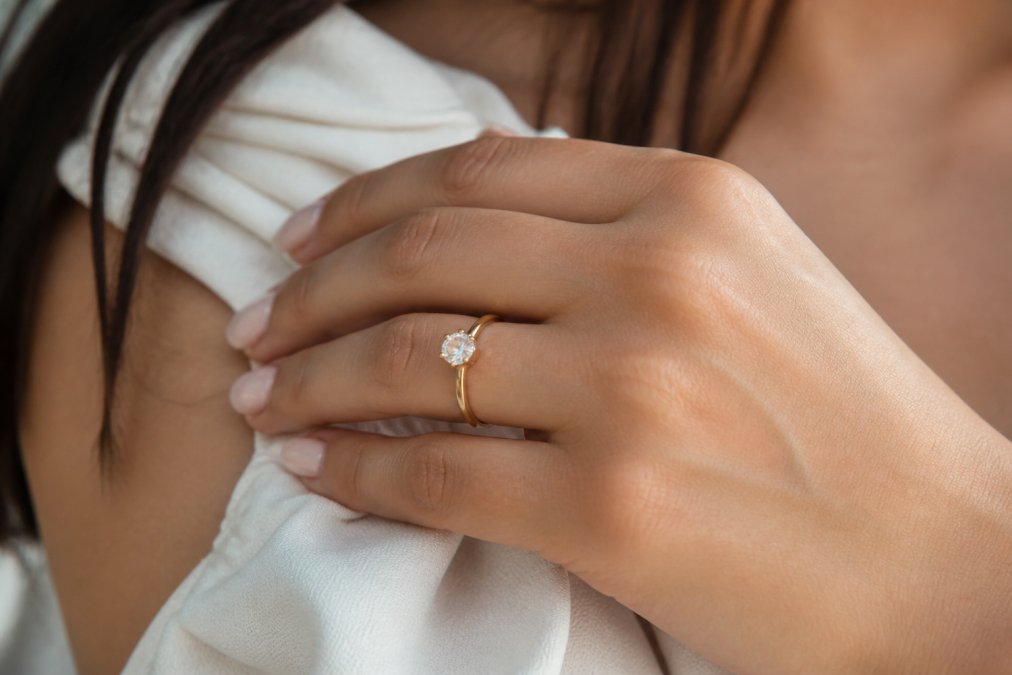
Native Jewel: Affordable 14k Gold Jewelry Without the Markup
The reason direct-to-consumer 14k gold costs less has nothing to do with shortcuts. It's the absence of a middle layer.
Can You Wear 14k Gold in the Ocean?
Yes, you can wear 14k gold in the ocean. Gold itself does not corrode in saltwater, and 14k's alloy blend is dense enough to handle a swim without breaking down. But the more useful question is whether the piece will still look and perform the way you bought it after a season of beach wear, and that depends on three things most guides skip: the alloy mix, the setting type, and how you verify the metal is what the seller claimed.
Why 14k Survives Saltwater Better Than 18k or 24k
Pure gold is inert, but it is also soft. The copper, silver, and zinc added to make 14k create a harder alloy that resists the abrasion of sand and the flexing that loosens prongs. An 18k piece has more gold and less alloy, so it scratches and bends more easily in the same conditions. A 24k piece is the softest of all and should never be a beach ring.
The Real Risks Are the Setting and the Fit
Salt and sand dull the surface over time, and chlorine in pools is harsher than seawater. But the failure mode that actually costs people rings is mechanical, not chemical:
- Cold water shrinks your fingers slightly, which is how rings slip off in the surf.
- High-set prong rings snag on towels, wetsuits, and beach bags, bending prongs out of alignment.
- Pavé settings trap sand in the tiny gaps, which abrades the metal over repeated exposure.
- Hot tubs combine heat, chlorine, and prolonged soaking, the worst combination for any fine jewelry.
A few habits keep ocean wear safe:
- Rinse the piece in fresh water after swimming
- Dry it with a soft cloth before storing
- Skip the ocean for high-set prong rings if you are swimming hard
- Never wear it in a hot tub, where chlorine concentration is highest
- Have prongs checked by a jeweler once a year if the ring sees regular saltwater
Confirming Your 14k Is Actually 14k Before You Swim In It
This is the step competitors leave out, and it matters most for "affordable" pieces. A ring sold as 14k that is actually gold-plated brass will not survive a single ocean trip, the plating wears through and the base metal corrodes.
Watch Out
Never wear an unverified piece in the ocean. If the metal is plated, saltwater accelerates the breakdown of the plating and can leave a green or black stain on your skin within days.
Key Takeaway
14k gold is a genuinely good beach metal, harder than 18k, inert in saltwater, and durable enough for daily wear. The risk is not the gold. It is an unverified stamp, a loose prong, or a ring that slips off in cold water.
How to Clean 14k Gold Jewelry at Home
Here's the routine that works:
- Mix a few drops of mild dish soap into a bowl of warm water
- Soak the piece for 10 to 15 minutes to loosen oils and lotion
- Brush gently with a soft-bristled toothbrush, focusing on the prongs and underside
- Rinse under warm running water with the drain plugged
- Pat dry with a lint-free cloth and let it air out fully
Never clean a piece over an open drain. A ring that slips off during rinsing is gone, and plumbers recover them far less often than people assume.
For deeper buildup on pavé settings, a jeweler's steam clean is worth the trip once or twice a year.
14k Gold vs 18k Gold Durability: Which Lasts Longer?
14k gold outlasts 18k gold in daily wear, and it isn't close. The higher the karat, the more pure gold, and pure gold is soft.
| Factor | 14k Gold | 18k Gold |
|---|---|---|
| Gold content | 58.3% | 75% |
| Hardness | Higher | Lower |
| Scratch resistance | Better | Weaker |
| Color depth | Slightly muted | Richer yellow |
| Best for | Daily wear | Occasional pieces |
Key Takeaway
For a ring you'll wear every day, choose 14k. For a piece that lives in a jewelry box and comes out for events, 18k's color is worth the softer metal.
Why Native Jewel Is the Smart Choice for Affordable 14k Gold
Buying 14k gold online comes down to trust, and trust comes down to documentation. Native Jewel backs every diamond piece with IGI certification and a lifetime warranty, which answers the durability worry directly.
Frequently Asked Questions
What is a good price for 14K gold jewelry?
A good price for 14K gold jewelry depends on the piece and its diamond content. At Native Jewel, wedding bands start at $1,200 for a 2mm pavé band, stud earrings range from $2,000 to $2,200, and engagement rings start at $2,200 for a 1.5ct emerald-cut design. These prices reflect direct-to-consumer savings compared to traditional retail markups, so you get solid 14K gold and IGI-certified lab-grown diamonds without paying for middlemen.
How can you tell if 14K gold is authentic?
Check for a hallmark stamp inside the band or on the clasp. Authentic 14K gold is marked with '14K' or '585' (meaning 58.5% gold). You can also test at home with a magnet (gold is not magnetic) or a jeweler's acid test kit. For diamond jewelry, verify the IGI certification that comes with your purchase. Native Jewel provides IGI certificates for all lab-grown diamond pieces, confirming both the diamond quality and the 14K gold setting.
Does 14K gold tarnish in the ocean?
14K gold does not tarnish in the ocean because gold itself is resistant to corrosion. However, the alloy metals mixed with gold (like copper or silver) can react to saltwater over time, especially if the piece has scratches. Rinse your 14K gold jewelry with fresh water after swimming in the ocean, then dry it with a soft cloth. This simple step keeps your piece looking new and prevents any dulling from salt or sand.
Is 14K gold durable enough for everyday wear?
Yes, 14K gold is more durable than 18K or 24K gold for daily wear because its higher alloy content makes it harder and more scratch-resistant. It holds up well to hand washing, light exercise, and regular use. For engagement rings and wedding bands, 14K gold offers a practical balance of strength and beauty. Native Jewel's 14K gold pieces are designed for daily wear and come with a lifetime warranty on all diamond jewelry.
How do I clean 14K gold jewelry at home?
Mix a few drops of mild dish soap with warm water. Soak your 14K gold jewelry for 10 to 15 minutes, then gently scrub with a soft-bristled toothbrush, focusing on crevices around prongs and settings. Rinse under warm water and pat dry with a lint-free cloth. Avoid harsh chemicals, chlorine, or abrasive cleaners. For diamond pieces, this method safely removes buildup and restores sparkle without damaging the 14K gold or the stones.
Choosing affordable 14k gold jewelry is really a decision about documentation and durability, not just price. Native Jewel makes that decision easier with IGI-certified lab-grown diamonds, ethically sourced 14k gold, handcrafted designs, a lifetime warranty on all diamond jewelry, and a 30-day return policy that removes the risk from buying online. Get started with Native Jewel and find a piece built to be worn every day, not saved for someday.


