

Cart
0

Last Updated: November 20, 2026
Quick Summary
Lab grown diamonds avoid the land disruption, water use and tailings of mining, but they carry an electricity-driven carbon footprint that depends heavily on the power grid used. Neither option wins on every measure, so the honest answer depends on which impacts matter most to you.
- Ask which electricity source grew the stone, since the grid largely determines lab grown emissions.
- Mining moves large volumes of rock and leaves tailings that require monitoring for decades.
- Check whether a footprint figure states its functional unit, system boundary and electricity source.
- Independent certification carries more weight than broad claims like eco-friendly or carbon neutral.
- Moissanite and recycled metal settings are lower-impact alternatives worth considering.
Want a lower-impact diamond ring?Native Jewel offers IGI-certified lab-grown diamond rings in 14K gold with complimentary resizing.
Shop Lower-Impact Rings
Table of Contents
- How Lab-Grown and Mined Diamonds Are Produced
- Where Lab-Grown Diamonds Are Made and Why Location Changes the Footprint
- Carbon Footprint and Energy Use: A Like-for-Like Comparison
- Land, Water, and Mining Waste: The Impacts Mining Leaves Behind
- Are Lab-Grown Diamonds More Ethical? What Sustainability Claims Prove
- Disadvantages of Lab-Grown Diamonds and Eco Alternatives Like Moissanite
- Choosing a Lower-Impact Engagement Ring Next Steps
- Frequently Asked Questions
How Lab-Grown and Mined Diamonds Are Produced
Lab grown diamonds and mined diamonds are chemically the same material: both are pure carbon arranged in a crystal lattice. The difference lies entirely in where the carbon comes from and how the crystal forms. Understanding that difference is the starting point for any honest comparison of their environmental impact. Buyers deserve a clear picture of both paths before choosing a ring.
Mined diamonds are extracted from kimberlite pipes or alluvial deposits, often after clearing forest and moving large volumes of earth. Lab-grown diamonds are created in a controlled environment using one of two methods: high pressure, high temperature (HPHT) or chemical vapor deposition (CVD).
The two routes carry very different resource profiles. Mining moves rock and sediment on a large physical scale. Growing diamonds shifts the burden toward electricity, since the reactors run for many hours per stone. That trade-off is what the rest of this comparison examines.
Where Lab-Grown Diamonds Are Made and Why Location Changes the Footprint
Where a lab-grown diamond is made matters as much as how it is made. A reactor running on coal-heavy grid electricity produces far more emissions than the same reactor running on hydro or solar power. Two stones with identical specifications can therefore carry different carbon footprints.
Production sites draw from different electricity mixes, so published footprint figures vary widely. A fair comparison should always state the power source behind the estimate. Buyers should ask sellers which grid powers their stones and whether that supply is renewable.
Mined diamonds have their own location dependence. Mines in remote regions often run on diesel generators, which raises emissions and transport costs. When comparing the two, check both the growing location and the mining location, not just the headline number.
Carbon Footprint and Energy Use: A Like-for-Like Comparison
Carbon footprint is the most cited environmental metric for diamonds, but the published numbers are not directly interchangeable. Longevity also shapes the picture, so see how long a lab diamond keeps its value and beauty. Two reports can both say "carbon footprint per carat" and mean different things. To compare fairly, you have to line up four variables: the functional unit, the system boundary, the electricity mix, and the data quality behind the estimate.
Functional unit. Most figures are expressed per carat of polished diamond, but some are per carat of rough, per stone, or per gram. A 1-carat polished stone typically requires more than 1 carat of rough, so a per-rough-carat number understates the per-polished-carat impact. Ask which unit the figure uses before you compare it to anything.
System boundary. A cradle-to-gate assessment might stop at the polished stone; a cradle-to-grave assessment adds setting, retail, use, and end-of-life. Cutting, polishing, and transport are often excluded from lab-grown figures because they happen in different facilities and countries, yet they are real energy costs. If one study includes finishing and another does not, the gap between them may be boundary, not technology.
Electricity mix. Lab grown diamond production is electricity-intensive, and the power draw largely determines the footprint. The same reactor on a coal-heavy grid and on a hydro- or nuclear-heavy grid can produce very different emissions. That is why a single "lab-grown" number is misleading, the grid, not the category, drives the result. A common pattern is for low-carbon grids to bring lab-grown emissions below many mined-stone estimates, while coal-heavy grids can push them above.
Mining's carbon profile. Mined diamonds draw energy from diesel machinery, ore processing, ventilation, and transport, and the intensity varies with ore grade, site remoteness, and whether the mine is open-pit or underground. Remote operations that rely on diesel generators carry a higher carbon burden than grid-connected sites. As with lab-grown, the location and power source matter as much as the method.
Data quality and uncertainty. Many widely cited figures come from a small number of studies with different ages, scopes, and assumptions. Some rely on industry-supplied data; others use modeled grid averages rather than metered facility data. That is why published estimates for the same category can differ substantially. Treat any single number as a range midpoint, not a precise value.
Buyers can narrow the uncertainty by asking for stone-specific data. Look for:
- The functional unit and system boundary behind any footprint figure
- The electricity source used to grow the stone, and whether it is documented
- Whether the assessment covers growing or mining, polishing, and shipping
- The date of the underlying study and whether it was independently reviewed
Watch out: A footprint figure without a stated functional unit, system boundary, and electricity source tells you little. Ask what the number includes before comparing it to another.
A transparent comparison does not declare a single winner. It shows that lab-grown and mined diamonds each carry an electricity- and location-driven carbon profile, and that the honest answer depends on which grid, which mine, and which boundary you are measuring.
The published footprint figures are not directly interchangeable, so the key variables are worth lining up side by side.
| Variable | What to check | Why it matters |
|---|---|---|
| Functional unit | Per polished carat, rough carat, stone or gram | A 1-carat polished stone needs more than 1 carat of rough |
| System boundary | Cradle-to-gate or cradle-to-grave | Excluding cutting and transport can shift the comparison |
| Electricity mix | Coal-heavy, hydro, nuclear or solar grid | The grid largely determines lab-grown emissions |
| Mining energy | Diesel use, ore grade, site remoteness | Remote diesel-powered sites carry a higher burden |
| Data quality | Study date, scope, independent review | Estimates for the same category can differ substantially |
Land, Water, and Mining Waste: The Impacts Mining Leaves Behind
Carbon is only one axis of environmental impact. A full comparison has to weigh land disturbance, water use and quality, waste, biodiversity, and local community effects alongside emissions, and here the two pathways diverge sharply.
Land disturbance and habitat. Open-pit and alluvial mining move large volumes of rock and sediment. Open-pit operations excavate the surface, remove vegetation, and can trigger erosion and sedimentation in nearby waterways. Alluvial mining disturbs riverbeds and floodplains. Where mines sit in forested or biodiverse regions, habitat loss and fragmentation follow, and the effects can persist after closure. The scale depends on ore grade: lower-grade deposits require moving more material per carat, which magnifies land impact.
Water use and water quality. Mining and ore processing consume water, and poorly managed sites can release sediment, heavy metals, and process chemicals into streams and groundwater. Tailings, the fine waste left after ore is processed, must be stored in engineered facilities, and their long-term management is a recurring risk. These impacts are local but can be severe, and they often outlast the mine itself.
Mining waste and tailings. Tailings volumes scale with the amount of ore processed, so low-grade operations generate proportionally more waste per carat. Waste rock piles and tailings facilities require monitoring for decades. The environmental record here varies widely by jurisdiction and operator, which is why location and practice matter as much as the mining method itself.
Lab-grown land and water. Lab-grown production does not excavate land, so it avoids the habitat loss, tailings, and acid drainage associated with mining. Its land footprint is a facility, not a pit. Water use is generally much lower than mining's, though reactor cooling and wastewater treatment still require attention, and the electricity supply chain, including fuel extraction and generation, carries its own land and water impacts upstream.
Biodiversity and community effects. Mining can affect biodiversity through habitat removal and through water and dust impacts on surrounding ecosystems. Local communities may experience changes in land access, water availability, and economic activity, for better or worse. Lab-grown production concentrates impacts at industrial facilities, which shifts the question from land and water to energy sourcing and labor conditions at the plant.
Watch out: A claim that lab-grown diamonds are "land-free" ignores the land and water embedded in their electricity supply. Ask about the power source, not just the facility.
A full-impact view does not produce a single score. It shows that mining's burdens are concentrated in land, water, and waste at the site, while lab-grown's burdens concentrate in energy, and that a fair comparison names which impact category is being weighed.
Are Lab-Grown Diamonds More Ethical? What Sustainability Claims Prove
Many shoppers assume lab-grown diamonds are automatically more ethical. The answer depends on which ethical issues matter to you. Lab-grown stones avoid the land disruption and conflict risks linked to some mined diamonds. They do not automatically resolve energy sourcing or labor conditions at the facility.
Sustainability claims deserve scrutiny. To judge whether lab-grown stones are really ethically sourced, read a step-by-step guide to the evidence. Ask what evidence supports them. Independent certification and third-party verification carry more weight than marketing language. Recognized responsible-sourcing programs, such as those covering gold, are one example of verifiable standards to look for. Native Jewel's lab-grown stones are IGI certified, though a grading report does not by itself confirm environmental performance.
Be cautious with broad claims like "eco-friendly" or "carbon neutral" unless the seller explains how they were measured.
Disadvantages of Lab-Grown Diamonds and Eco Alternatives Like Moissanite
Lab-grown diamonds have real drawbacks. Their energy use can be high, especially on fossil-fuel grids. Resale value for lab-grown stones has historically been lower than for mined stones, so buyers should consider long-term value as well as environmental impact. Some buyers also prefer natural stones for reasons of tradition or rarity.
If your priority is minimizing impact, moissanite is worth considering. Compare it with lab-grown and mined diamonds on the metrics that matter to you.
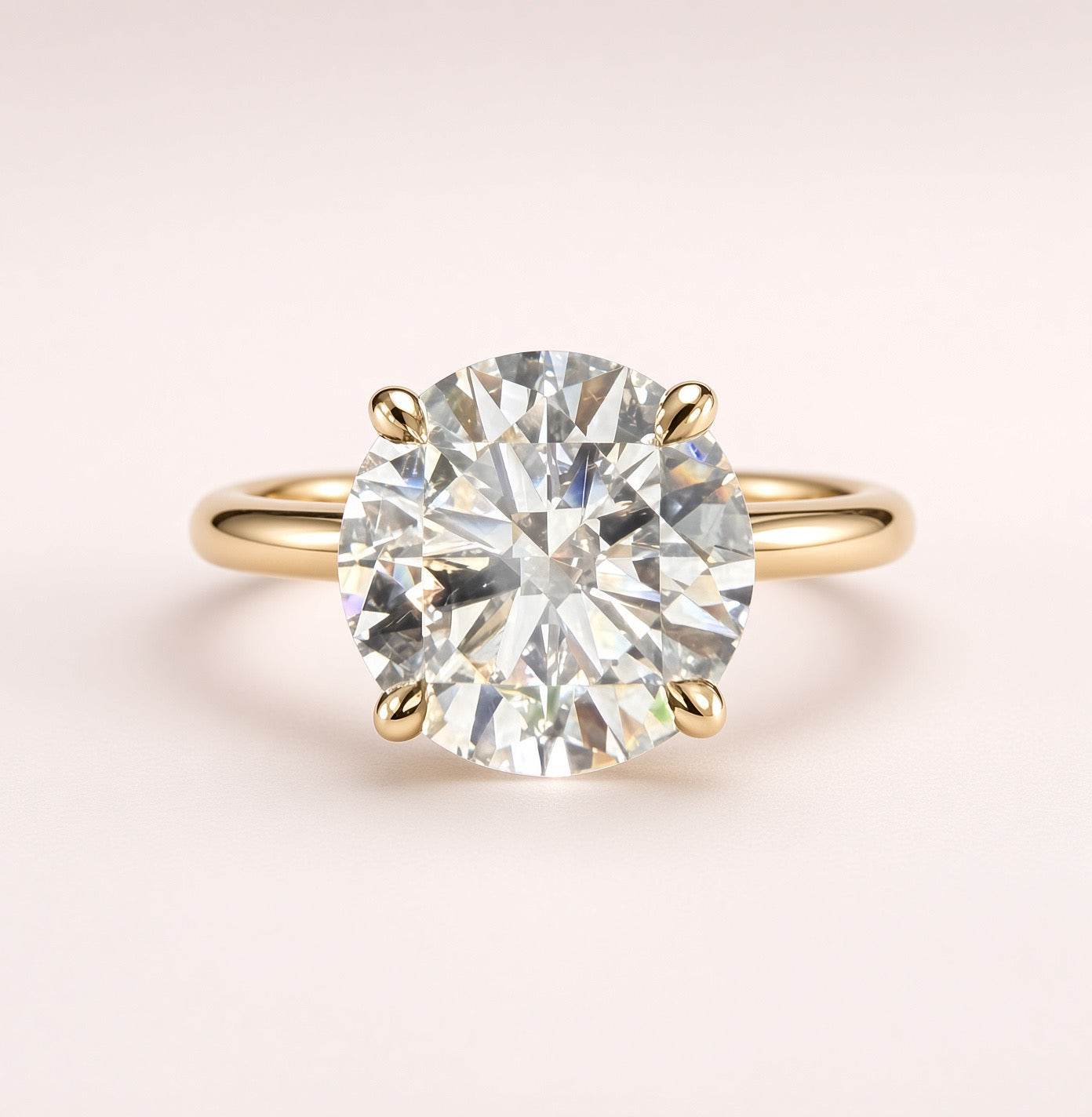
Recycled metal settings are another lower-impact choice. Choosing recycled gold for the band or setting reduces the mining impact of the metal itself. Our 3 Carat Round Solitaire Engagement Ring pairs a lab-grown centre stone with 14K yellow gold.
Choosing a Lower-Impact Engagement Ring Next Steps
No single option wins on every measure. Lab-grown diamonds avoid mining land disturbance but carry an electricity-driven footprint. Mined diamonds carry land, water and waste impacts that vary by operation. Moissanite and recycled metal offer other paths.
Start by asking three questions: what power source grows the stone, what evidence backs any sustainability claim, and which impacts matter most to you. Then compare specific stones on those answers rather than on headline claims.
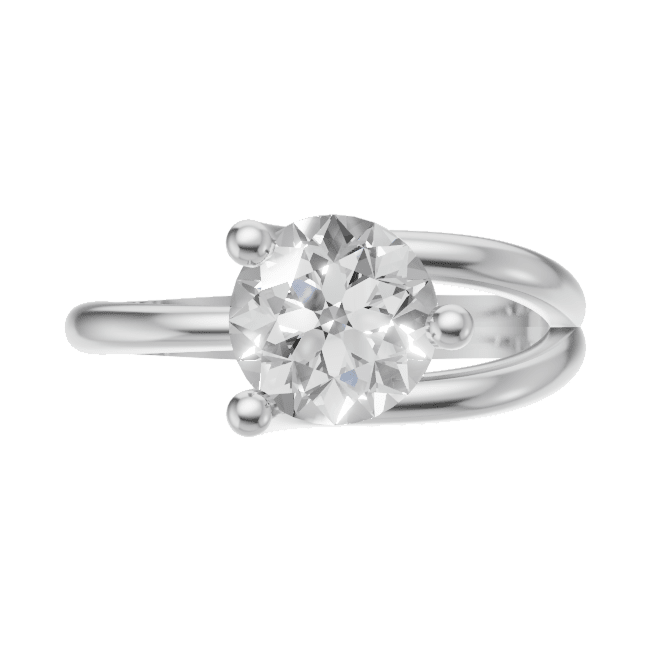
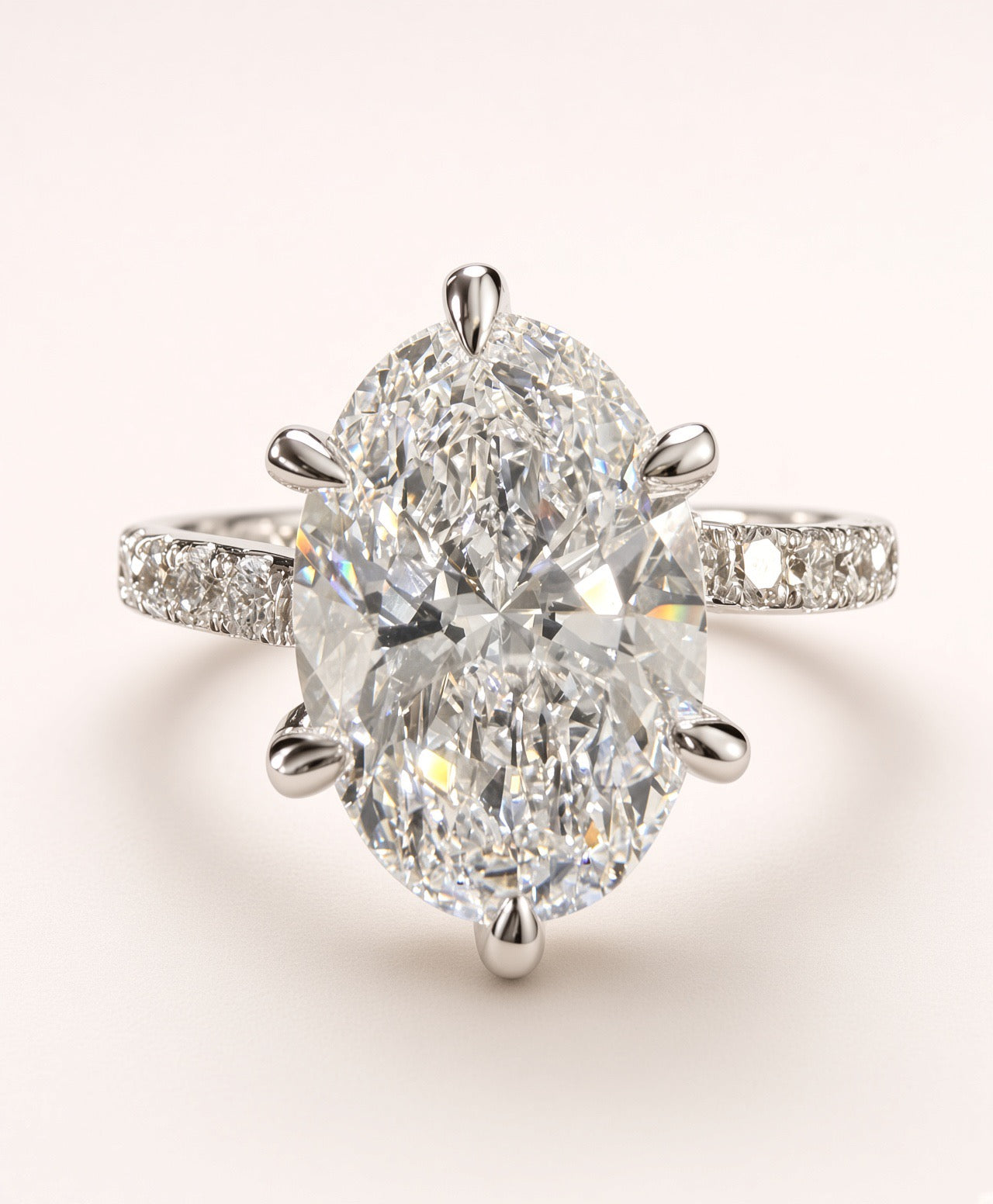
If a lab-grown diamond fits your priorities, explore our 3ct oval lab diamond engagement ring with a pavé band or the Celine Bypass Solitaire Ring for a more modern design. Native Jewel offers a 30-day return window and a lifetime warranty on diamond jewelry, and many listings include complimentary resizing.
Frequently Asked Questions
Are lab diamonds worse for the environment?
Not automatically. Lab-grown diamonds avoid the land disturbance and mining waste of extraction, but growing them is energy-intensive. Their overall footprint depends mostly on the electricity used in production: grids that run on coal produce far more emissions per carat than grids dominated by renewables. Compare the full life-cycle figures for the same carat weight, not a single headline claim.
Do lab-grown diamonds use more energy than mined diamonds?
Often, yes. Growing a diamond with CVD or HPHT methods requires sustained electricity over many days, while mining energy depends on the mine's equipment, depth and ore grade. Published assessments vary widely, so the answer depends on the electricity mix and the assessment scope. Lab-grown stones made with renewable power can narrow or reverse the gap.
Are lab-grown diamonds more sustainable if they are made with renewable energy?
Renewable power substantially reduces the carbon footprint of lab-grown production because the process is electricity-intensive. It does not remove other considerations, such as water use at the production site or the energy embedded in equipment. Ask a seller which electricity source its growers use and whether that claim is verified.
How can I tell whether a diamond was produced sustainably?
Start with the grading report. An IGI certificate confirms the stone's color, clarity, cut and that it is lab-grown, but it does not measure environmental performance. Look for specific, verifiable disclosures such as the production location, electricity source and any independent life-cycle assessment. Be cautious of broad terms like eco-friendly that are not backed by data.


