

Cart
0

Quick Summary
The best diamond setting for active lifestyles depends on what your hands do most. A bezel or low-profile setting with smooth edges resists snagging and impact, while prong settings let in more light but are more vulnerable. Match the setting to your most demanding activity.
- A bezel setting gives the strongest protection and scores 5 out of 5 on durability.
- Low-profile settings sit close to the finger, reducing snags on fabric and gloves.
- Check prongs every few months and have any loose or bent prongs fixed promptly.
- Remove the ring before heavy lifting, climbing, or contact sports when possible.
- Store the ring in a dedicated case and confirm your insurance covers jewelry.
Which setting fits your daily life?Native Jewel offers IGI-certified lab diamond rings in secure, low-profile and bezel settings.
Shop Engagement Rings
Table of Contents
- Diamond Setting for Active Lifestyles: How to Choose
- Why Your Activities Should Decide Your Diamond Setting
- Comparing Diamond Settings: Bezel, Low-Profile, Prong, and Channel
- Low-Profile Diamond Settings for Hands-On Work and Sports
- Bezel Setting Engagement Ring Options for Maximum Protection
- Ring Settings That Do Not Snag on Clothing, Gloves, and Gear
- Fit, Metal Choice, and Ring Care for Active Lifestyles
- Booking a Setting Consultation Before You Buy
- Frequently Asked Questions
Diamond Setting for Active Lifestyles: How to Choose
Last Updated: November 16, 2026
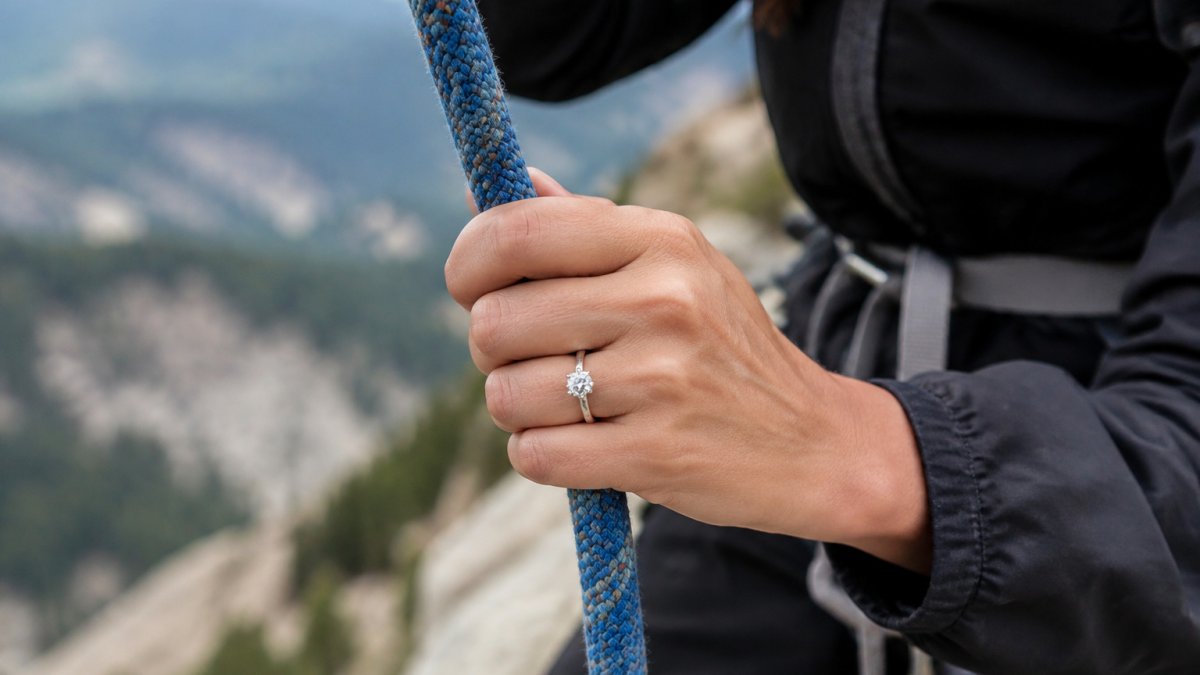
Why Your Activities Should Decide Your Diamond Setting
Choosing a diamond setting for active lifestyles starts with one question: what does your hand actually do all day?
Most guides treat "active" as a single category. It is not. Weightlifting, climbing, swimming, gardening, and contact sports load a ring in different directions, and a setting that survives one can fail at another.
Weightlifting and strength training. Barbells, dumbbells, and kettlebells press directly into the palm and the sides of the fingers. A high prong setting can be crushed against a knurled bar, and a wide band can pinch under heavy loads.
Rock climbing and bouldering. Ropes, carabiners, and rock edges create sideways impact and abrasion. Exposed prongs can bend or shear, and a stone can catch in a crack or sling.
Swimming and water sports. Cold water and soap can shrink fingers enough for a loose ring to slip off. A secure fit and a setting with no open gaps where lotion, sand, or pool water can collect make cleaning easier.
Gardening and yard work. Soil, grit, and gloves are the main enemies. Dirt packs into prong galleries and under bezels, and gloves pull at anything that protrudes.
Contact sports and racquet sports. Ball impact and hand-to-hand contact favor a bezel or a flush setting, and many leagues and coaches ask players to remove jewelry entirely.
Nursing, cooking, and childcare. Frequent handwashing, gloves, and lifting put a premium on a setting that does not snag and a band that does not spin. A low-profile prong or bezel setting with a contoured wedding band is a common pairing.
Use these questions to sort your own routine:
- Which activities put direct pressure on the palm or sides of the fingers?
- Which involve gloves, ropes, bars, or tools that can catch an edge?
- Which expose the ring to water, soap, grit, or repeated handwashing?
- Which carry a risk of impact from a ball, another person, or a hard surface?
Your answers point toward the settings covered below. A ring that suits a swimmer and a ring that suits a climber are not the same ring, and the rest of this guide shows where those paths diverge.
Comparing Diamond Settings: Bezel, Low-Profile, Prong, and Channel
Each diamond setting protects the stone in a different way, and each has trade-offs. The table below summarizes how the four most common styles compare for active wear.
| Setting | Profile | Stone Security | Snag Resistance | Durability Rating (1-5) | Best For |
|---|---|---|---|---|---|
| Bezel | Low to moderate | Very high | High | 5 | Sports, manual labor |
| Low-profile prong | Low | Moderate | High | 4 | Daily hands-on work |
| Standard prong | Higher | Moderate | Low to moderate | 3 | Light daily wear |
| Channel | Low | High for side stones | Moderate | 4 | Accent stones, flush wear |
Durability Rating (1-5)
Bezel 5
Low-profile prong 4
Standard prong 3
Channel 4
Bezel settings surround the center stone with a metal rim. This rim shields the stone's edges from knocks and reduces snagging. The trade-off is that a bezel can make the diamond look slightly smaller because metal covers part of the girdle.
Low-profile settings sit close to the finger. They reduce the chance of catching on fabric and sit comfortably under gloves. The main downside is that the stone is more exposed to sideways impact than a bezel.
Prong settings lift the stone with small metal claws. They let the most light into the diamond, which is why many buyers choose them. The prongs are the weak point: they can bend or wear down, and they can catch on fabric.
Channel settings hold side stones between two metal walls. They protect accent stones well and keep the band smooth, which helps with comfort.
Pick the setting that matches your priorities. If security matters most, a bezel leads. If brilliance and light matter most, a prong setting leads. Most active wearers land somewhere between the two.
Low-Profile Diamond Settings for Hands-On Work and Sports
Low-profile settings are often the first recommendation for people who use their hands constantly. Because the stone sits close to the skin, it has less use to catch on objects, and the ring is less likely to rotate or tilt during tasks.
A low-profile design works especially well for:
- Nurses and healthcare workers who wash hands and wear gloves often
- Climbers and outdoor workers who grip ropes or tools
- Parents and caregivers who lift children throughout the day
- Anyone who types, cooks, or gardens regularly
Pairing matters. A wedding band that is contoured to sit flush against a low-profile setting prevents the two rings from snagging each other. Ask your jeweler to check how the bands fit together before you buy.
Low-profile settings still need care. Check the prongs every few months. Loose or bent prongs leave the diamond exposed, so have any problems fixed promptly.
Bezel Setting Engagement Ring Options for Maximum Protection
A bezel setting engagement ring offers the strongest physical protection of the common styles. The metal rim wraps the diamond's girdle, so an impact is more likely to hit metal than the stone itself. For people who bump into doorframes, play contact sports, or work with heavy tools, this coverage is a practical advantage.
Our Native Jewel 1.50ct Round Lab Diamond Solitaire Engagement Ring in 14K yellow gold uses a polished solitaire design with a clean, simple profile, available at $1,900.00.
Bezels involve trade-offs. Some buyers find that the metal rim reduces the amount of light entering the diamond. A bezel also shows more metal on the finger, which changes the overall look. If you want maximum sparkle, compare how each setting looks in person before deciding.
Ring Settings That Do Not Snag on Clothing, Gloves, and Gear
Snagging is one of the most common complaints from active wearers. A ring that catches on a sleeve, glove, or piece of equipment can tear fabric, bend prongs, or pull a stone loose. The best defense is a setting with smooth edges and a low profile.
Look for these features when reducing snags:
- A low or flush profile with no sharp points facing outward
- Smooth prong tips or a full bezel rim
- A band that sits flat and does not rotate
- Stone shapes with fewer corners, such as round diamonds, which have no points to catch
Our Native Jewel 2.25ct Round Lab Diamond Engagement Ring in 14K white gold features a 1.50ct round center with pavé shoulders, available at $1,900.00.
Fabric and gear are not the only concern. Test how the ring moves when you wear gloves. A ring that fits snugly and does not slide will cause fewer problems.
Fit, Metal Choice, and Ring Care for Active Lifestyles
Fit matters more for active wearers than for people who rarely use their hands. A ring that is too loose can spin, catch, or slip off during a workout. A ring that is too tight can restrict circulation, especially when hands swell from heat or exercise. Measure your finger when your hands are at their usual size, and remember that fingers change with temperature, time of day, and season.
For active wear, aim for a fit that slides over the knuckle with slight resistance but does not rotate freely on the finger. If you are between sizes, ask your jeweler about sizing beads or a comfort-fit band, which can keep a slightly larger ring from spinning without making it too tight.
Metal choice affects durability and repairability as much as setting style does. Platinum resists wear well but develops a patina over time and is denser, which some wearers notice in weight. White gold is typically rhodium-plated, and that plating wears away with abrasion, so active wearers may need re-plating more often.
A simple care routine helps any setting last:
- Remove the ring before heavy lifting, climbing, or contact sports when possible.
- Inspect the prongs and stone every few months with good lighting, looking for bent tips, gaps between the stone and metal, or a stone that rocks in its seat.
- Clean the ring gently with warm water, mild soap, and a soft brush, and rinse away soap residue that can dull the stone.
- Have a professional jeweler check the setting once a year, and sooner if you notice a loose stone or a snag.
Watch out: a ring that feels fine can still have loose prongs, and a stone can loosen gradually without a visible gap. Regular inspection catches small problems before a stone is lost.
Loss prevention is part of care. If you remove your ring for higher-risk activities, store it in the same dedicated case every time so it does not end up in a gym bag or a pocket. Keep your appraisal current and confirm that your homeowner's or renter's policy covers the ring, or ask about a scheduled jewelry rider, since standard policies often cap coverage for jewelry and may require an appraisal or receipt. Photograph the ring and keep the documentation with your policy.
Native Jewel offers a lifetime warranty on diamond jewelry, and complimentary resizing is included on the rings in its collection.
Booking a Setting Consultation Before You Buy
Choosing a setting is easier with expert guidance, especially when your activities are demanding. A consultation lets you describe your routine, try sizing options, and compare how different settings feel on your hand. Ask about the metal, prong design, and bezel height, and request a clear explanation of the trade-offs for your lifestyle.
Browse our engagement ring collection to compare settings side by side, or read our guide to pairing a wedding band with a low-profile engagement ring before you decide. For care questions, our ring care guide for active lifestyles covers safe cleaning steps, and our guide to preventing scratches on gold jewelry explains how to protect your metal.
A good setting should feel secure, look right, and suit the way you live.
Choosing the right setting protects both your diamond and your everyday life. Native Jewel designs rings for real wear, from polished bezels to low-profile solitaires. Explore our engagement rings and find a setting built for the way you move.
Frequently Asked Questions
Are low-profile diamond settings better for active lifestyles?
Often, yes. A low-profile setting sits close to the finger, so the ring is less likely to catch on gloves, sleeves, or gear. It also reduces the chance of a bump against a hard surface. The trade-off is that a low-profile design shows less of the stone's height, so it may look less dramatic than a tall solitaire. For most people who work with their hands or train regularly, the snag resistance is worth that small change in look.
Which diamond setting is most secure for everyday wear?
A bezel setting offers the most protection because a metal rim surrounds the stone's girdle, which helps keep the diamond secure and shields its edges. Prong settings give more light and a classic look but leave the stone more exposed, so prongs should be checked regularly. Channel and flush settings protect side stones well. Your jeweler can inspect the setting at each service visit to confirm the stones are tight.
Should I take my engagement ring off when working out?
For heavy lifting, climbing, contact sports, or gardening with tools, removing the ring is the safest choice, since any setting can take a hard knock. For light activity, a low-profile or bezel-set ring is usually fine. Store the ring in a padded box while you train so it is not lost or scratched. Native Jewel's 14K yellow gold 1.50ct Round Lab Diamond Solitaire Engagement Ring at $1,900.00 is a simple setting with no extra pavé, so there are fewer small stones to catch.
How should an active person choose an engagement ring?
Start with your main activities, then match the setting to them. Choose a low-profile or bezel setting for hands-on work and sports, and a prong setting if you want more light and accept some extra exposure. Check that the band fits snugly, since a loose ring spins and catches more easily. Choose 14K gold for a balance of durability and budget, and plan a yearly inspection with your jeweler to confirm the stone is secure.


