

Cart
1
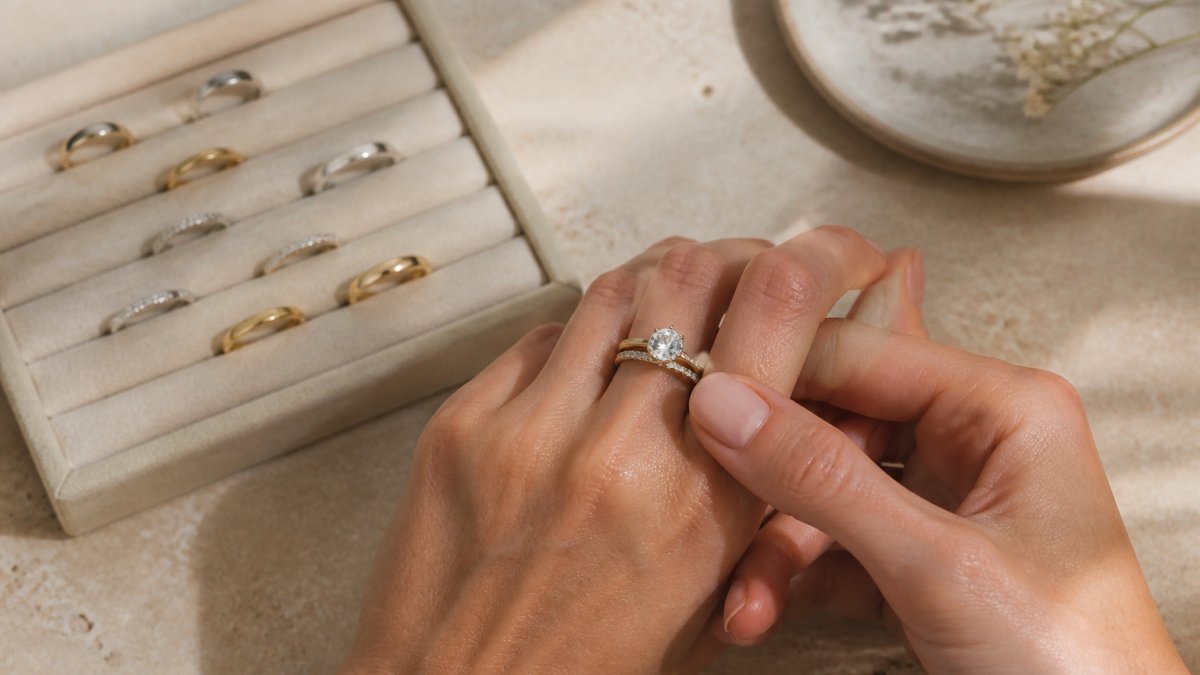
Table of Contents
- Start With Your Engagement Ring's Geometry
- Curved Wedding Band vs Straight Band: Which Fits a Low Profile Ring?
- The Gap Between Engagement Ring and Wedding Band: Causes and Fixes
- Best Wedding Bands for Low Set Rings: Width, Profile, and Stone Choices
- Lifestyle, Daily Wear, and Long-Term Maintenance
- Step-by-Step: Choosing and Ordering Your Band
- Conclusion
- Frequently Asked Questions
Last Updated: October 4, 2026
Start With Your Engagement Ring's Geometry
The key to choosing a wedding band for a low profile engagement ring is measuring your ring's geometry before you shop. A low-profile engagement ring sits close to the finger, so the band must clear the setting without rubbing or catching. This guide from Native Jewel walks you through every measurement, fit option, and style choice. Below, we'll show you exactly how to get it right the first time.

Low-profile settings are popular because they rarely snag on clothing. But that same design creates a fit problem most guides skip. The wedding band has to sit flush against a shank that offers almost no vertical room.
Here is the good news: you can measure everything at home in about ten minutes.
Measure Bridge Height and Setting Clearance at Home
Bridge height is the distance from the top of your finger to the lowest point of the diamond setting. Setting clearance is the open space under that setting. Both numbers decide which bands will fit.
Grab a soft measuring tape and a ruler marked in millimeters. Then follow these steps:
- Lay the ring flat on a table.
- Measure from the table surface up to the lowest point of the setting.
- Slide the tape under the setting to measure open clearance.
- Write both numbers down in millimeters.
- Photograph the ring from the side for reference.
If the clearance is under 2 mm, a straight band will likely bump the setting. That points you toward a curved or contoured band.
Pro Tip
Measure both sides of the ring, not just one. Asymmetrical settings often have different clearance on each side, and the tighter side decides your band shape.
Match Metal Type and Color to Your Existing Ring
Metal color should match or deliberately contrast with your engagement ring. Yellow gold pairs with yellow gold. White gold pairs with white gold or platinum. Mixing warm and cool tones works, but only when you mean to do it.
Metal karat matters too.
For a cohesive stack, keep three things consistent:
- Metal color (yellow, white, or rose)
- Finish (high polish, matte, or brushed)
- Overall ring profile (rounded, flat, or domed)
A mismatched finish is the mistake most people miss. A polished band beside a matte engagement ring reads as two separate purchases, not one set.
Curved Wedding Band vs Straight Band: Which Fits a Low Profile Ring?
A curved wedding band is the better choice for most low-profile engagement rings because it bends around the setting instead of pushing into it. A straight band works only when clearance is generous. This is the single biggest decision in the whole process.

The trade-off is real. If you ever plan to wear the band by itself, a straight band gives you more freedom.
Here is how the two compare:
| Feature | Curved Band | Straight Band |
|---|---|---|
| Fits low-profile settings | Yes, wraps the setting | Only with 2 mm+ clearance |
| Resizing difficulty | Harder | Easy |
| Wears alone well | Less often | Yes |
| Cost | Higher | Lower |
| Best for | Tight clearance rings | Generous clearance rings |
A contoured band is the middle path. It curves only where it needs to, then straightens out along the sides. Many couples choose this shape because it looks clean from the top and still clears the setting.
One more option worth knowing: a tapered band. It runs wider at the top and narrows toward the base, which can hug a low setting without a full curve.
The Gap Between Engagement Ring and Wedding Band: Causes and Fixes
The gap between engagement ring and wedding band is the visible space where the two rings do not touch. It happens when the engagement ring's shank curves away from the band, or when the setting sits too low for a straight band to reach it.
Some couples love the gap. Others find it distracting. Either way, you have options.
Common causes include:
- A low or bezel setting that blocks the band
- A rounded shank that narrows near the head
- A band that is too wide to sit close
- A prong setting that protrudes past the shank line
The fix depends on the cause. A thinner band often closes the gap on its own. A contoured band solves it by design. And when neither works, a spacer fills the space.
Spacers, Ring Guards, and Solder-Free Solutions
A spacer ring is a thin band worn between the engagement ring and the wedding band. It absorbs the gap and keeps the two rings from rubbing. Spacers are the simplest fix because they need no soldering and no reshaping.
Ring guards work the same way. They clip or slide around the engagement ring's shank and hold the band in place.
Solder-free solutions matter for a practical reason: soldering fuses two rings into one piece. That is permanent. A spacer lets you separate the rings anytime.
Watch Out
Soldering two rings together is permanent and can void some warranties. If you might ever wear the band alone, choose a spacer instead.
Another option is a gap-filling band with a slight curve built in. It looks like a straight band from above but tucks under the setting where it counts.
Best Wedding Bands for Low Set Rings: Width, Profile, and Stone Choices
The best wedding bands for low set rings are 2 mm to 3 mm wide with a low ring profile. A slim band slides under the setting with less friction. A tall, domed band is more likely to bump it.
Shank width is the measurement across the band at its widest point. Width affects both fit and look. A 2 mm band feels delicate. A 3 mm band reads as more substantial and holds more diamonds.
1.75cttw Round Lab Diamond Wedding Band in 14K Yellow Gold →
Ring profile describes the band's cross-section shape:
- Flat: modern and low, sits closest to the finger
- Domed: rounded on top, classic but taller
- Comfort fit: curved inside for easier wear
For a low-profile stack, a flat or comfort-fit profile usually wins. It keeps the overall height down and the fit comfortable.
Stone setting style changes the height too. A channel set or pave band sits nearly flush with the metal. A prong setting raises each stone, which adds height you may not want next to a low ring.
Diamond-Accented vs Plain Metal Bands
A diamond-accented band adds sparkle that competes or coordinates with your engagement ring. A plain metal band keeps the focus on the engagement ring and costs less.
Neither is better. It comes down to the look you want.
An eternity band carries diamonds all the way around. A half-eternity band sets them across the top only. Half-eternity bands are easier to resize because the back stays plain.
Our 1.75cttw Round Lab Diamond Wedding Band in 14K White Gold shows how a French pave setting keeps stones low while still delivering full sparkle. The 3 mm width gives it presence without adding height.
If you want something slimmer, the 0.75ct Pave Diamond Wedding Band in 14K Yellow Gold sits at just 2 mm. It slides under a low setting with almost no friction.
For warmer tones, the 14K Yellow Gold French Pave Wedding Band at 2.5 mm splits the difference between delicate and substantial.
Each of these bands is IGI certified and comes with a lifetime warranty on craftsmanship.
Lifestyle, Daily Wear, and Long-Term Maintenance
Daily wear decides more than style does. A nurse, a chef, or anyone working with their hands needs a band that survives real use. A low-profile stack already reduces snagging, which helps.
Think about how you use your hands:
- Do you lift weights or work with tools?
- Do you type all day?
- Do you remove rings often for work?
If you remove your rings often, a spacer is easy to lose. Choose one that fits snugly or skip it in favor of a contoured band.
Maintenance keeps a stack looking new. Clean both rings weekly with warm water and mild soap, then dry with a soft cloth.
Key Takeaway
A low-profile stack needs less snag protection but more cleaning. A quick weekly soak keeps the sparkle visible.
Check the prongs and pave stones every few months. A loose stone is cheap to tighten and expensive to replace.
Step-by-Step: Choosing and Ordering Your Band
Choosing and ordering a wedding band for a low profile engagement ring takes five steps. Measure first, then match metal, then pick your shape, then choose your stones, then confirm the fit.
Here is the full process:
- Measure bridge height and clearance in millimeters.
- Match metal color and karat to your engagement ring.
- Decide between a curved, contoured, or straight band.
- Choose band width (2 mm to 3 mm) and ring profile.
- Pick diamond-accented or plain metal.
- Confirm your ring size and ask about resizing.
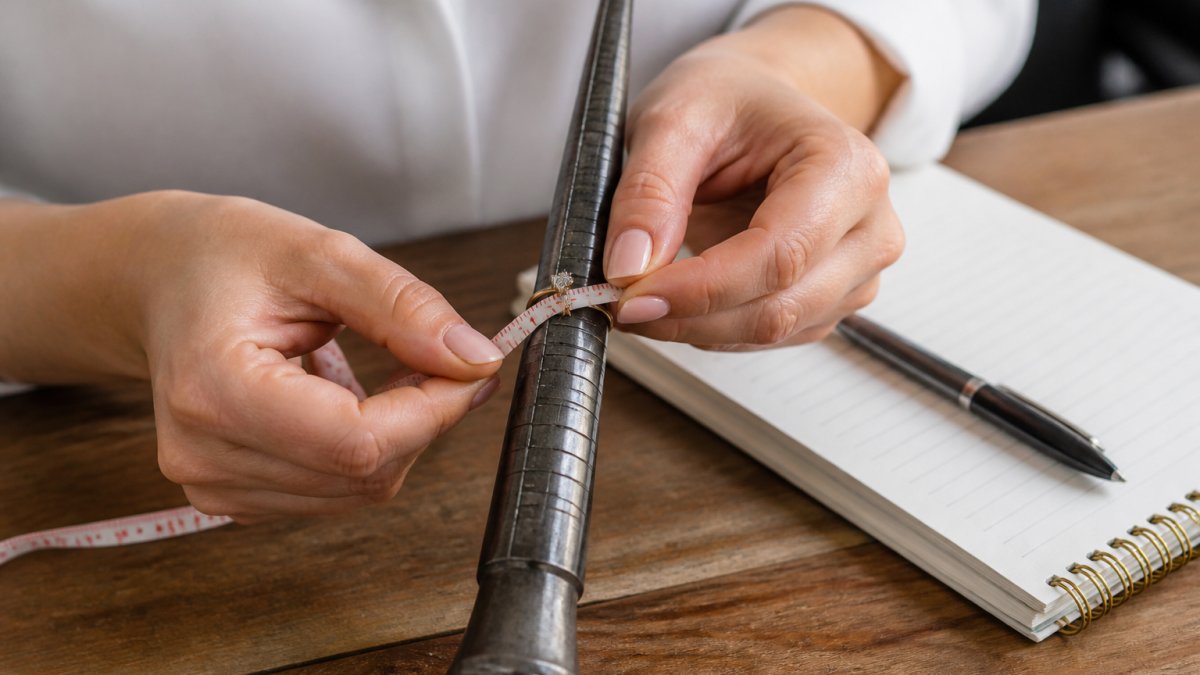
For sizing, visit a jeweler for a professional measurement if you can. At home, measure an existing ring's inner diameter and compare it to a size chart.
Before you order, confirm three things:
- Your ring size matches the band's finished size
- The band clears your setting by at least 1 mm
- The return and resizing policy covers your needs
Native Jewel includes complimentary resizing after purchase and 30-day returns, so a sizing miss is fixable.
Best For
Couples who want a low-profile stack with real sparkle and no soldering. A contoured or slim pave band fits most settings without a spacer.
Conclusion
Getting the geometry right is the hard part, and most couples skip it until the band arrives and does not fit. Measure the clearance, match the metal, and pick a shape that clears the setting. Native Jewel offers IGI-certified lab-grown diamond bands in 14K gold, with handcrafted designs, a lifetime warranty on craftsmanship, and complimentary resizing. Shop rings at Native Jewel and build a stack that fits as well as it looks.
Frequently Asked Questions
Can you wear a wedding band with a low set engagement ring?
Yes, but the band needs to clear the engagement ring's setting. A low profile ring sits close to the finger, so a straight band may rub against the gallery or leave a gap. Curved bands, contoured shanks, or thin spacers solve this. Measure your ring's bridge height first, then choose a band with a profile that fits underneath without pressure.
Do low profile rings require a custom wedding band?
Not always. Many low profile rings work with standard curved or contoured bands available in common widths like 2mm to 3mm. Custom design becomes necessary when the setting is unusually low, the stone shape is elongated, or you want a flush fit with no gap. A jeweler can assess whether an off-the-shelf contoured band fits or if a custom curve is needed.
How do you prevent a gap between your engagement ring and wedding band?
Prevent the gap by choosing a band with a curve that mirrors your engagement ring's profile, or by using a thin spacer ring between them. Solder-free spacers let you remove the band independently. Measure the gap with a strip of paper before ordering.
What is the difference between a contour band and a straight band?
A contour band has a curved shank that arches around the engagement ring's center stone, allowing a flush fit. A straight band has a flat interior profile and sits beside the ring, often leaving a gap with low profile settings. Contour bands suit low set rings; straight bands work best with high-set or bezel settings that sit flat against the finger.


