

Cart
0
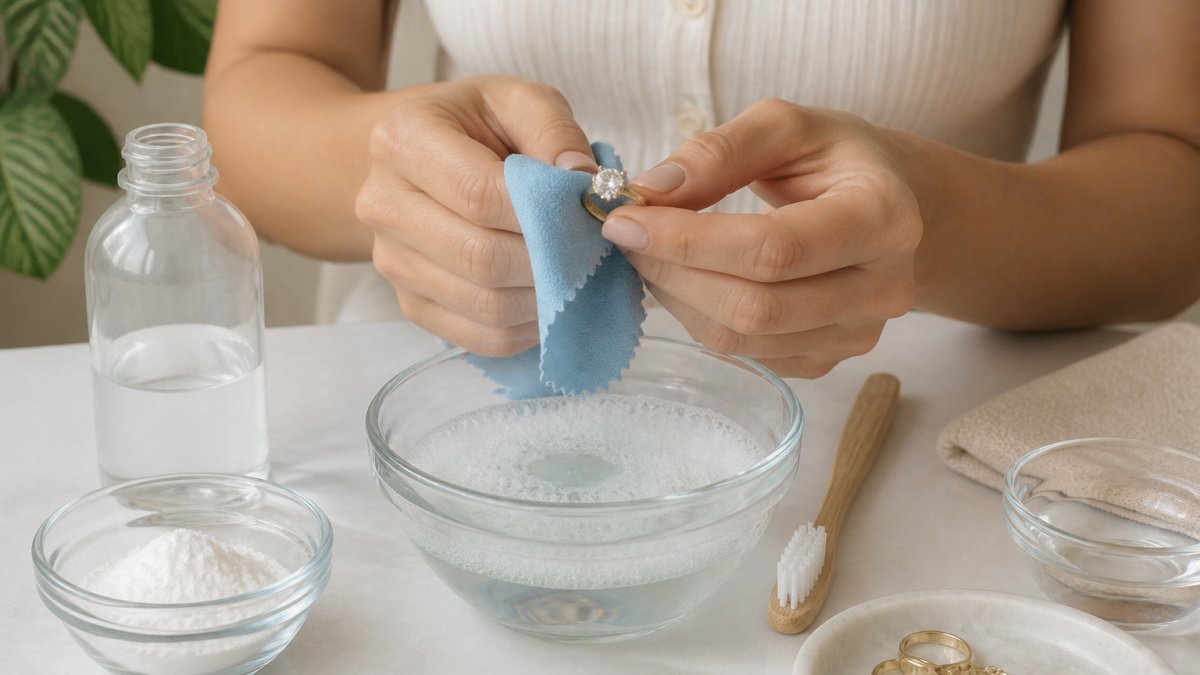
Table of Contents
- How to Clean Diamond Jewelry With Household Items Safely: Step-by-Step
- How to Clean a Diamond Ring With Dish Soap
- How Often to Clean Diamond Jewelry (and Why Timing Matters)
- Common Mistakes When Cleaning Diamond Rings
- Cleaning Different Metals and Settings Without Damage
- Troubleshooting Residue, Cloudiness, and Tarnish
- Safe Storage and Preventative Maintenance for Diamond Jewelry
- Conclusion: Keep the Sparkle Without the Risk
- Frequently Asked Questions
Last Updated: October 2, 2026
How to Clean Diamond Jewelry With Household Items Safely: Step-by-Step
You can clean diamond jewelry at home with mild dish soap, warm water, and a soft-bristled brush in about ten minutes. No harsh chemicals required. This guide from Native Jewel walks you through the safest method, step by step.
Most cleaning mistakes happen fast. A reader scrubs a ring with toothpaste, or soaks it in bleach, and the damage shows up weeks later as a dull stone or a loose prong.
Below, we show you exactly how to clean diamond jewelry with household items safely, plus how often to do it and which products to avoid.
What You'll Need Before You Start
Gather these items first:
- Mild dish soap (no bleach, no lemon scent)
- Warm water in a small bowl
- Soft-bristled baby toothbrush
- Lint-free cloth or microfiber towel
- A small strainer to cover the drain
Before you soak anything, inspect the ring. Look at the prongs and the setting. If a stone moves when you press it gently, stop and see a jeweler first.
The Soak, Scrub, Rinse, and Dry Method
Follow these four steps:
- Soak. Place the jewelry in warm soapy water for 15 to 20 minutes.
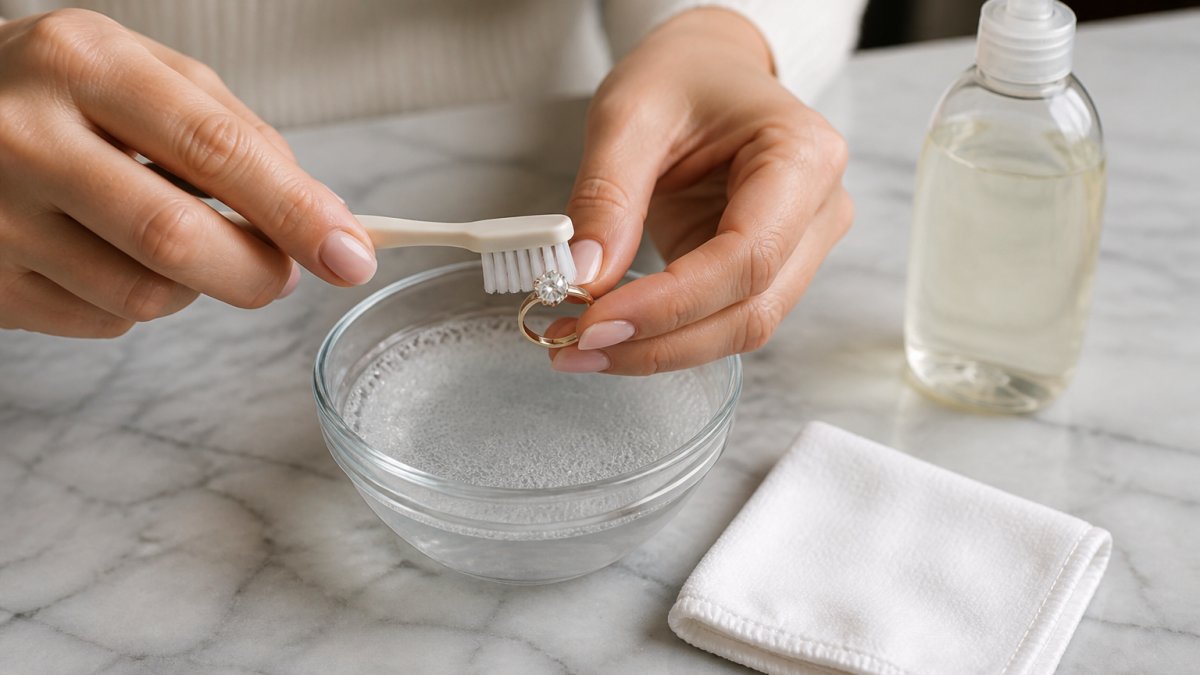
- Scrub. Brush gently around the stone, the prongs, and the underside of the setting.
- Rinse. Hold the piece under warm running water with the drain covered.
- Dry. Pat it dry with a lint-free cloth, then let it air dry fully.
Soak time matters more than scrubbing force. Grime loosens on its own, so you need less pressure on the metal.
Pro Tip
Clean over a bowl, not over the sink. If a stone is loose, the bowl catches it. The sink does not.
How to Clean a Diamond Ring With Dish Soap
Dish soap is the safest household cleaner for diamond rings. It cuts through skin oils and lotion without touching the metal or the stone.
The key is the type of soap. Use a mild, grease-cutting formula with no added bleach, no lemon or citrus scent, and no abrasive particles.
Here is the short version of the dish soap method:
- Add a few drops of mild dish soap to a bowl of warm water.
- Soak the ring for 15 to 20 minutes.
- Brush gently with a soft-bristled brush.
- Rinse and pat dry with a lint-free cloth.
Skip the ultrasonic cleaner unless a jeweler confirms your setting can handle it. Ultrasonic vibration can loosen stones in worn settings.
According to the Gemological Institute of America's jewelry care guidance, gentle soap and water remains the recommended home method for most diamond jewelry.
Watch Out
Never use chlorine bleach on diamond jewelry. It attacks the alloys in white gold and can pit the metal over time.
How Often to Clean Diamond Jewelry (and Why Timing Matters)
Clean your diamond jewelry every two to four weeks for regular wear. Rings worn daily often need weekly cleaning, because soap, lotion, and skin oils build up fast.
A simple rule: if the stone looks cloudy, it is due for a clean. Dull sparkle is almost always surface residue, not damage.
Increase the frequency in these cases:
- You wear the ring to the gym or while gardening
- You apply hand lotion several times a day
- You swim in chlorinated pools
- You cook often and handle raw dough or oils
Diamond jewelry is a long-term purchase, and routine care protects that investment.
Common Mistakes When Cleaning Diamond Rings
The biggest mistake is using an abrasive cleaner. Toothpaste, baking soda paste, and powdered cleansers scratch metal and leave a residue that makes the stone look worse.
Other common mistakes when cleaning diamond rings:
- Soaking in bleach or ammonia-based cleaners
- Scrubbing hard with a stiff brush
- Cleaning over an open drain
- Skipping the rinse, which leaves soap film
- Ignoring loose prongs before cleaning
Key Takeaway
Gentle beats aggressive every time. Warm water, mild soap, and light brushing remove nearly all buildup without risk.
Cleaning Different Metals and Settings Without Damage
The soap-and-water method is safe across every common diamond setting, but the details change by metal and by how the stones are held. Here is what actually differs, and why.
Yellow Gold, Rose Gold, and Platinum
These three metals behave similarly in a home clean because none of them relies on a surface plating.
- Yellow gold is alloyed with copper and zinc for color and strength. Chlorine and ammonia attack those alloying metals over time, which is why bleach and ammonia-based cleaners are off the table even though the gold itself is inert.
- Rose gold gets its color from a higher copper content. Copper reacts to ammonia and to some acidic cleaners, so stick to mild soap and pat it dry rather than letting it air dry, which reduces water-spotting on the warmer tone.
- Platinum is denser and more scratch-resistant than gold, but it develops a matte patina with wear. A soft brush and mild soap will not remove that patina, only a jeweler's polish will, so do not scrub harder trying to restore shine. You will only bend prongs.
White Gold and Rhodium Plating
White gold is yellow gold alloyed with white metals (often palladium or nickel) and then plated with rhodium for the bright white finish. That rhodium layer is what you are actually looking at.
- Rhodium plating wears thin over months to a few years depending on wear. When it thins, the ring looks warmer or slightly yellow, that is not dirt, and no household cleaner will fix it.
- Bleach and chlorine accelerate plating wear and can pit the underlying alloy. This is the single most common cause of permanent damage from home cleaning.
- A jeweler can re-plate white gold, which restores the bright finish. Most practitioners find re-plating is needed every 12 to 24 months for a daily-wear ring.
Pavé, Channel, and Bezel Settings
The setting matters as much as the metal, because it determines how much force the prongs can take.
- Pavé and channel settings hold many small stones in tiny prongs. Those prongs bend easily, so use a soft brush with light pressure and skip the ultrasonic cleaner entirely, vibration loosens small stones in worn settings faster than it cleans them.
- Bezel settings encircle the stone in metal with no exposed prongs, which makes them the easiest and safest to clean at home. A soft brush reaches the gap between stone and bezel without risk.
- Prong settings (the classic solitaire) expose the girdle of the diamond. Brush around the prongs, not across them, and check each prong with a gentle press before and after cleaning.
A Quick Rule for Any Setting
If you cannot see the prongs clearly, do not scrub them. Soak longer instead. Soak time loosens grime without applying force to metal that may already be worn.
Watch Out
Ultrasonic cleaners are marketed as a home shortcut, but they are not safe for every setting. Skip them for pavé, channel, and any ring with a stone that has ever felt loose. A jeweler can confirm whether your specific setting tolerates ultrasonic vibration.
Troubleshooting Residue, Cloudiness, and Tarnish
Cloudiness usually means soap film, not a damaged stone. Rinse the piece again in warm water and dry it with a fresh lint-free cloth.
Tarnish is a metal issue, not a diamond issue. Gold and platinum do not tarnish, but sterling silver does.
Hard water leaves mineral spots. After rinsing, dry the jewelry right away instead of letting it air dry, and the spots will not form.
Here is a quick fix list:
- Cloudy stone: re-rinse and dry with microfiber
- White film: too much soap, use less next time
- Spots: hard water, dry immediately
- Dull metal: polishing cloth
- Loose stone: stop cleaning, see a jeweler
Safe Storage and Preventative Maintenance for Diamond Jewelry
Most guides stop at "store it in a pouch." The more useful skill is knowing how to inspect a piece before you clean it, and how storage choices feed directly into how often you need to clean at all.
Inspect Before You Clean (The Step Most Guides Skip)
Scrubbing a ring with a loose stone is how stones get lost, often down a drain, sometimes in the bowl you thought would catch it. Before any soak or brush, do a 30-second inspection:
- Look at each prong. A prong that has pulled away from the stone, or that looks thinner than its neighbors, is a warning sign.
- Press gently. Use a fingernail or a toothpick to press each prong toward the stone. If it moves, stop. Do not clean. See a jeweler.
- Check the girdle. Tilt the ring under a light. If you can see a gap between the stone's edge and the metal, the setting has loosened.
- Wiggle the stone. With a clean finger, press the stone side to side. Any movement means the setting needs professional attention.
If all four checks pass, proceed with the soak-and-scrub method. If any fail, the cheapest repair you will ever make is the one you do before the stone falls out.
How Storage Prevents Future Buildup
Storage is not just about avoiding scratches, it is about slowing how fast grime accumulates.
- Store pieces separately. Diamonds are the hardest gemstone and will scratch gold, platinum, and softer gems (like sapphires or emeralds) if they share a compartment. Use a soft pouch or a lined slot for each piece.
- Keep the clasp or band dry. Moisture trapped in a closed box encourages tarnish on sterling silver components and can leave mineral deposits on gold. Make sure pieces are fully dry before storing.
- Avoid open-air displays for daily-wear rings. A ring left on a countertop collects dust, hairspray, and cooking aerosol, the same residue you are trying to remove. A closed box slows that buildup.
- Do not store in a bathroom. Humidity from showers keeps the air moist, which accelerates tarnish on silver and can leave spots on gold.
Preventative Habits That Cut Cleaning Frequency
A few habits reduce how often you need to clean at all:
- Put jewelry on last, after lotion, perfume, and hairspray have dried.
- Take rings off before swimming, cleaning with chemicals, or working out.
- Remove rings before handling raw dough, oils, or anything sticky.
- Check prongs monthly with the four-step inspection above.
- Get a professional cleaning and inspection once a year, a jeweler can see prong wear you cannot.
A yearly check catches worn prongs before a stone falls out, and it keeps the cleaning schedule honest. If you want a piece built to hold up to daily wear, Native Jewel offers IGI-certified lab-grown diamonds in handcrafted 14K gold settings, with a lifetime warranty on all diamond jewelry.
Pro Tip
Keep a dedicated soft pouch and a small lint-free cloth with your jewelry box. Having the cloth on hand makes it easy to wipe a ring dry after washing hands, which prevents the soap-film and hard-water spots that send people back to the cleaning bowl.
Conclusion: Keep the Sparkle Without the Risk
Cleaning diamond jewelry at home is safe when you stick to mild soap, warm water, and a soft brush. The risk comes from harsh chemicals and hard scrubbing, not from cleaning itself.
Native Jewel handcrafts each piece with IGI-certified lab-grown diamonds and ethically sourced 14K gold, backed by a lifetime warranty and 30-day hassle-free returns.
Get started with Native Jewel and find a piece worth caring for.
Frequently Asked Questions
What is the best homemade jewelry cleaner for diamonds?
A mix of mild dish soap and warm water is the safest homemade cleaner for diamond jewelry. Add a few drops of soap to a bowl of warm water, soak the piece for 15 to 20 minutes, then scrub gently with a soft-bristled brush. Rinse thoroughly and pat dry with a lint-free cloth. Avoid abrasive cleansers, chlorine bleach, and toothpaste, which can scratch metal or loosen prongs over time.
Can I clean diamonds with Dawn dish soap?
Yes, Dawn and similar mild dish soaps are safe for diamond jewelry when diluted in warm water. The key is to use a small amount and avoid any formula with added moisturizers, citrus, or bleach. Soak for 15 to 20 minutes, scrub with a soft-bristled brush, rinse under warm running water with the drain closed, and dry with a microfiber or lint-free cloth to prevent water spots.
How often should I clean my diamond engagement ring?
Clean your diamond engagement ring every one to two weeks if you wear it daily. Lotions, hand sanitizers, and natural skin oils build up behind the stone and dull its sparkle. A quick soak in mild dish soap and warm water takes about five minutes. If you notice visible film or the stone looks cloudy, clean it right away rather than waiting for a scheduled session.
What household items should I avoid when cleaning fine jewelry?
Skip chlorine bleach, toothpaste, abrasive cleansers, ammonia on certain gemstones, and harsh bathroom or glass cleaners. These can damage metal settings, strip finishes, or harm softer stones like pearls and opals. Even on diamond-only pieces, bleach can weaken alloys in white gold or platinum over repeated exposure. Stick with mild dish soap, warm water, a soft-bristled brush, and a lint-free cloth for safe routine cleaning.


