

Cart
0

Quick Summary
Identify high quality gold hallmarks by reading the karat or fineness stamp, such as 14K or 585, and checking it against the piece's color and weight. A gold hallmark tells you only the declared gold content, not the maker, stone quality, or value, so verify it with a chart, a loupe, and a jeweler.
- Karat stamps like 14K (58.3% gold) and 18K (75% gold) show the declared gold content.
- Fineness numbers such as 585 equal about 14K and 750 equals 18K.
- Gold-filled, GF, GP and vermeil marks indicate plating or a thin layer, not solid gold.
- Check worn or small stamps under bright light with a 10x loupe, photographing from several angles.
- Confirm a stamp with a jeweler using non-destructive testing and ask for written results.
Table of Contents
- What Gold Hallmarks Tell You and What They Don't
- Reading Karat Stamps: A Visual Reference for 10K, 14K, 18K and 24K
- Gold Jewelry Stamps List: Common Marks and What Each One Means
- Using a Gold Hallmark Identification Chart to Decode a Piece
- Letter Markings on Gold Jewelry: Date Letters, Maker's Marks and Assay Marks
-
Step-by-Step: Inspecting Worn or Small Hallmarks and Verifying Them
- Step 1: Set up lighting and magnification
- Step 2: Check every likely location on the piece
- Step 3: Document what you see before interpreting it
- Step 4: Cross-check the mark against the piece itself
- Step 5: Use safe, non-destructive checks first
- Step 6: Understand the limits and risks of acid testing
- Step 7: Cross-check against records and documentation
- Step 8: Know when to seek professional testing
- Spotting Counterfeit and Misleading Marks
- Next Step: Choosing Gold Pieces You Can Verify With Confidence
- Frequently Asked Questions
What Gold Hallmarks Tell You and What They Don't
Last Updated: November 16, 2026
A gold hallmark is a small stamp on jewelry showing its metal content, usually a karat mark like 14K or 18K, or a fineness number like 585 or 750.
A hallmark tells you the gold content the maker declares. It does not prove who made the piece, where it was sold, or what it is worth.
Here is what a clean, readable stamp usually tells you:
- The gold purity, such as 14K (58.3% gold) or 18K (75% gold)
- Sometimes the maker's or manufacturer's mark
- In some countries, an assay office mark or date letter
Here is what it usually does not tell you:
- The quality of the stone set in the piece
- The quality of the craftsmanship or solder joints
- Whether the gold is recycled, mined responsibly, or traceable
Watch out: A stamp can be worn, faded or added by someone passing off a piece as something it is not.
Reading Karat Stamps: A Visual Reference for 10K, 14K, 18K and 24K
Karat measures how much of a gold alloy is pure gold, out of 24 parts. Pure 24K gold is very soft, so jewelers mix it with metals like copper, silver or zinc for strength.
Here are the most common karat stamps you will see in the United States:
| Stamp | Gold Content | Common Use |
|---|---|---|
| 10K | 41.7% | Durable everyday pieces, class rings |
| 14K | 58.3% | Popular for engagement rings and daily wear |
| 18K | 75% | Richer color, often pricier and softer |
| 24K | 99.9% | Very soft, rarely used for jewelry |
14K is a common balance of color, strength and value. 18K gold has a deeper color.
Numerical Fineness Marks and Their Karat Equivalents
Many pieces, especially those made outside the United States, use a three-digit number instead of a karat stamp. This is the fineness, or gold content in parts per thousand.
- 375 = 9K (37.5% gold)
- 585 = 14K (58.5% gold, rounded from 58.3%)
- 750 = 18K (75% gold)
585 on a ring means roughly the same as 14K. Converting the number to karats helps you compare pieces side by side.
Declared gold content by karat stamp
10K gold content 41.7%
14K gold content 58.3%
18K gold content 75%
24K gold content 99.9%
Gold Jewelry Stamps List: Common Marks and What Each One Means
Stamps vary, but these are the ones shoppers see most often:
- Karat marks (10K, 14K, 18K): the declared gold content
- Fineness numbers (375, 585, 750): the same idea in parts per thousand
- Maker's marks: initials or a symbol identifying the manufacturer
Gold-filled and gold-plated pieces can look just like solid gold. Check the mark before you pay solid gold prices.
Using a Gold Hallmark Identification Chart to Decode a Piece
A gold hallmark identification chart lists stamps side by side so you can match what you see. Write down every mark on the piece, even partial ones, then compare each against the chart.
A simple process works well:
- Note the karat or fineness mark first
- Check for a maker's mark or symbol
- Look for letters or small symbols near the stamp
Charts list common stamps, but not every maker used every system. If the piece also has diamonds, lab grown diamond grading standards explained covers the grading that may accompany the stone.
Letter Markings on Gold Jewelry: Date Letters, Maker's Marks and Assay Marks
Letters and symbols on gold jewelry fall into several categories, and their meaning depends on where and when the piece was made. Applying one country's conventions to another's jewelry is a common source of confusion.
The main categories of letter and symbol marks
- Maker's marks: Initials, names, or symbols identifying the company or workshop that produced the piece. In the United States, maker's marks are not centrally registered or legally required on all jewelry, so they vary widely.
- Date letters: Letters or letter-and-symbol combinations used in some countries to indicate the year a piece was assayed and marked. These are most associated with British hallmarking but appear in other systems as well.
- Assay office marks: Symbols from an official testing office confirming the metal was checked. The mark usually identifies the office rather than the individual tester.
How hallmark systems differ by country
United States: No federal hallmarking system requires independent assay of gold jewelry.
United Kingdom: The U.K. has one of the longest-running hallmarking systems.
Continental Europe: Many European countries have historically required official assay and hallmarking, with purity marks, maker's marks, and sometimes date or office marks.
Other regions: Several countries operate national assay or hallmarking systems with their own symbols and legal requirements.
How era affects what you see
Hallmarking practices have changed over time. Older pieces may carry hand-struck marks that are uneven or worn, while modern pieces may carry tiny, precise laser-engraved marks. Date letter cycles reset and change format, so a date letter must be read against the reference for its specific office and period. A mark inconsistent with a piece's stated age is a reason to ask questions, not proof of fraud.
Reading mixed, partial, and conflicting marks
Real jewelry often carries combinations of marks rather than a single clean stamp. Common patterns include:
- A purity stamp plus a maker's mark, with no assay mark
- A worn date letter that is only partially legible
- A stamp that appears to have been added later or altered
When marks conflict, do not assume the most convenient one is correct. Compare them to the piece's construction, weight, and history, and seek a professional opinion if the stakes are high.
What a hallmark can and cannot establish
A hallmark can establish a declared gold content and, in some systems, identify the maker and assay office. It cannot establish craftsmanship quality, stone quality, condition, authenticity of the maker's claim, or resale value. Treat the hallmark as one input among several, and verify it against the piece and its documentation.
Step-by-Step: Inspecting Worn or Small Hallmarks and Verifying Them
Small or worn stamps can be hard to read, and a readable stamp can still be wrong. This workflow combines inspection with verification so you are not relying on a single mark.
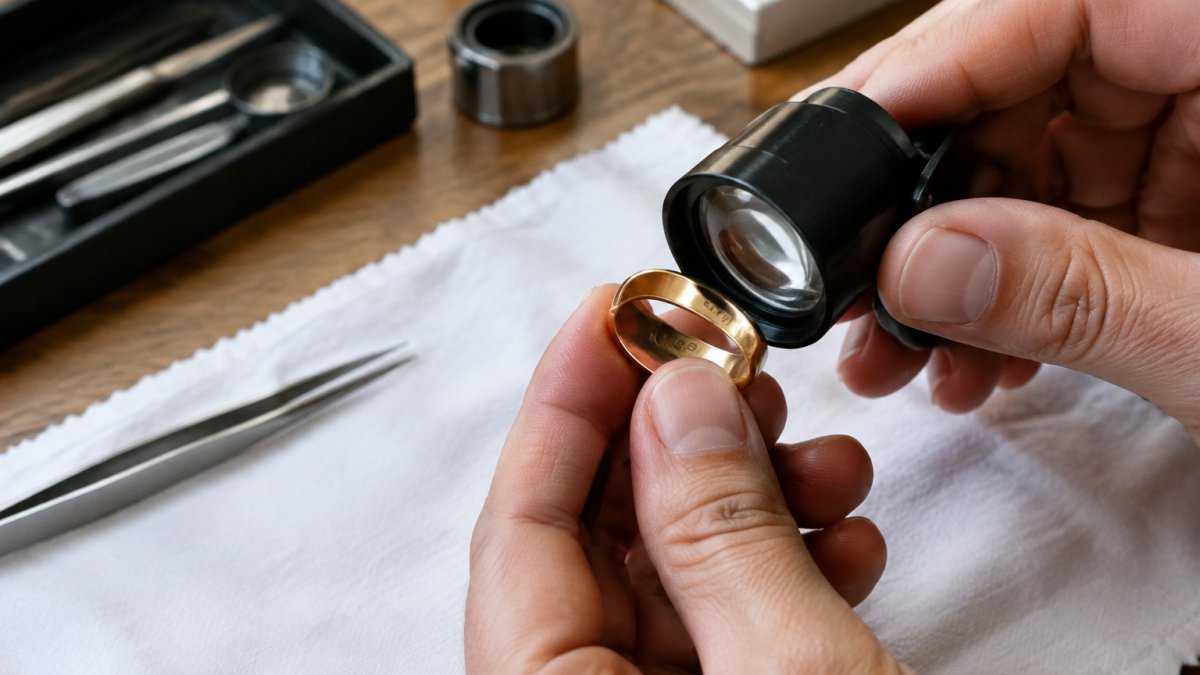
Step 1: Set up lighting and magnification
Work near a bright window or under a daylight lamp with a color temperature near 5000K to 6500K. A 10x jeweler's loupe is the standard tool; a phone with a macro lens or clip-on attachment also works if stabilized at the highest resolution. Take photos from multiple angles, including raking light to reveal shallow or worn strikes.
Step 2: Check every likely location on the piece
Stamps are not always where you expect. Check the inner shank of rings, the clasp and jump rings on chains, the back of pendants and brooches, the inside of bracelet clasps, and the posts or backs of earrings. On hollow or lightweight pieces, stamps may be on a small tag rather than the main body.
Step 3: Document what you see before interpreting it
Write down every character, symbol, and partial mark. Note whether the strike is crisp, shallow, doubled, or uneven. Photograph the mark next to a scale reference if possible. This record matters if you later compare the piece to a seller's description or ask a jeweler for an opinion.
Step 4: Cross-check the mark against the piece itself
A hallmark is a claim, not a proof. Compare the stamp to the item's construction and appearance:
- Color: 14K yellow gold and 18K yellow gold look different; 18K is deeper and richer. A piece stamped 18K that looks pale yellow is worth a second look.
- Weight and heft: Solid gold feels denser than gold-plated base metal of the same size. A hollow piece can still be solid gold, but the weight should be plausible for the stated karat and dimensions.
- Wear patterns: Plating can wear through at high-friction points such as ring shanks and clasp edges, revealing a different color underneath. Solid gold wears but does not flake or expose a base layer.
Step 5: Use safe, non-destructive checks first
Non-destructive testing is the safest route for a piece you do not own yet or cannot risk damaging. A jeweler can use an electronic gold tester or X-ray fluorescence (XRF) to estimate surface composition without scratching the piece.
Watch out: Do not rely on a magnet test or a tarnish test. These methods are unreliable and do not confirm gold content.
Step 6: Understand the limits and risks of acid testing
Acid testing, or touchstone testing, involves rubbing the metal on a stone and applying nitric acid solutions. It is common in pawn shops and some jewelry stores, but it can leave a small mark, results depend on the tester's skill and acid strength, and it tests only the surface. For a piece you are considering buying, ask whether any testing has been done and whether it was destructive.
Step 7: Cross-check against records and documentation
A hallmark becomes more trustworthy when it aligns with independent records. Ask the seller for receipts, appraisal reports, grading lab certification for stones, or manufacturer paperwork. For pieces described as antique or from a specific maker, compare the mark to published maker's mark references and, where applicable, assay office records. A reputable seller should be able to explain what the marks mean and where the piece came from.
Step 8: Know when to seek professional testing
Bring the piece to a jeweler or appraiser when any of the following apply:
- The mark is worn, partial, or unreadable
- The stamp conflicts with the piece's appearance, weight, or stated history
- The price is significant enough that a wrong call would be costly
A professional opinion is not a guarantee, but it adds accountability a stamp alone cannot provide. Ask what method the jeweler uses, whether it is destructive, and whether they will put their findings in writing.
Spotting Counterfeit and Misleading Marks
Counterfeit and misleading marks are common enough to check for. Watch for these red flags:
- A karat stamp that looks uneven, shallow or freshly scratched
- A stamp that does not match the piece's color or weight
- Marks that appear to be added or altered around the original
Many misleading pieces use a stamp that suggests solid gold when the item is only plated. Always confirm whether a piece is solid gold, gold-filled or gold-plated.
Next Step: Choosing Gold Pieces You Can Verify With Confidence
Once you can read a hallmark, you can shop with more confidence. Look for pieces with clear karat stamps, honest descriptions and a seller who explains what each mark means. Native Jewel offers 14K gold fine jewelry, including IGI-certified lab-grown diamond pieces, with a lifetime warranty on all diamond jewelry and 30-day hassle-free returns. Browse our rings to see how a clear 14K stamp looks on a finished piece:
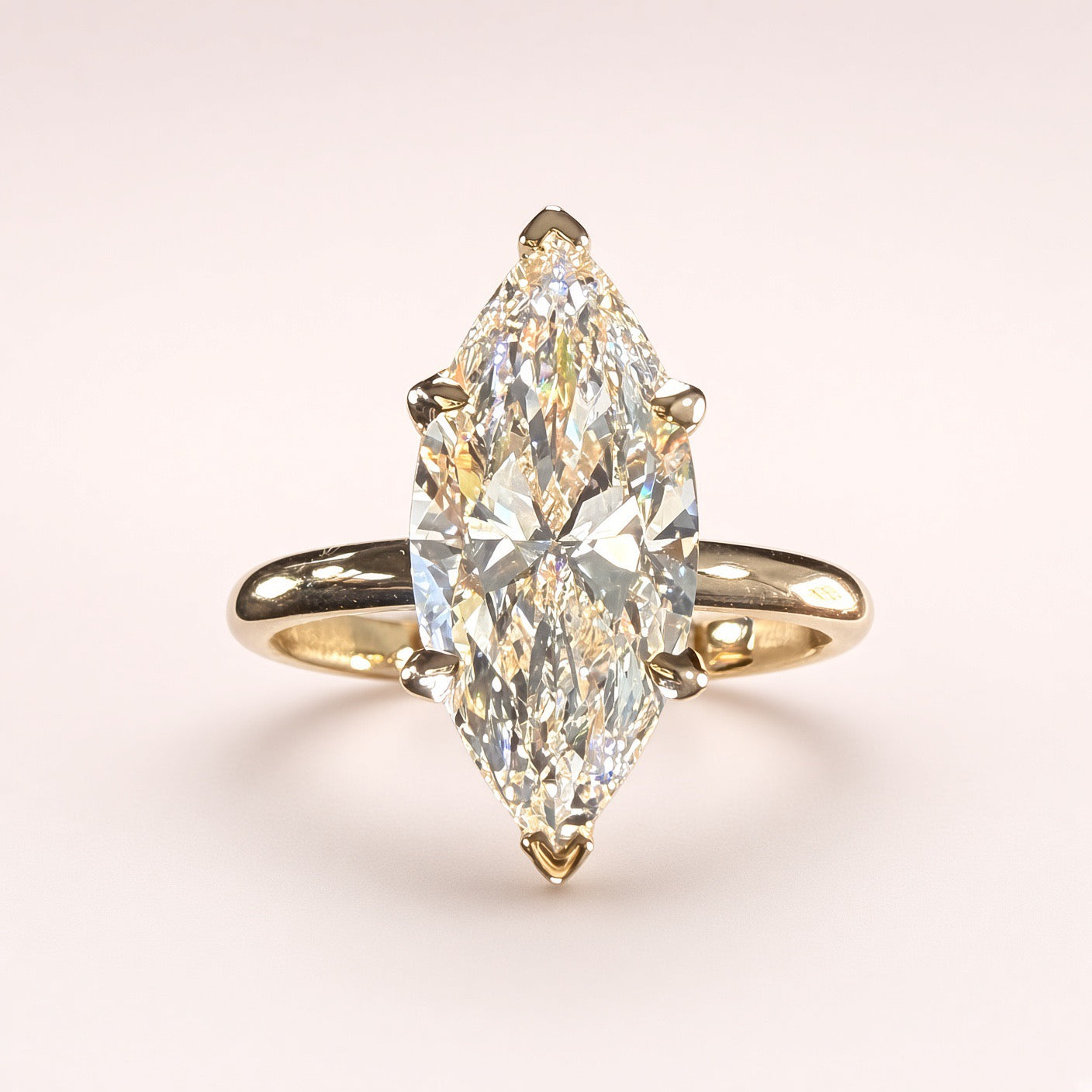
- 3 Carat Marquise Solitaire Engagement Ring | 14K Yellow Gold, $3,200.00
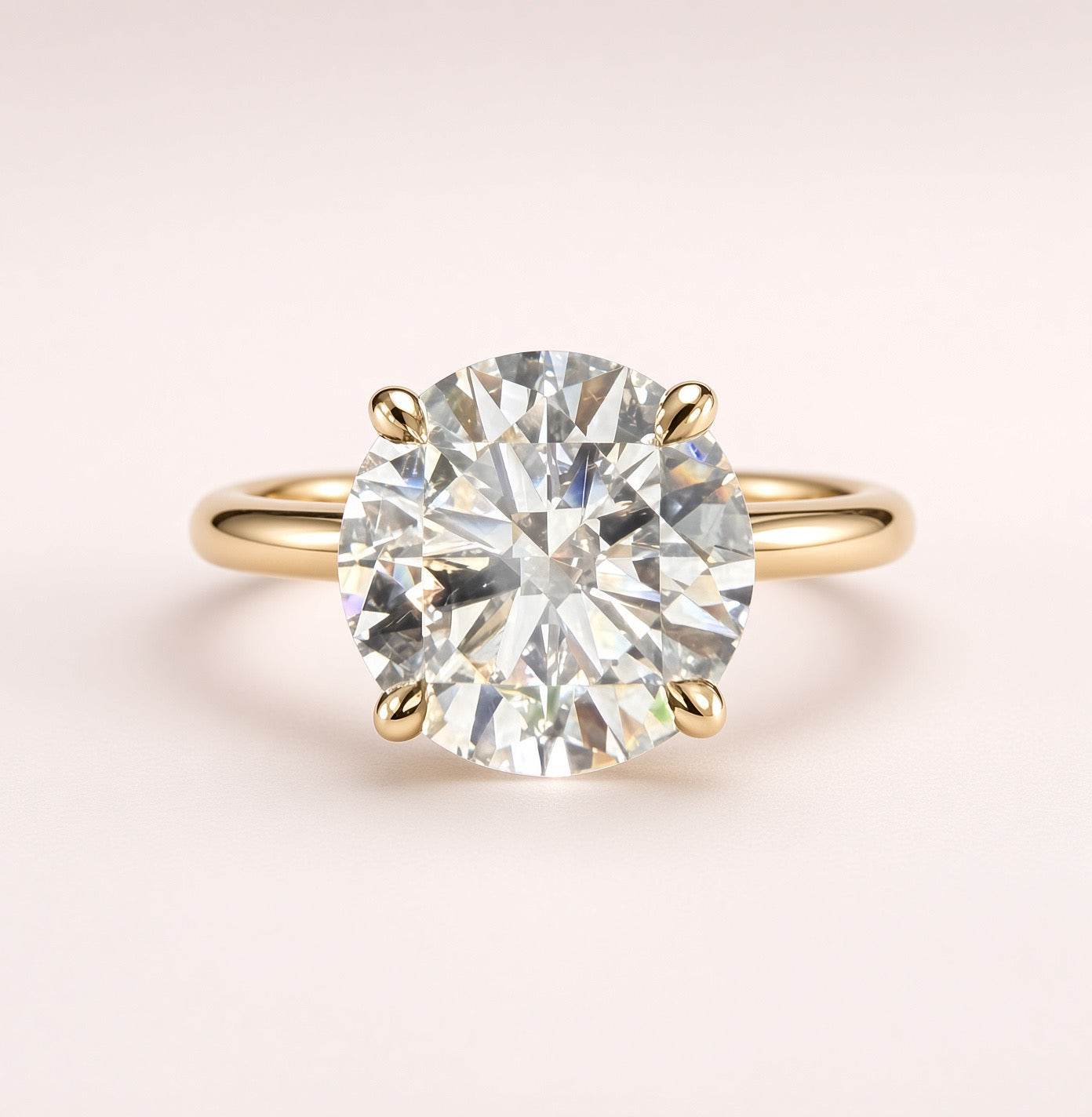
- 3 Carat Round Solitaire Engagement Ring | 14K Yellow Gold, $3,200.00
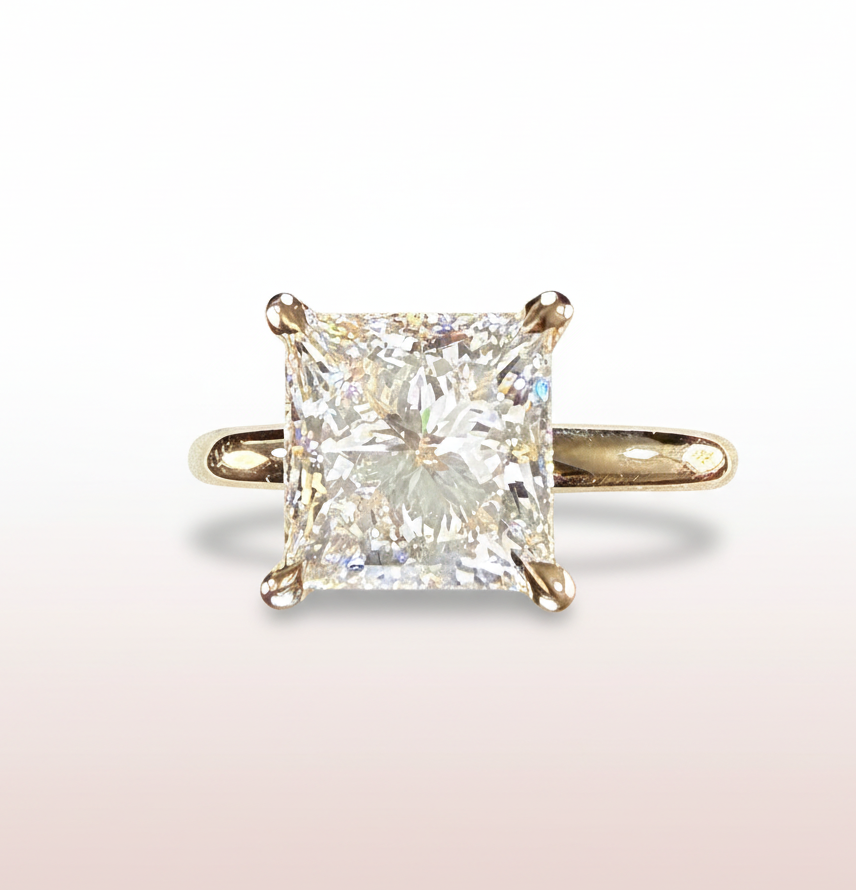
- 3.00ct Princess-Cut Lab Diamond Solitaire Engagement Ring | 14K Yellow Gold, $3,200.00
Before any purchase, ask the seller to show you the stamps, confirm the metal content in writing, and explain their return policy. A trustworthy seller will welcome those questions. To learn which certifications lab-grown diamonds carry, read what certification do lab-grown diamonds get?
Frequently Asked Questions
What do 10K, 14K, and 18K stamps mean on jewelry?
A stamp shows the gold content of a piece. 10K means 10 parts of gold out of 24, about 41.7 percent pure gold. 14K is 58.3 percent and 18K is 75 percent. The remaining share is alloy metals such as copper, silver or zinc, which add strength and change color. 24K is pure gold but is too soft for most everyday jewelry, so it is rarely used for rings or chains. A 14K stamp is a common choice for durable fine jewelry, including Native Jewel's 14K yellow gold engagement rings.
How do you identify a gold jewelry maker's mark?
A maker's mark is usually a small symbol, initials or a registered logo struck near the karat stamp. Compare it against a published hallmark database or a reference book, and check whether the marks match the country and era the piece claims to come from. Because a maker's mark identifies who produced the piece, it does not by itself prove purity. Confirm the karat stamp separately and, for valuable pieces, ask a qualified appraiser to verify both.
Can gold jewelry be genuine without a hallmark?
Yes. Some genuine gold pieces carry no stamp, especially older, handmade, very small or custom-made items, and pieces made before hallmarking was required in a given place. A missing hallmark does not prove a piece is fake, but it removes one easy check. In that case, rely on a professional assay or acid and density testing from a qualified jeweler, and keep your receipts and any documentation from the seller.
How can you verify a gold hallmark before buying jewelry?
Start by confirming the stamp is clear, consistent in font and depth, and placed where stamps normally appear, such as inside a ring band or on a clasp. Cross-check the mark with a hallmark identification chart, then ask the seller for a written description of the metal and karat. Magnet tests and toothpaste or vinegar tests are unreliable and can damage the surface. A certified appraiser can confirm purity without damaging the piece. Native Jewel provides a lifetime warranty on craftsmanship and 30-day returns on purchases.


