

Cart
0

Last Updated: November 19, 2026
Quick Summary
Lab grown diamonds are popular because they are real diamonds with the same carbon crystal structure as mined stones, sold at a lower price. Buyers can put more of their budget into size, quality and setting while getting a clearer origin story.
- Lab grown diamonds have the same carbon crystal structure as mined diamonds.
- Their lower retail price lets buyers spend more on stone size, quality or setting.
- Both types are graded on the 4Cs, so compare the grading reports line by line.
- Lab grown stones lose value faster on resale, so they suit buyers who keep the ring.
- Our 2ct oval solitaire in 14K yellow gold is $2,100.00 with an IGI certificate.
Ready to choose a lab grown ring?Native Jewel offers IGI-certified lab grown diamond rings in 14K gold, with complimentary resizing included.
Shop Lab Grown Rings
Table of Contents
- Why Lab Grown Diamonds Are Suddenly Everywhere
- Are Lab Grown Diamonds Real?
- How Lab Grown Diamonds Are Made
- Lab Grown Diamond vs Mined Diamond: Price, Quality and Value
- Resale Value and Long-Term Price Volatility
- The Downsides of Lab Grown Diamonds
- Choosing Your Lab Grown Ring: Next Steps With Native Jewel
- Frequently Asked Questions
Lab grown diamonds have moved from a niche curiosity to a mainstream option in fine jewelry over the last several years. Couples planning a proposal, gift shoppers and budget-minded buyers are all asking the same question: why are lab grown diamonds becoming popular? This guide walks through the main reasons buyers are choosing them, and where the trade-offs still matter.
Why Lab Grown Diamonds Are Suddenly Everywhere
Lab grown diamonds are growing in popularity because they offer the same physical diamond at a lower price, with a clearer origin story. Buyers who once would not consider anything but a mined stone now compare the two directly, often with a grading report in hand.
A common mistake is assuming this is a passing trend. The shift has been building for years, and it reflects several changes at once: better production methods, more transparent certification, and buyers who want more of their budget spent on the stone and setting rather than on the mining supply chain.
Are Lab Grown Diamonds Real?
Yes. A lab grown diamond is a real diamond, made of the same carbon crystal structure as a mined diamond. It is not a simulant like cubic zirconia or moissanite, which are made from different materials and look different under testing.
What separates a real diamond from a simulant is its chemical composition and crystal lattice, which a gemological lab can confirm. That is why certification matters more than the word "lab grown" on a product page. For the reasons this distinction matters to buyers, see our guide on GIA's overview of lab-grown diamond identification.
How Lab Grown Diamonds Are Made
Lab grown diamonds are created in one of two ways: high-pressure high-temperature (HPHT), which recreates the conditions deep in the earth, or chemical vapor deposition (CVD), which builds the crystal layer by layer from a carbon-rich gas. Both methods produce diamonds that are chemically and optically identical to mined stones.
The method affects cost and sometimes the growth pattern a lab can detect under magnification, but it does not change the fact that the finished stone is diamond. Buyers do not need to choose a method; they need a clear grading report that documents the stone.
Lab Grown Diamond vs Mined Diamond: Price, Quality and Value
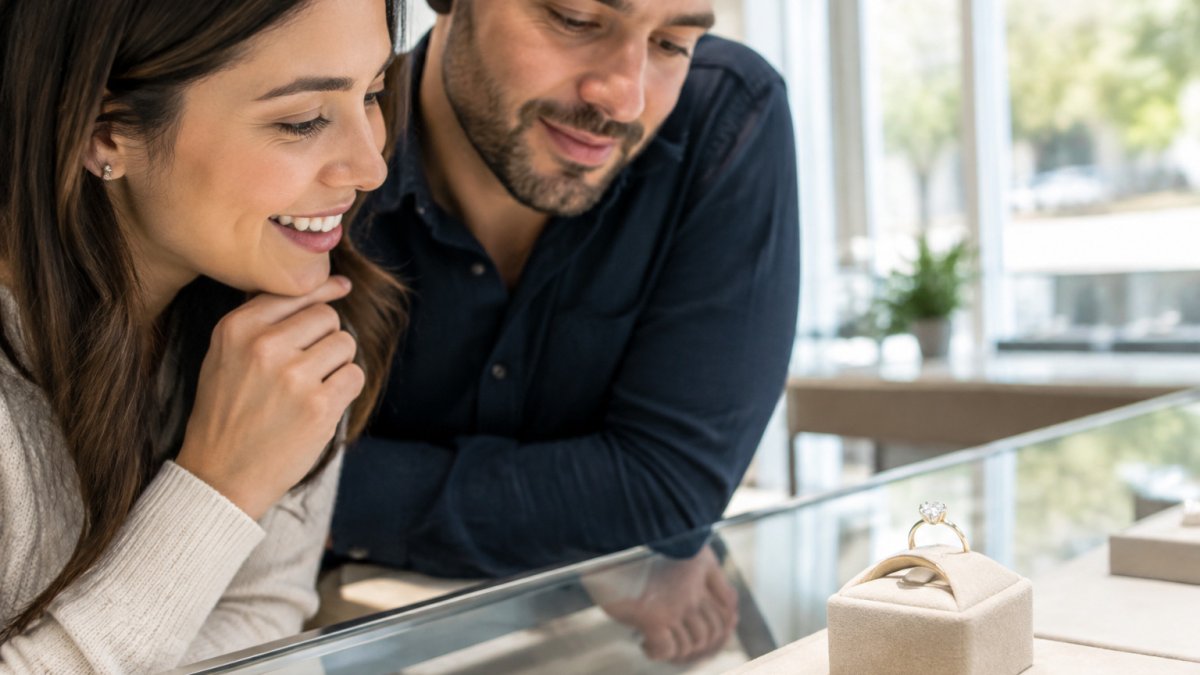
The most visible difference between the two is price, but quality and value depend on what you are buying and how you evaluate it. To see the numbers side by side, read the lab-grown versus natural diamond price comparison. A lab grown stone and a mined stone of the same grade can look nearly identical under a loupe, so the comparison comes down to budget, priorities and what you expect the stone to do for you over time.
Why the Price Gap Exists
Mined diamonds carry costs that lab grown stones do not: exploration, extraction, land rehabilitation, and a supply chain that moves rough stones through multiple dealers before cutting. The result is a retail price gap that varies by size, shape and grader.
What the Price Difference Buys
Because the gap is large, buyers can redirect budget in three ways: a larger stone at the same spend, a higher color and clarity grade at the same carat, or a more detailed setting and metal. A better cut is often the highest-return upgrade because cut drives light performance more than any other factor.
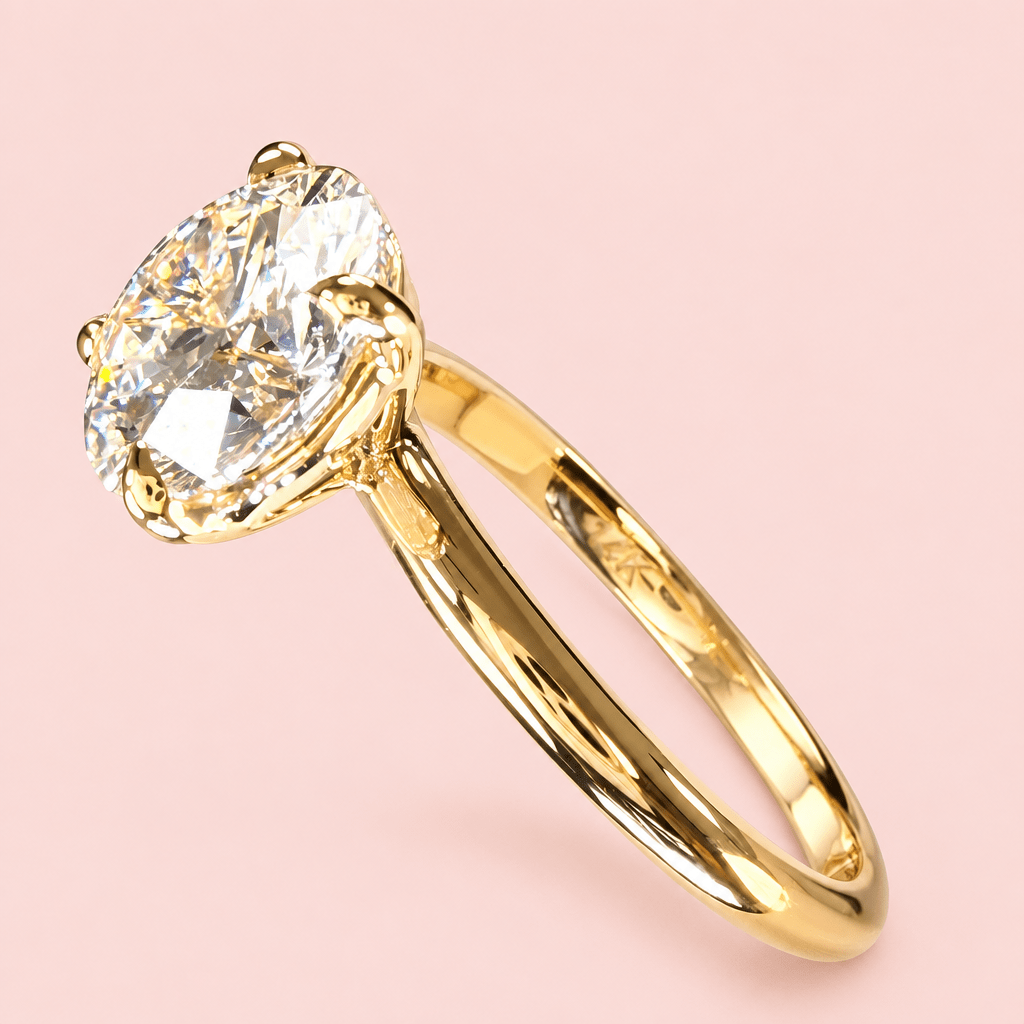
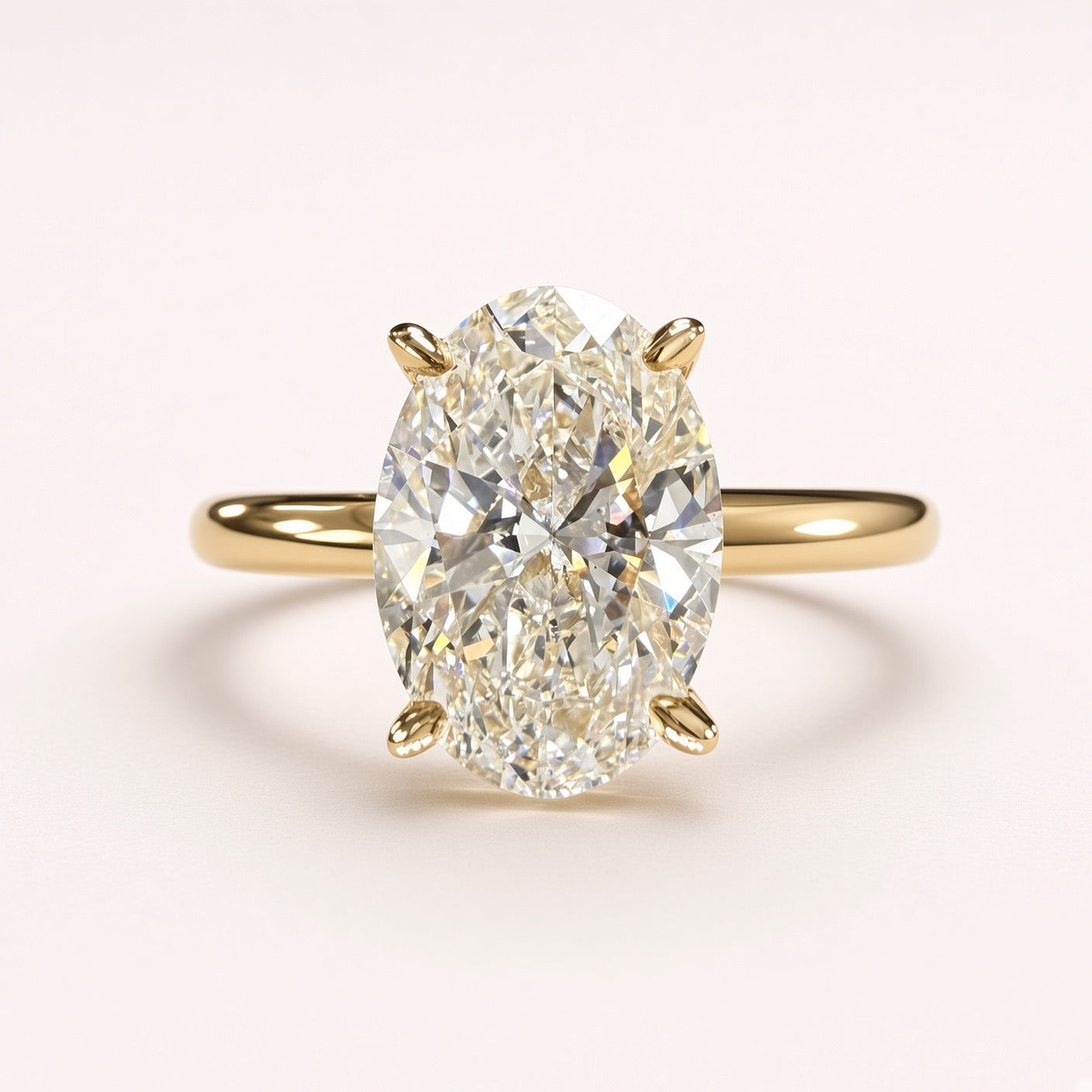
Our 2ct oval solitaire in 14K yellow gold, for example, is priced at $2,100.00, with an IGI certificate and complimentary resizing included. A 1.50ct round pavé ring in the same metal is $1,900.00.
Quality: Same 4Cs, Different Paper Trail
Both lab grown and mined diamonds are graded on the 4Cs: cut, color, clarity and carat. Our lab grown diamond quality guide explains how to read a grading report before you buy. The difference is the report. Lab grown stones are typically graded by a gemological laboratory, and the report should state that the stone is lab grown. When comparing two stones, compare the reports line by line rather than the marketing copy.
Value: Purchase Price Is Not the Same as Resale
Value means different things to different buyers. If value means the look and size of the stone on the hand for a given budget, lab grown wins clearly. If value means a store of wealth you can recover later, lab grown is a poor fit, because resale prices have fallen as production has scaled and the secondary market is thinner. Treating a lab grown ring as a purchase for use, not an asset, is a reasonable way to budget for it.
Watch out: a lower purchase price can feel like a bargain while the resale gap is much wider than buyers expect, so decide before you buy whether resale matters at all.
A Quick Decision Framework
Choose lab grown if your priority is maximum stone quality and size within a fixed budget, you want a documented origin story, and you plan to keep and wear the ring. Choose mined if rarity, natural origin and resale expectations matter more to you than size for the money. Neither choice is wrong; the mistake is buying one while expecting the other's economics.
The table below summarises the price, quality and resale differences the article describes between lab grown and mined diamonds.
| Factor | Lab grown diamond | Mined diamond |
|---|---|---|
| Purchase price | Lower retail price for same spend | Higher retail price; includes mining costs |
| Physical makeup | Same carbon crystal structure as mined | Natural carbon crystal structure |
| Grading | Graded on the 4Cs; report should state lab grown | Graded on the 4Cs |
| Resale value | Falls more quickly; thinner secondary market | Resale gap is narrower, per article |
| Best for | Size and quality within a fixed budget | Rarity, natural origin and resale |
| Our 2ct oval solitaire | $2,100.00 with IGI certificate | Not stated in article |
Resale Value and Long-Term Price Volatility
This is where expectations most often go wrong. Lab grown diamonds have fallen in price more quickly than mined diamonds as production has scaled, and most lab grown stones are not bought as investments. For a detailed breakdown, see lab grown diamond resale value and what to expect. Their value is in the look, the certification and the meaning of the gift.
If you are buying a ring to keep and wear, resale value should matter less than the stone's quality and the setting's craftsmanship. If you expect to resell, plan on a value well below your purchase price, and treat the ring as a purchase for use rather than storage.
The Downsides of Lab Grown Diamonds
Lab grown stones are not right for every buyer. Their resale market is thinner and prices have been falling, so they are a poor choice for anyone who wants a store-of-value asset. Some traditional jewelers also still discount them, which can make appraisal and insurance more complicated.
There is also a question of sentiment. Some buyers want a stone with a natural origin story, and no grading report will change that. Consider these trade-offs honestly before you decide.
Choosing Your Lab Grown Ring: Next Steps With Native Jewel
Start by deciding your budget, then your priorities: stone size, color and clarity, metal and setting. Our 2ct oval lab diamond engagement ring in 14K yellow gold is a strong choice if you want the diamond to be the entire statement, and our 1.50ct round lab diamond solitaire in 14K yellow gold suits a classic, understated look.
Before you buy, review our fine jewelry return policy, which covers our 30-day returns. Rings include complimentary resizing, and diamond jewelry carries a lifetime warranty.
Frequently Asked Questions
Are lab grown diamonds real diamonds?
Yes. Lab grown diamonds have the same carbon crystal structure, chemical composition and optical properties as mined diamonds. They are graded with the same 4Cs (cut, color, clarity and carat weight) and can be certified by laboratories such as IGI. The difference is origin: they are grown in a lab using high-pressure high-temperature or chemical vapor deposition rather than formed in the earth. Only specialized equipment can tell them apart from natural stones, which is why a grading report matters when you buy.
Do lab grown diamonds lose value?
Lab grown diamonds typically resell for far less than they cost new, and prices have fallen as production has scaled. Mined diamonds also lose resale value, so neither is a reliable investment. Buy a lab grown diamond for its beauty, its price and its ethical profile rather than as a store of wealth, and keep its IGI report with the ring.
What are the downsides of lab grown diamonds?
The main downsides are resale value, which is low and volatile, and the fact that a lab grown stone does not carry the rarity or history some buyers want from a natural diamond. Some jewelers also dislike the product because it reduces demand for mined stones. Lab grown production still uses energy, so sustainability claims depend on the grower's energy sources. Weigh these points against your own priorities before buying.
How do I verify a lab grown diamond is certified?
Ask for the grading report from IGI, the International Gemological Institute, which identifies the stone as lab grown and lists its carat weight, color, clarity and cut. Native Jewel includes IGI certification with its lab grown diamond pieces, so you can check the documentation before committing to a purchase.


