

Cart
1

Last Updated: October 24, 2026
Quick Summary
Lab-grown diamond price typically ranges from $1,500 to $2,500 per carat, which is 40-50% less than natural diamonds with identical specifications. Lab-grown diamonds are produced in controlled environments over weeks, while natural diamonds form over billions of years and require costly mining operations.
- A 1-carat lab-grown diamond costs $1,500-$2,500 compared to $3,000-$6,000+ for natural diamonds
- Lab-grown diamonds resale for 30-50% of purchase price versus 20-60% for natural diamonds
- Price per carat increases as carat weight rises due to rarity of larger stones
- Cut quality affects price within the same carat weight, with excellent cuts commanding 10-20% premiums
- D-color, VS1-clarity grades cost more than lower color or clarity grades in both types
Table of Contents
- Lab-Grown Diamond Price vs Natural Diamond Price: The Core Difference
- Lab-Grown Diamond Prices by Carat Weight
- Natural Diamond Prices by Carat Weight
- Diamond Price Comparison by Cut, Color, and Clarity
- Lab-Grown vs Natural Diamond Resale Value and Long-Term Cost
- Why Lab-Grown Diamonds Cost Less: Production and Market Factors
- Choosing Your Diamond: Lab-Grown or Natural for Your Budget
- Frequently Asked Questions
Lab-Grown Diamond Price vs Natural Diamond Price: The Core Difference
Lab-grown diamonds cost substantially less than natural diamonds of comparable quality. A lab-grown diamond typically sells for 40-50% less than a natural diamond with identical specifications: same carat weight, cut, color, and clarity grade. This price gap exists because lab-grown diamonds are produced in controlled environments over weeks, while natural diamonds form over billions of years and require costly mining operations.
The gap isn't about quality, both types are chemically identical and equally durable. It's about supply, production cost, and market positioning. Natural diamonds command premium prices due to scarcity and established market expectations. Lab-grown diamonds offer the same optical and physical properties at a fraction of the cost, making them an increasingly popular choice for engagement rings and fine jewelry.
The real question isn't whether one is "better", it's which makes sense for your priorities. If you want maximum carat weight or a larger stone within your budget, lab-grown diamonds deliver. If you value the rarity narrative of natural diamonds, you'll pay more. Both are legitimate choices backed by different reasoning.
| Diamond Type | Typical Price Range (1 Carat) | Production Time | Supply | Resale Value |
|---|---|---|---|---|
| Lab-Grown | $1,500-$2,500 | 2-4 weeks | On-demand | Lower (30-50% of purchase) |
| Natural | $3,000-$6,000+ | Billions of years | Limited | Varies (20-60% of purchase) |
Lab-Grown Diamond Prices by Carat Weight
Lab-grown diamond pricing scales predictably with carat weight, though the relationship is not linear. A 1-carat lab-grown diamond costs less per carat than a 0.5-carat stone, and a 2-carat costs more per carat than a 1-carat.
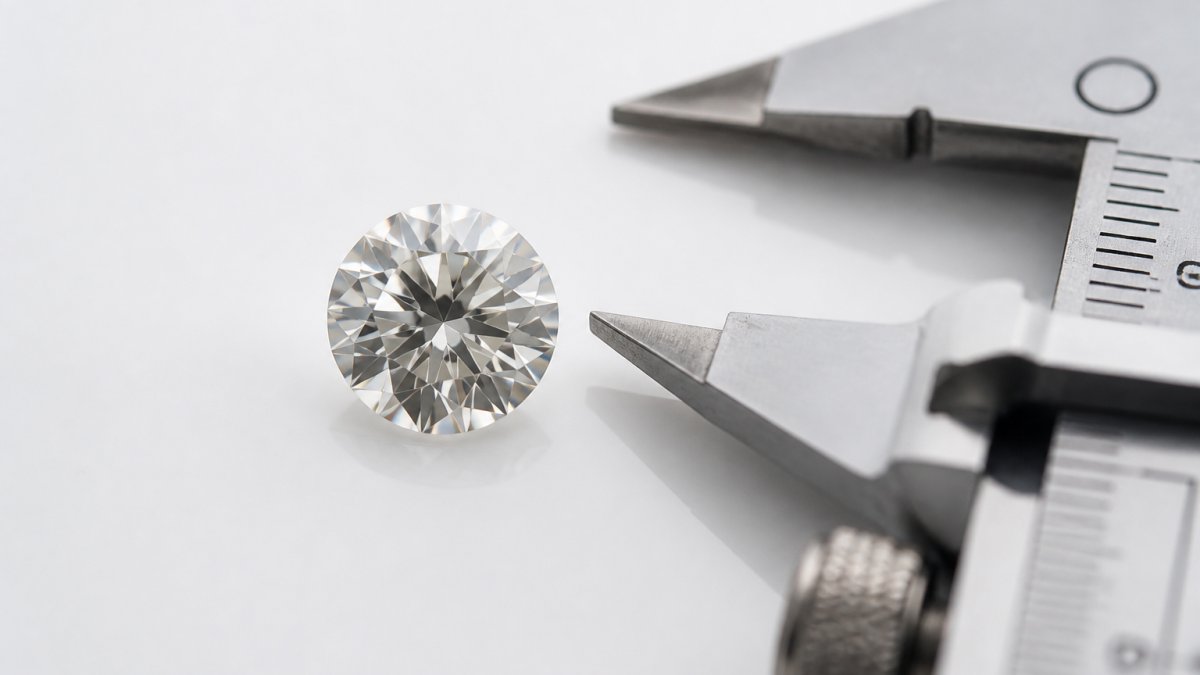
Native Jewel's current lab-grown diamond pricing reflects these real-world production costs:
- 1.50 carats: $1,900 (D color, VS1 clarity, round cut)
- 2.00 carats: $2,200 (D color, VS1 clarity, round cut)
- 3.00 carats: $3,200 (D color, VS1 clarity, round cut)
- 2.00 carats (oval): $2,100 (D color, VS1 clarity, oval cut)
- 3.03 carats (oval): $3,100 (D color, VS1 clarity, oval cut)
These prices include IGI certification, which verifies that the stone is lab-grown and meets the stated quality specifications. The price per carat increases as carat weight rises. A 3-carat stone costs roughly $1,067 per carat, while a 1.5-carat costs about $1,267 per carat.
Cut quality also affects price within the same carat weight. Excellent-cut diamonds command higher prices than good or very good cuts because the cutting process directly impacts light performance and visual sparkle.
Natural Diamond Prices by Carat Weight
Natural diamond pricing follows the same carat-weight progression but at a much higher absolute price point. A natural 1-carat diamond typically ranges from $3,000 to $6,000 depending on color, clarity, and cut quality. A 2-carat natural diamond often costs $8,000 to $15,000 or more. The per-carat price accelerates significantly at higher weights because larger natural diamonds are exponentially rarer in the earth.
Natural diamonds are graded using the same 4Cs framework as lab-grown stones, carat, cut, color, and clarity, but their pricing reflects the rarity premium built into the market. A D-color, VS1-clarity natural diamond commands higher prices than lower color or clarity grades, but the baseline is still substantially higher than lab-grown equivalents.
The Gemological Institute of America and the American Gem Society both certify natural diamonds using identical grading standards, so a natural diamond's certification report is directly comparable to a lab-grown diamond's report. The difference is origin: natural diamonds are mined from the earth, while lab-grown diamonds are created in a laboratory using high-pressure high-temperature (HPHT) or chemical vapor deposition (CVD) methods.
Pricing volatility affects natural diamonds more than lab-grown stones. Market demand, mining output, and investment speculation can shift natural diamond prices year to year.
Diamond Price Comparison by Cut, Color, and Clarity
The 4Cs, carat, cut, color, clarity, and cut, determine a diamond's price within both lab-grown and natural categories. Understanding how each factor affects cost helps you make informed trade-offs.
Cut is the most visible quality factor. An excellent-cut diamond maximizes light return and sparkle, commanding a 10-20% premium over a very good cut. The difference is visible to the naked eye: an excellent-cut diamond appears brighter and more brilliant. Round brilliant cuts typically cost more than fancy cuts like oval, cushion, or radiant because round cutting requires more rough material to be removed.
Color grades range from D (colorless) to Z (light color). D, E, and F are colorless and cost the most. G through J are near-colorless and offer excellent value because the color difference is invisible to the naked eye without direct comparison. Below J, the color becomes perceptible. Most engagement rings use D through I color grades.
Clarity measures the presence of inclusions and blemishes. FL (flawless) and IF (internally flawless) are the rarest and most expensive. VS1 and VS2 (very slightly included) offer outstanding value because inclusions are invisible to the naked eye and require 10x magnification to detect. SI1 and SI2 (slightly included) cost less but may show visible inclusions. Most engagement rings use VS1 or VS2 clarity.
Carat weight is the most straightforward factor: more carats cost more money. But the relationship is non-linear. A 2-carat diamond costs more than twice a 1-carat diamond because larger stones are rarer.
For lab-grown diamonds, the price differences between color and clarity grades are smaller than for natural diamonds, but they still exist. A D-color, VS1-clarity lab-grown diamond costs more than an I-color, SI1-clarity lab-grown diamond of the same carat weight and cut.
Lab-Grown vs Natural Diamond Resale Value and Long-Term Cost
This is where the comparison becomes complex. Lab-grown diamonds typically resale for 30-50% of the original purchase price, while natural diamonds resale for 20-60% depending on market conditions. Neither type holds value like an investment, both are consumer purchases where you should expect to lose money if you resell.
The resale value gap exists because natural diamonds have an established secondary market and perceived rarity value. Collectors and investors view natural diamonds as finite resources.
However, the resale value story is often overstated. If you're buying a diamond for an engagement ring, to wear and cherish, not to flip for profit, resale value shouldn't be the primary decision driver. You're buying it for emotional and aesthetic reasons, not financial return.
For deeper guidance on what to expect, explore the resale value expectations for lab-grown diamonds to understand how long-term cost factors into your purchase decision.
1.50ct Round Lab Diamond Solitaire Engagement Ring | 14K Yellow Gold | D/VS1 IGI →
The total cost of ownership includes more than just the diamond. Setting material, taxes, insurance, and maintenance affect your true investment. Insurance typically costs 1-2% of the ring's value annually. These ongoing costs apply equally to lab-grown and natural diamond rings.
Why Lab-Grown Diamonds Cost Less: Production and Market Factors
Lab-grown diamonds cost less because they're produced efficiently in controlled environments. High-pressure high-temperature (HPHT) and chemical vapor deposition (CVD) methods create diamonds in weeks, not billions of years. The production cost is substantially lower than mining, processing, and transporting natural diamonds from remote locations.
Natural diamond mining requires extensive infrastructure: geological surveys, mining permits, extraction equipment, environmental compliance, and labor across multiple continents. A single natural diamond may take months to extract and process before reaching a retailer.
Market positioning also drives the price gap. Natural diamonds benefit from decades of marketing that positioned them as rare, valuable, and essential for engagement. The "A Diamond Is Forever" campaign created cultural expectations that natural diamonds should be expensive.
Supply dynamics reinforce the price difference. Natural diamond supply is limited by geology, you can only mine what exists in the earth.
The certification process also affects pricing. IGI and other gemological laboratories certify both types using identical standards.
For a deeper understanding of why this cost structure exists, learn about the real reasons lab-grown diamonds are cheaper to explore production methods and market economics in detail.
Choosing Your Diamond: Lab-Grown or Natural for Your Budget
The choice between lab-grown and natural diamonds ultimately depends on your priorities and budget. If maximizing carat weight within a fixed budget is your goal, lab-grown diamonds win decisively. You can afford a larger, higher-quality stone. If you prioritize the rarity narrative and don't mind paying more, natural diamonds offer that story.
For most couples planning an engagement ring, lab-grown diamonds deliver exceptional value. You get a chemically identical, optically identical, physically identical diamond at a fraction of natural diamond prices.
Consider these scenarios:
Lab-grown diamonds make sense if: You want a 2+ carat stone within a moderate budget, you prioritize ethical sourcing and environmental impact, you value transparency in pricing, you're comfortable with lower resale expectations, you want to maximize diamond quality (cut, color, clarity) within your budget.
Natural diamonds make sense if: You prioritize the rarity narrative and heritage story, you're willing to pay a premium for perceived investment value, you prefer established market recognition, you plan to pass the ring down as a family heirloom, resale value is important to your decision.
For specific product examples at different price points, explore our current lab-grown diamond engagement rings to see how carat weight, cut, and metal choices affect real pricing.

To understand the full pros and cons before deciding, review the comprehensive comparison of lab-grown vs natural diamonds for a detailed breakdown of durability, certification, environmental impact, and other factors that may influence your choice.
Native Jewel specializes in IGI-certified lab-grown diamonds set in 14K gold. Our rings combine transparent pricing with handcrafted quality and lifetime warranty on craftsmanship. Every diamond comes with an IGI report verifying its lab-grown origin and quality specifications. We offer 30-day returns and free shipping on orders over $1,999, so you can purchase with confidence knowing you can resize or exchange if needed.
Lab-grown diamonds are real diamonds, certified by the same gemological laboratories that certify natural stones, and they perform identically in every measurable way.
Your decision should be based on your values, budget, and what matters most to you, not on outdated assumptions about diamond quality or value. Whether you choose lab-grown or natural, select a certified stone from a reputable jeweler who stands behind their work with clear warranties and return policies.
Frequently Asked Questions
Why are lab-grown diamonds less expensive than natural diamonds?
Lab-grown diamonds cost 40-60% less than mined diamonds of identical carat weight and grading because they skip the extraction and supply chain costs of mining. Natural diamonds require years of geological formation and expensive mining operations. Both are chemically and optically identical.
How much does a 1-carat lab-grown diamond cost compared with a natural diamond?
A 1-carat lab-grown diamond with D color and VS1 clarity typically costs $1,500-$2,200, while an equivalent natural diamond ranges from $3,500-$5,500. Native Jewel's 1.50-carat lab-grown solitaire in 14K yellow gold is priced at $1,900, delivering exceptional value for certified IGI diamonds. The price difference reflects production cost, not quality: both diamonds have identical crystal structure, optical properties, and grading reports.
Do lab-grown diamonds hold their value compared to natural diamonds?
Lab-grown diamonds do not appreciate like natural diamonds and typically have lower resale value. Natural diamonds retain 30-50% depending on market conditions and demand. If resale value matters, natural diamonds have a historical edge.
Does diamond price depend more on carat, cut, color, or clarity?
Carat weight is the strongest price driver. Cut and color significantly influence brilliance and appearance but increase price more gradually. Clarity (VS1 vs SI1) affects price moderately. The 4Cs interact: a 2-carat D-color VS1 diamond costs far more than a 2-carat J-color SI2. Native Jewel's lab-grown diamonds are graded D color and VS1 clarity, optimizing the balance between visual excellence and value.
The diamond you choose should feel right for your unique story. Lab-grown diamonds offer exceptional value, ethical sourcing, and transparent pricing, making them the clear choice for couples who want beauty without compromise. Shop lab-grown diamond rings at Native Jewel and discover how to get more carat, color, and clarity within your budget.


