

Cart
1
Table of Contents
- What Lab Grown Diamond Resale Value Actually Looks Like in 2026
- Lab Grown vs Natural Diamond Price Depreciation: How the Curves Compare
- How to Sell Lab Grown Diamonds: A Step-by-Step Guide
- What Drives Resale Value: Certification, Carat Weight, and the Setting Factor
- How to Get the Best Lab Grown Diamond Resale Value
- Tax and Insurance Implications When You Sell Lab Grown Diamonds
- Conclusion: Buy for Love, Not Liquidity
- Frequently Asked Questions
Last Updated: September 24, 2026
What Lab Grown Diamond Resale Value Actually Looks Like in 2026
Lab grown diamond resale value is the amount a secondary buyer will pay for a lab-created stone, and in 2026 it typically lands between 20 and 40 percent of the original retail price. That gap surprises people who assumed a certified diamond holds its worth. Understanding it before you buy is the difference between a confident purchase and a disappointing sale.
The reason is simple: lab-grown stones are manufactured, not mined. Supply expands whenever producers add reactors, and prices fall accordingly. A 2026 buyer can purchase the same specification for less than a 2022 buyer paid. Resale follows retail downward, not upward.
Below, we break down what a realistic payout looks like, how to sell lab grown diamonds without leaving money on the table, and why the setting matters as much as the stone.
Typical Payout: 20-40% of Retail
Most jewelers and resale platforms quote 20 to 40 percent of retail for a lab-grown stone, and often less for smaller goods. A one-carat lab diamond that sold new for a few thousand dollars frequently draws offers in the low hundreds on the secondary market.

Natural diamonds do not escape this either. Traditional retail markups mean a mined stone also resells well below its original price. The difference is the floor: natural supply is constrained, lab supply is not.
Why the First Year Is the Steepest
Depreciation hits hardest immediately after purchase. The moment a ring leaves the showroom, it becomes a used item competing against new inventory that is already cheaper than last year's.
After that first year, the curve flattens.
Lab Grown vs Natural Diamond Price Depreciation: How the Curves Compare
Natural stones and lab-grown stones depreciate on different curves, and the distinction matters if you are weighing resale before you buy. Mined diamonds lose value mostly to retail markup. Lab-grown diamonds lose value to markup plus ongoing manufacturing cost declines. That second driver is what makes the lab-grown curve steeper and less predictable.
| Factor | Natural Diamond | Lab Grown Diamond |
|---|---|---|
| Primary depreciation driver | Retail markup | Markup plus falling production cost |
| Supply constraint | Limited | Expands with production |
| Typical resale range | Below retail, varies widely | 20-40% of retail |
| Certification impact | Strong | Moderate |
| Long-term price trend | Relatively stable | Continued downward pressure |
| Setting contribution to offer | Often itemized separately | Frequently folded into a single low bid |
Depreciation by Carat Weight
Larger lab-grown stones carry a higher sticker price and therefore a larger absolute loss, even when the percentage holds steady. A three-carat stone might return a few hundred dollars more than a one-carat stone, but it also cost several times more to begin with. The percentage recovered does not climb with size the way many buyers assume.
Watch Out
Do not assume a bigger stone protects your money. Larger lab-grown diamonds lose more dollars, not fewer, because the starting price is higher and the buyer pool is smaller.
The 'Setting' Factor: Stone Value vs. Metal Value
Most resale quotes you receive are for the stone alone. That is a problem, because the setting, the band, the prongs, the pavé, the metal itself, carries its own resale value that a stone-only offer ignores.
Why the Two Curves Diverge
The mechanism is supply. Mined diamond supply is constrained by geology and mining economics, new production is slow and expensive, so the floor under natural prices moves gradually. Lab-grown supply expands whenever producers add reactors, and reactor capacity has grown steadily. More supply at a lower production cost pushes wholesale prices down, and retail follows.
How to Sell Lab Grown Diamonds: A Step-by-Step Guide
Selling a lab-grown diamond takes preparation, not luck. Gather your paperwork, get an independent read on value, and choose a channel that matches how much time you are willing to spend.

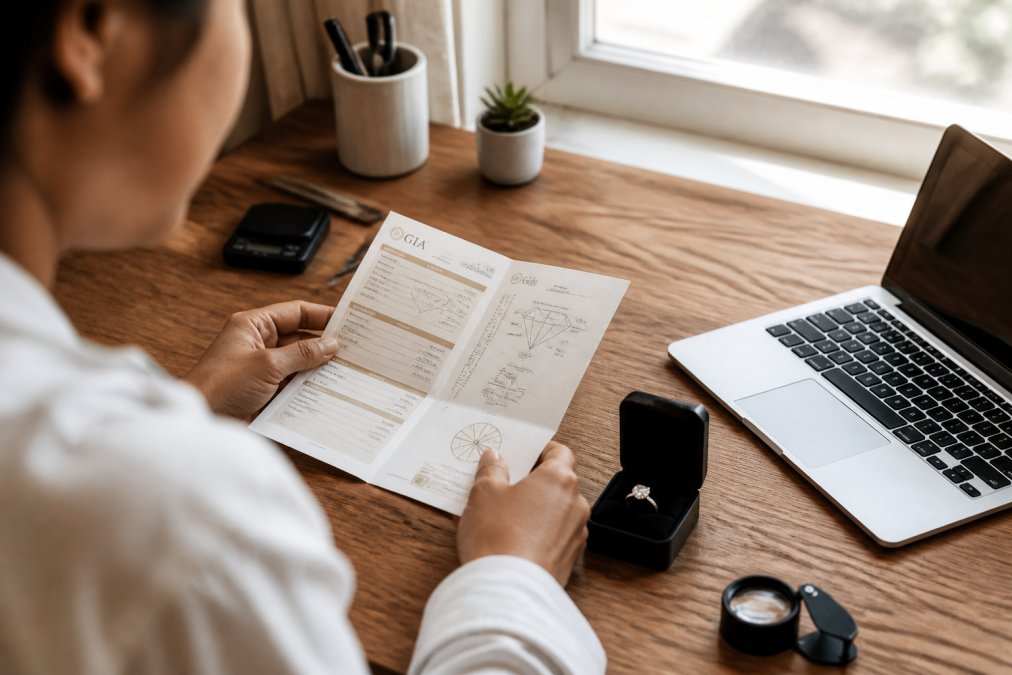
- Locate your gemological report. An IGI or GIA document ties your stone to verified specifications.
- Get an independent appraisal for insurance and negotiation context.
- Photograph the stone and setting in natural light from several angles.
- Request quotes from jewelers, resale platforms, and buyback programs.
- Compare net offers after fees, shipping, and any commission.
- Disclose lab-grown origin in writing. Buyers test, and surprises kill deals.
- Complete the sale through a channel with tracked payment and shipping.
Where to List: Platforms, Jewelers, and Private Buyers
Jewelers and buyback programs move fastest but pay the least. Online resale platforms reach more buyers but take a commission and require you to handle shipping and disputes.
4.05ct Oval Lab Diamond Engagement Ring →
Pro Tip
Ask whether a buyer's quote is for the stone alone or the complete ring. A strong setting and precious metal can add real value that a stone-only offer ignores.
What Drives Resale Value: Certification, Carat Weight, and the Setting Factor
Certification, carat weight, and the setting are the three levers that move a resale offer most. A gemological report from IGI or GIA confirms color, clarity, cut, and carat weight, and buyers pay more when they can verify those grades without guessing.
Key Takeaway
Certification does not create resale value on its own, but its absence removes buyers. A documented stone sells; an undocumented one sits.
How to Get the Best Lab Grown Diamond Resale Value
Getting the best lab grown diamond resale value comes down to timing, paperwork, and channel choice. Sell while the stone still matches current market specifications, keep the original certification and receipt, and price against live listings rather than what you paid. The sections below turn that into a working plan.
Prepare the Documentation Before You List
Buyers discount undocumented stones heavily, so the paperwork is not optional. Gather these before you contact anyone:
- The original gemological report (IGI or GIA) matching the stone's measurements and grades
- The original purchase receipt, which establishes your basis and proves the stone is yours
- Any independent appraisal you have had done for insurance purposes
- Clear photographs of the stone, the report number, and the setting from multiple angles in natural light
Channel-by-Channel: Where the Money Actually Is
Each channel trades speed against price. Here is how they compare in practice:
- Jewelers and buyback programs. Fastest and simplest. They typically pay the least because they need margin to resell. Best when speed matters more than price.
- Online resale platforms. Reach the widest buyer pool. They take a commission and require you to handle shipping, insurance, and disputes. Net proceeds are usually better than a jeweler's offer but worse than a private sale.
- Private party sales. Can net the most, take the longest, and carry the most risk. Meet at a reputable jeweler who can verify the stone on the spot, and complete payment through a tracked method.
- Pawn shops. Avoid unless speed is the only priority. Offers are typically a fraction of even a jeweler's quote.
Timing and Pricing Tactics
- Sell the complete ring when the setting is intact and high quality, the metal and setting add value a stone-only sale forfeits.
- List during peak engagement season when buyer traffic rises.
- Bundle the certificate, appraisal, and original packaging; complete sets sell faster and for more.
- Price against current live listings for comparable stones, not against what you paid.
- Negotiate on net proceeds, not headline offers. A higher headline with a larger commission can net less.
For context on how grading standards affect buyer confidence, the Gemological Institute of America's grading documentation explains what each grade on a report actually certifies. Buyers who understand grading pay closer to fair value.
Documentation does not create resale value on its own, but its absence removes buyers. A documented stone sells; an undocumented one sits.
Tax and Insurance Implications When You Sell Lab Grown Diamonds
Selling jewelry can create a taxable event, and most sellers never plan for it. The IRS treats profit on the sale of personal property as a capital gain, while a loss on personal-use items generally is not deductible. Keep your original purchase receipt so you can establish basis if a gain occurs.
Conclusion: Buy for Love, Not Liquidity
Lab-grown diamonds are a purchase, not a portfolio. If resale value is your priority, no diamond, lab or mined, will deliver it. Buy the stone you want to wear, and let the value live in the moment rather than the resale listing.
Frequently Asked Questions
Do lab grown diamonds drop in value?
Yes. Lab grown diamonds typically resell for 20% to 40% of their original retail price. The steepest drop happens in the first year, driven by falling production costs and rising supply. After that initial hit, values tend to stabilize somewhat, though they rarely recover. This pattern is similar to natural diamonds, which also lose significant value at retail markup, but lab grown stones face additional pressure from fast-improving manufacturing that keeps pushing prices down.
How much can I sell a 2ct lab grown diamond for?
A 2-carat lab grown diamond that retailed for $4,000 to $6,000 might sell for $800 to $2,000 on the secondary market, depending on cut, clarity, color, and certification. Larger stones over 3 carats sometimes hold slightly better percentages because the buyer pool is smaller but more motivated. IGI or GIA certification and an excellent cut grade help you get closer to the top of that range. Private sales usually net more than trade-ins from jewelers.
Is it worth buying a lab-grown diamond for investment purposes?
No. Lab grown diamonds are not investment assets. They are manufactured products, and manufacturing costs keep falling, which pushes resale prices down over time. If your goal is financial return, stocks, bonds, or real estate offer better liquidity and appreciation. Buy a lab grown diamond because you love how it looks and want a larger, higher-quality stone for your budget, not because you expect it to grow in value.
How does IGI certification impact the resale potential of lab-grown jewelry?
IGI certification gives buyers confidence in the stone's grading and confirms it is a genuine lab grown diamond, not a simulant like cubic zirconia. A gemological report listing carat weight, color, clarity, and cut makes your listing more credible and can command a higher price. Without certification, buyers often assume the worst and offer less. Keep the original report and any appraisal documents; they are your strongest negotiating tools when you sell.


