

Cart
0

Table of Contents
- What Is 18k Gold? Purity, Alloys, and Daily Wear Basics
- 14k vs 18k Gold Durability: Which Holds Up Better?
- Pros and Cons of 18k Gold for Everyday Jewelry
- Activity-Based Risk: When 18k Gold Is a Problem
- Can You Wear 14k Gold in the Ocean?
- How to Care for 18k Gold Jewelry
- Skin Sensitivity, Alloy Reactions, and Repair Costs
- The Verdict: Which Karat Belongs on Your Hand?
- Frequently Asked Questions
Last Updated: September 23, 2026
What Is 18k Gold? Purity, Alloys, and Daily Wear Basics
18k gold is a gold alloy made of 75% pure gold and 25% other metals, such as copper, silver, or palladium. That ratio gives it a rich yellow tone and a softness that raises the question of is 18k gold better for daily wear. At Native Jewel, we work almost entirely in 14K gold for pieces meant to be worn every day, and the reason comes down to how that 25% alloy behaves over years, not weeks.
The karat system measures purity out of 24 parts. So 18k means 18 parts gold, 6 parts alloy. Higher karat means more gold content, a deeper color, and less metal hardness. That trade-off is the whole story of this article.
14k vs 18k Gold Durability: Which Holds Up Better?
14k gold holds up better for daily wear because its higher alloy content makes it harder and more scratch resistant. An 18k ring will show surface scratches, small dents, and prong wear sooner under the same conditions. The 14k vs 18k gold durability gap is not dramatic, but it compounds over years of daily use.
| Factor | 14k Gold | 18k Gold |
|---|---|---|
| Gold content | 58.3% | 75% |
| Metal hardness | Higher | Lower |
| Scratch resistance | Better | Moderate |
| Color depth | Slightly muted | Richer tone |
| Best for | Daily wear, rings | Occasional wear |
Metal Hardness, Malleability, and Scratch Resistance
Malleability is how easily a metal bends and deforms without cracking. 18k gold is more malleable, which is why it takes a high polish so beautifully and why it loses that polish faster. Prongs on an 18k setting bend out of shape more readily, and a bent prong is how stones get lost.
Pros and Cons of 18k Gold for Everyday Jewelry
The answer to is 18k gold better for daily wear is yes, if you accept more maintenance in exchange for a richer color. It is not a bad choice. It is a choice with a cost, and most guides skip that part.
Pros:
- Deeper, warmer yellow gold color
- Higher precious metal content and investment value
- Takes an exceptional polish and luster
- Hypoallergenic in most nickel-free alloy blends
Cons:

- Surface scratches appear faster
- Prongs and thin settings deform more easily
- Professional polishing needed more often
- Higher price per gram
Watch Out
The most common mistake is buying an 18k gold ring with a thin band and small prongs for daily wear. Thin 18k metal bends, and a bent prong can drop a stone without warning. If you want 18k, choose a thicker setting.
Activity-Based Risk: When 18k Gold Is a Problem
18k gold becomes a real risk during high-impact or abrasive activities, not during normal daily wear. Typing, driving, and cooking are fine. The problems cluster around specific tasks, and the reason comes down to one property: 18k gold's 25% alloy content makes it more malleable than 14k, so it deforms rather than springs back when force is applied.
Here is how the most common activities actually affect an 18k piece, and what the mechanism is:
- Weightlifting and gym work: Knurled bars and dumbbells grind against metal and flatten prongs. The grit embedded in a knurled bar acts like a file on soft gold, and the repeated pressure of a grip can bend a thin band out of round. A common pattern is a ring that fits fine on Monday and spins loosely by Friday after a week of heavy pulls.
- Gardening and DIY: Grit and soil act like sandpaper on soft gold. Silica particles are harder than the gold alloy, so every handful of dirt leaves micro-abrasions that dull the surface. Gloves help, but fine grit still works its way inside.
- Swimming in chlorinated pools: Chlorine attacks the alloy metals over repeated exposure. Gold itself resists chlorine, but the copper and silver in the 25% alloy can oxidize and discolor, especially in warm pool water. A single swim is harmless; a daily lap habit is not.
- Housework with cleaning agents: Ammonia and bleach dull the luster quickly. These chemicals strip the surface layer of alloy metals, leaving a hazy film that requires professional polishing to remove.
- Hot tubs and saltwater: Heat and salt accelerate the same alloy reaction. Cold water also shrinks fingers slightly, which loosens prongs and increases loss risk.
Lifestyle suitability matters more than karat here. A desk worker and a landscaper can both wear 18k, but only one of them will keep it looking new without regular care. A practical rule: if the activity involves gripping metal, abrasive grit, or repeated chemical exposure, take the 18k piece off first. If it involves only light contact and no chemicals, 18k is fine.
Pro Tip
Keep a small soft pouch in your gym bag or garden shed. The single most effective care step for 18k gold is removing it before the activities above, not polishing it afterward.
Can You Wear 14k Gold in the Ocean?
You can wear 14k gold in the ocean, and it is the safer of the two karats for saltwater exposure. Salt water is not corrosive to gold itself, but it does affect the alloy metals and can leave a dull film. Rinse the piece in fresh water and dry it with a soft cloth as soon as you are out.
The bigger ocean risk is loss, not damage. Cold water shrinks fingers slightly and loosens prongs, so a ring that fits snugly indoors can slip off in the surf. For beach days, 14k is the practical pick because its greater metal hardness resists the sand and grit that find their way into every setting.
How to Care for 18k Gold Jewelry
Caring for 18k gold jewelry means cleaning it gently at home and having it professionally polished once or twice a year. Skip the ultrasonic cleaner if your piece has pavé stones, since vibration can loosen small settings.
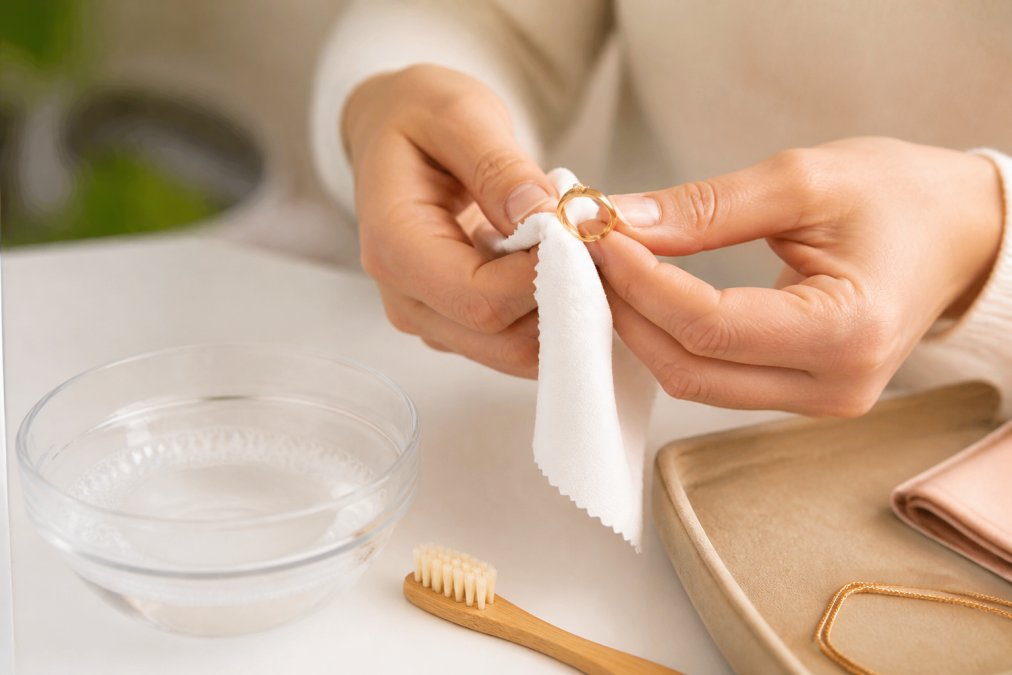
A simple routine keeps the luster intact:
- Mix a few drops of mild dish soap in warm water
- Soak the piece for 10 to 15 minutes
- Brush gently with a soft-bristled toothbrush
- Rinse under warm running water
- Pat dry with a lint-free cloth
- Store separately in a soft pouch to prevent scratches
Pro Tip
Take your 18k pieces to a jeweler for a prong check every six months. Tightening a loose prong costs far less than replacing a lost stone, and most jewelers will do the inspection while you wait.
Skin Sensitivity, Alloy Reactions, and Repair Costs
Skin sensitivity to gold usually comes from the alloy metals, not the gold itself. Nickel and cobalt are the common culprits, and they appear more often in white gold than in yellow or rose gold. Yellow 18k gold is typically alloyed with copper and silver, which most people tolerate well. If a piece irritates your skin, the fix is usually a different alloy blend, not a lower karat.
Here is the part most guides skip: because 18k gold contains 75% pure gold versus 58.3% in 14k, it has less of the base metal that triggers reactions. For someone with a known nickel sensitivity, a nickel-free 18k yellow or rose gold piece is often more comfortable than a 14k white gold piece that uses nickel in its alloy. The karat is not the variable that matters, the alloy recipe is.

Key Takeaway
For sensitive skin, choose the alloy blend, not the karat. For long-term cost, choose the warranty, not the karat. 18k gold can be the right daily-wear choice if both answers come back in its favor.
The Verdict: Which Karat Belongs on Your Hand?
Choosing between 14k and 18k comes down to one question: will this piece live on your hand, or in a box? For an engagement ring worn daily, 14K gold is the more resilient choice, and it is what Native Jewel uses across our collection, from the 4.05ct oval lab diamond ring in 14K white gold to the 4.10ct pear lab diamond ring in 14K yellow gold.
Frequently Asked Questions
Is 18k gold too soft for everyday wear?
18k gold contains 75% pure gold, which makes it softer than 14k gold (58.3% gold). For daily wear, it can scratch and dent more easily, especially in rings. However, many people wear 18k gold jewelry daily without issues, particularly necklaces and earrings that see less friction. If you want a ring for constant wear, 14k gold offers better scratch resistance and resilience.
Does 18k gold tarnish faster than 14k gold?
Pure gold does not tarnish, but the alloy metals in 18k gold (like copper and silver) can react with chemicals, sweat, and moisture. Because 18k gold has a higher gold content and fewer alloy metals than 14k, it actually resists tarnish slightly better in most conditions. However, both karats can tarnish if exposed to chlorine, sulfur, or harsh cleaning products. Regular cleaning helps maintain luster.
Can you wear 14k gold in the ocean?
You can wear 14k gold in the ocean briefly, but it is not recommended for extended exposure. Saltwater and sand can scratch the metal and dull its finish over time. Chlorine in pools is more damaging, as it can break down alloy metals and cause discoloration. If you wear 14k gold in the ocean, rinse it with fresh water and dry it thoroughly afterward to protect the metal.
How does 18k gold hold up against scratches and dents?
18k gold is more prone to surface scratches and dents than 14k gold because its higher pure gold content makes it softer. Rings and bracelets, which bump against surfaces frequently, show wear fastest. Prongs and settings can also loosen over time. Choosing 14k gold for high-contact pieces or removing 18k gold jewelry during rough activities helps prevent damage.
Daily wear is unforgiving on soft metal, and an engagement ring is the one piece you never take off. Native Jewel builds every ring in 14K gold for exactly that reason, pairing greater metal hardness with IGI-certified lab-grown diamonds and a lifetime warranty on craftsmanship. If you want a ring that keeps its shape and shine through years of real life, browse the collection and find the setting that fits how you actually live.


