

Cart
0
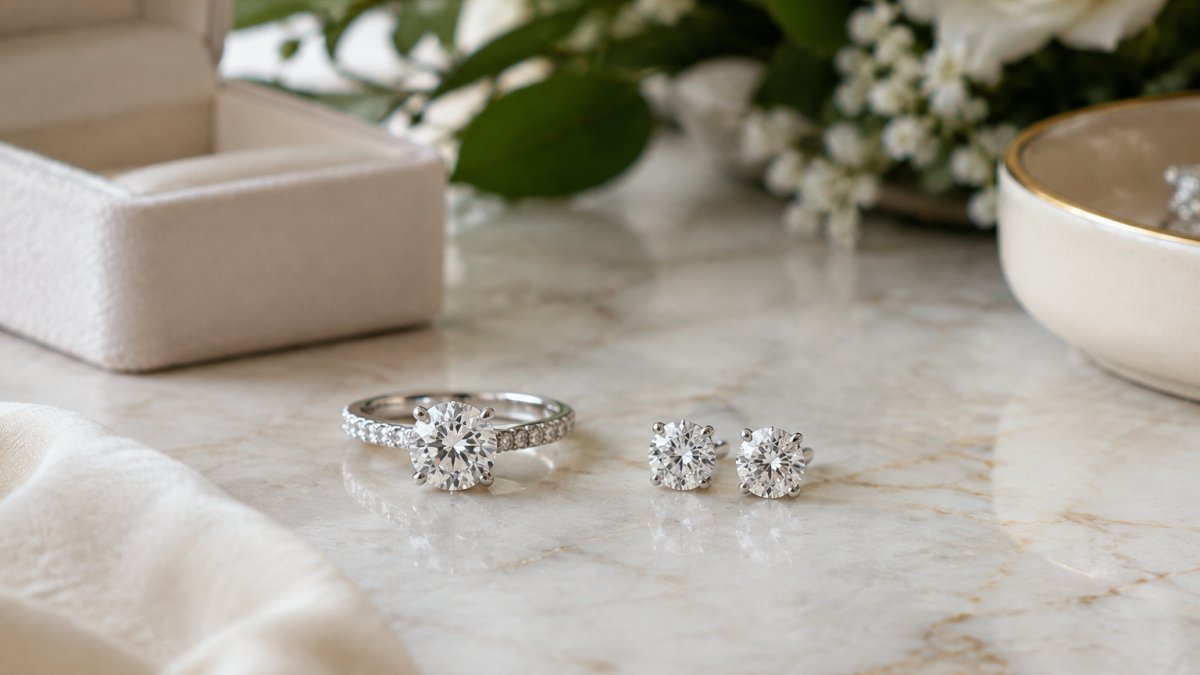
Last Updated: November 21, 2026
Quick Summary
Style diamond studs with an engagement ring by matching the metal first, then deciding how closely the stud shape should echo the ring. Mirror the shape for a coordinated look or contrast it for a personalized one, and size the studs to the ring's visual scale.
- Yellow gold rings pair with yellow gold studs, white gold or platinum rings with white gold or platinum studs.
- Prong settings show more diamond sparkle, while bezel settings protect the stone for daily wear.
- Pair a pear-shaped ring with oval or round studs and avoid marquise studs that compete.
- Match stud size to ring scale: 1 to 2 cttw for delicate solitaires, 2 to 3 cttw for halo or three-stone rings.
- Build an ear stack with studs as the anchor, add one huggie, and stop at two or three piercings.
Which studs suit your ring?IGI-certified lab-grown diamond studs in 14K gold, made to pair with your ring.
Shop Diamond Studs
Table of Contents
- Start With the Ring, Then Choose the Studs
- How to Match Diamond Earrings With an Engagement Ring
- Diamond Earring Settings: Prong vs. Bezel
- Diamond Studs With a Pear-Shaped Engagement Ring
- The Best Diamond Stud Size for Everyday Wear
- Layer Studs Without Over-Accessorizing
- Shop Studs That Work With Your Ring
- Frequently Asked Questions
Start With the Ring, Then Choose the Studs
A diamond stud is the quietest piece of jewelry you own. Your engagement ring is the loudest. Styling them together means letting one lead and the other support it, and the ring should almost always lead.
Which studs belong with the ring? The answer starts with your ring's metal, shape, and scale, not with the earrings.
Below, we'll walk through how to style diamond stud earrings with engagement rings step by step, from metal matching to size balance to layering. You'll finish with a clear plan for your own pair.
But first, here's what most guides get wrong: they treat the earrings as an afterthought. The studs are the frame. Get the frame right and the ring looks better.
If you're still deciding on the ring itself, our guide on how to choose an engagement ring setting covers the starting point.
How to Match Diamond Earrings With an Engagement Ring
Matching diamond earrings to an engagement ring comes down to two decisions: metal first, then how closely the shapes should echo each other. Get those right and everything else falls into place.
Think of it as a scale, not a switch. On one end sits a fully coordinated set. On the other sits a deliberately mixed look. Most people land somewhere in the middle.
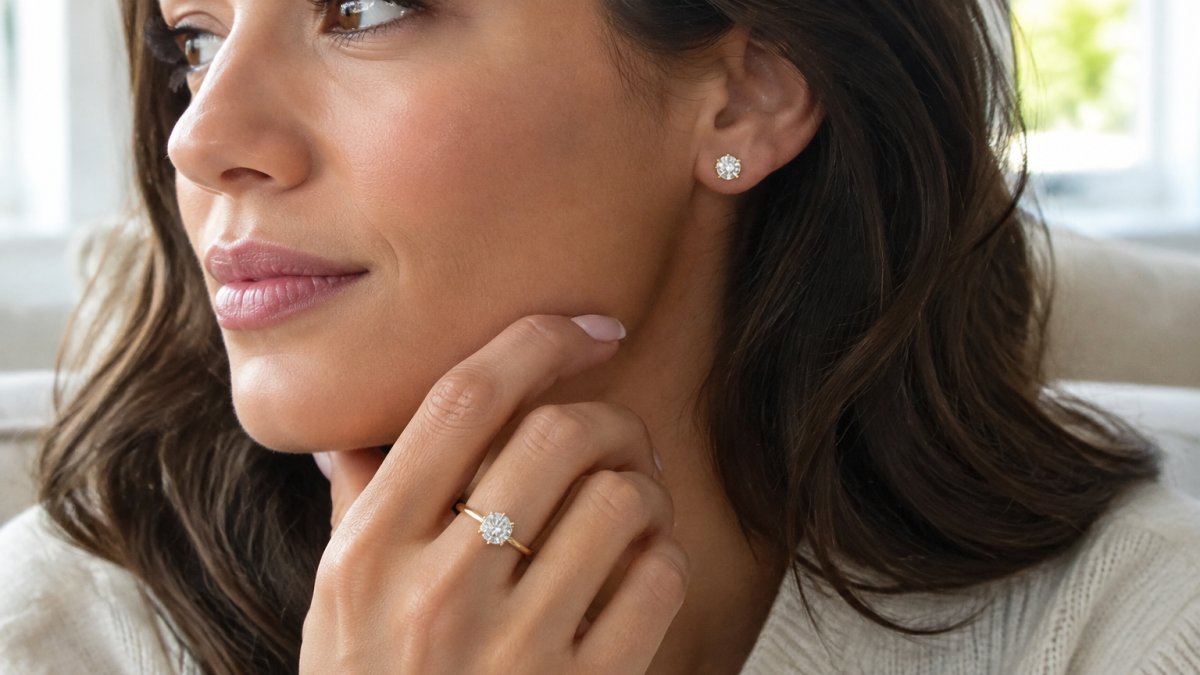
Match the Metal First
Start with the metal, because it's the one element people notice without realizing it. A white gold stud beside a yellow gold ring creates a visible clash at the earlobe and the hand.
The simple rule:
- Yellow gold ring: choose yellow gold studs
- White gold or platinum ring: choose white gold or platinum studs
- Rose gold ring: rose gold studs, or yellow gold if the tones sit close
Mixed metals can work, but they need intent. A thin white gold stud with a yellow gold ring reads as a mistake. A deliberate mix, like rose gold studs with a white gold ring, reads as a choice. If you want the safest path, match the metal.
Then Decide How Closely to Mirror the Shape
Shape is where you choose your style. A round brilliant ring pairs naturally with round studs. A pear-shaped ring can echo its outline with an oval or pear-shaped stud.
Here's the rule we give customers: mirror the shape for a coordinated look, contrast it for a personalized one. Neither is wrong.
- Mirror: pear ring with oval studs, round ring with round studs
- Contrast: pear ring with round studs, oval ring with round studs
- Avoid: two strong shapes competing, like a marquise ring with marquise studs at a different angle
The goal is a coordinated jewelry look, not a matchy-matchy one. A little variation keeps the pairing interesting.
Diamond Earring Settings: Prong vs. Bezel
Prong and bezel settings are the two main choices for diamond studs, and the difference matters for both look and daily wear. Prong settings hold the stone with small metal claws and show more of the diamond. Bezel settings wrap the stone in a smooth metal rim.
Prong settings let in more light, so the diamond sparkles more freely. They suit round and oval cuts especially well. The trade-off: prongs can catch on hair, scarves, and knitwear.
Bezel settings protect the edges of the stone and sit flush against the earlobe. They're the better pick for active lifestyles, for anyone who wears studs daily, and for pear or oval shapes where a corner could chip.
For a deeper look at which setting suits daily wear, our article on diamond settings for active lifestyles breaks down the trade-offs.
A quick comparison:
| Setting | Sparkle | Protection | Best For |
|---|---|---|---|
| Prong | Maximum | Moderate | Evening wear, round cuts |
| Bezel | Softer | High | Everyday wear, active lives |
| Martini | Maximum | Moderate | A three-stone look from the side |
| Halo | High | Moderate | Ring with a halo center |
If your ring has a halo setting, a halo stud creates a coordinated effect. Just keep the halo proportions similar, or the smaller halo can look like an afterthought.
Diamond Studs With a Pear-Shaped Engagement Ring
A pear-shaped ring is elongated and asymmetric, and the best stud pairing echoes that soft length rather than fighting it. Oval studs are one option, since their outline echoes the pear's curve without repeating it exactly.
Round studs also work here. They give the pear ring center stage and keep the ear simple. This is the safer choice if your pear ring already has a halo or pavé band.
What to avoid: a second strong shape at the ear. Marquise studs next to a pear ring create two competing points of interest.
If you want the oval echo, our oval cut lab diamond stud earrings in 14K white gold carry a 3.12 cttw total weight with D color and VS1 clarity, IGI certified.
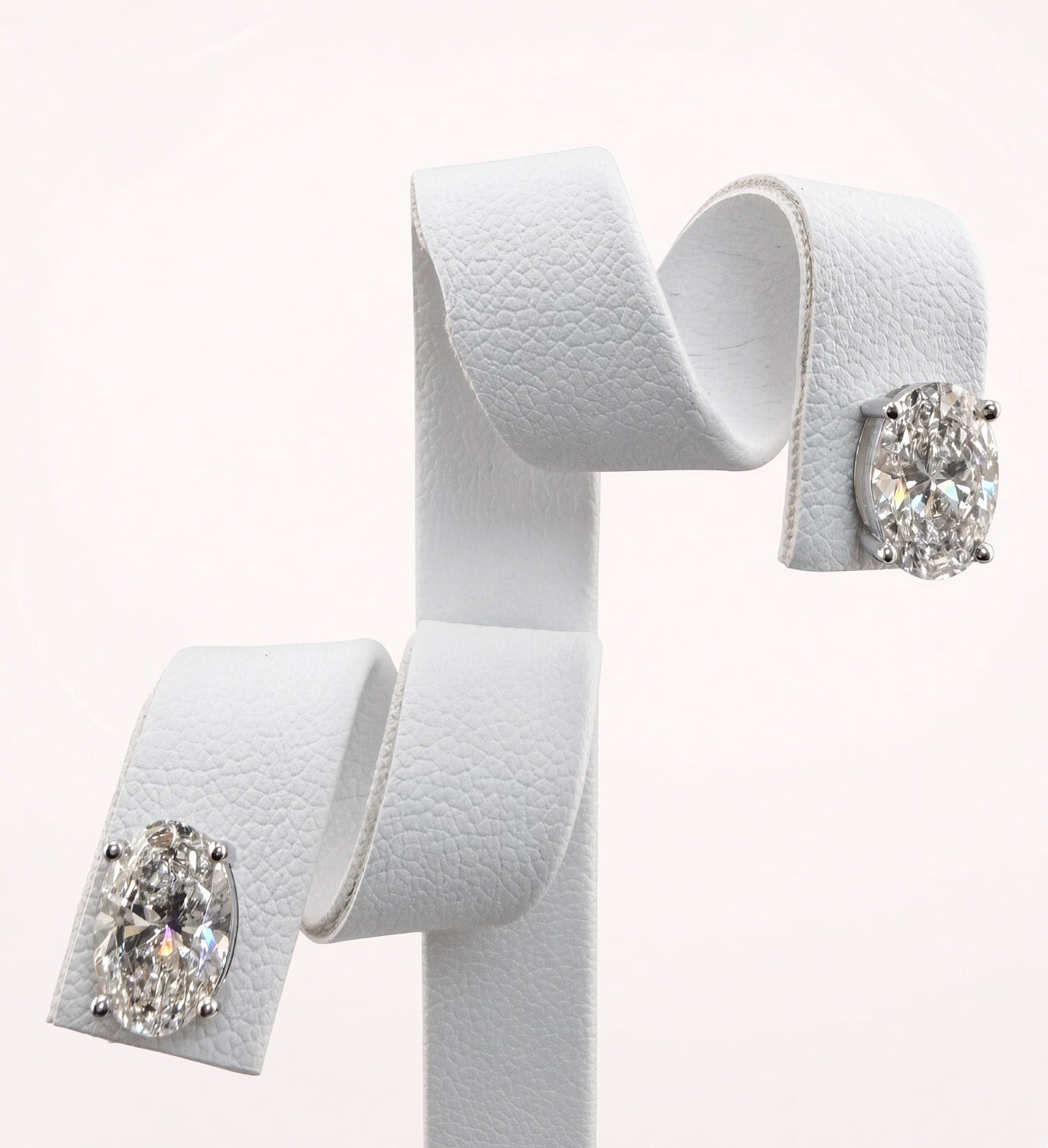
For a pear ring with a halo, keep the stud simple. Let the ring carry the detail.
The Best Diamond Stud Size for Everyday Wear
Size is about proportion, not maximum carats, and the right number depends on three things: the ring's visual scale, your face shape, and how the stud sits on your earlobe.
Start with the ring's visual scale, not its carat weight. A delicate solitaire with a thin band reads smaller than a three-stone or halo ring even at the same center-stone weight. A simple guide:
- Delicate solitaire ring: 1 to 2 cttw studs
- Halo or three-stone ring: 2 to 3 cttw studs
- Statement ring: 3 to 4 cttw studs to hold their own
Face shape matters more than most guides admit. Round studs soften a strong jawline and suit square or rectangular faces. Oval or pear studs add length and flatter round faces. Square or princess studs bring structure to a soft or oval face. The stud does not need to match the ring's shape here; it needs to balance the face.
Earlobe real estate is the practical limit. A stud that overhangs the lobe looks oversized regardless of carat weight, and a stud that sits too high can crowd a second piercing. Check the diameter against your lobe before you commit to a larger pair.
Watch out: push backs are comfortable for daily wear, but check the fit. A loose back is how studs get lost, and a back that is too tight can pinch after a few hours. Screw backs are more secure for larger studs and for anyone who sleeps in their earrings; friction backs are easier to remove but loosen over time.
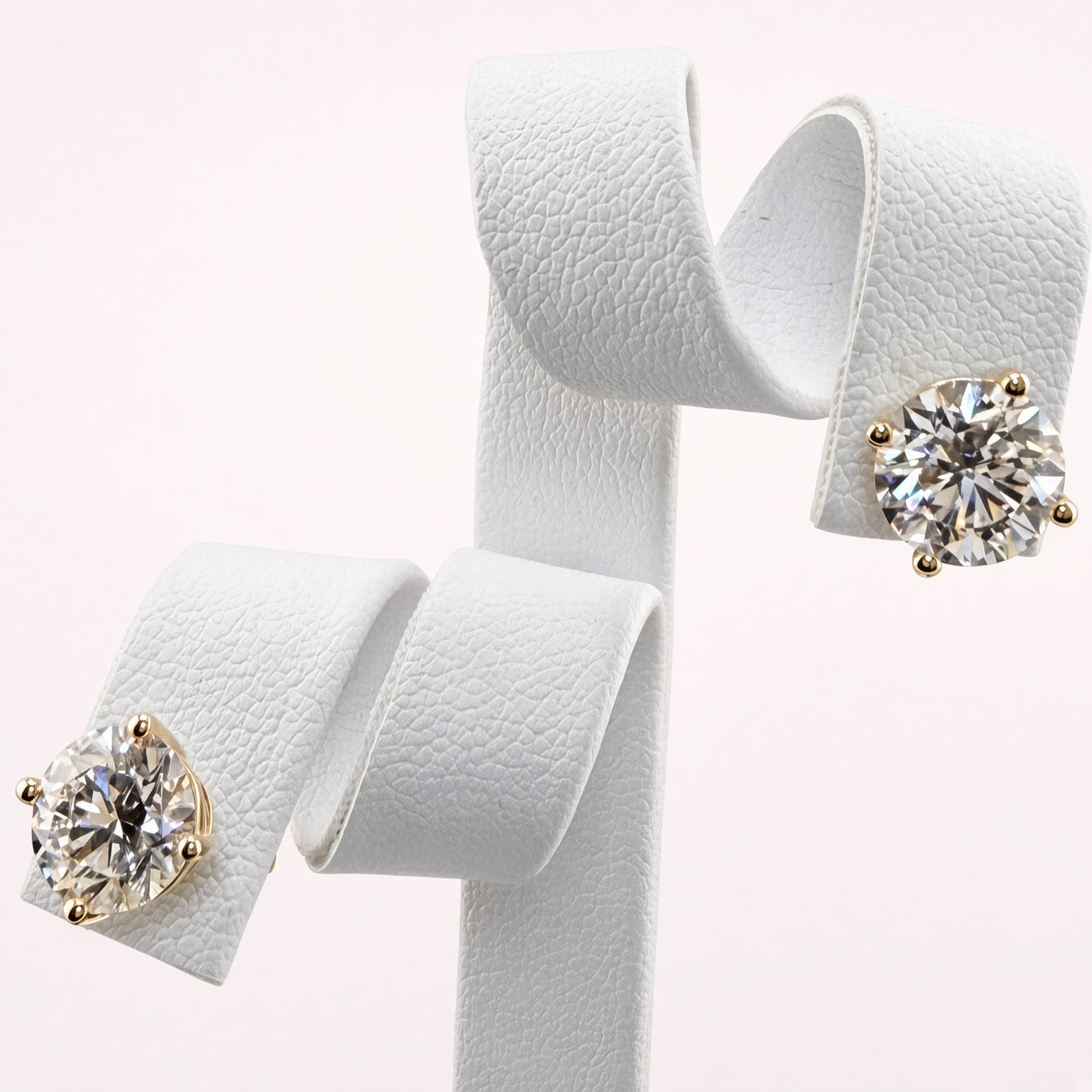
Our 2cttw round lab diamond stud earrings in 14K yellow gold carry D color, VS1 clarity, and Excellent cut, with IGI certification.
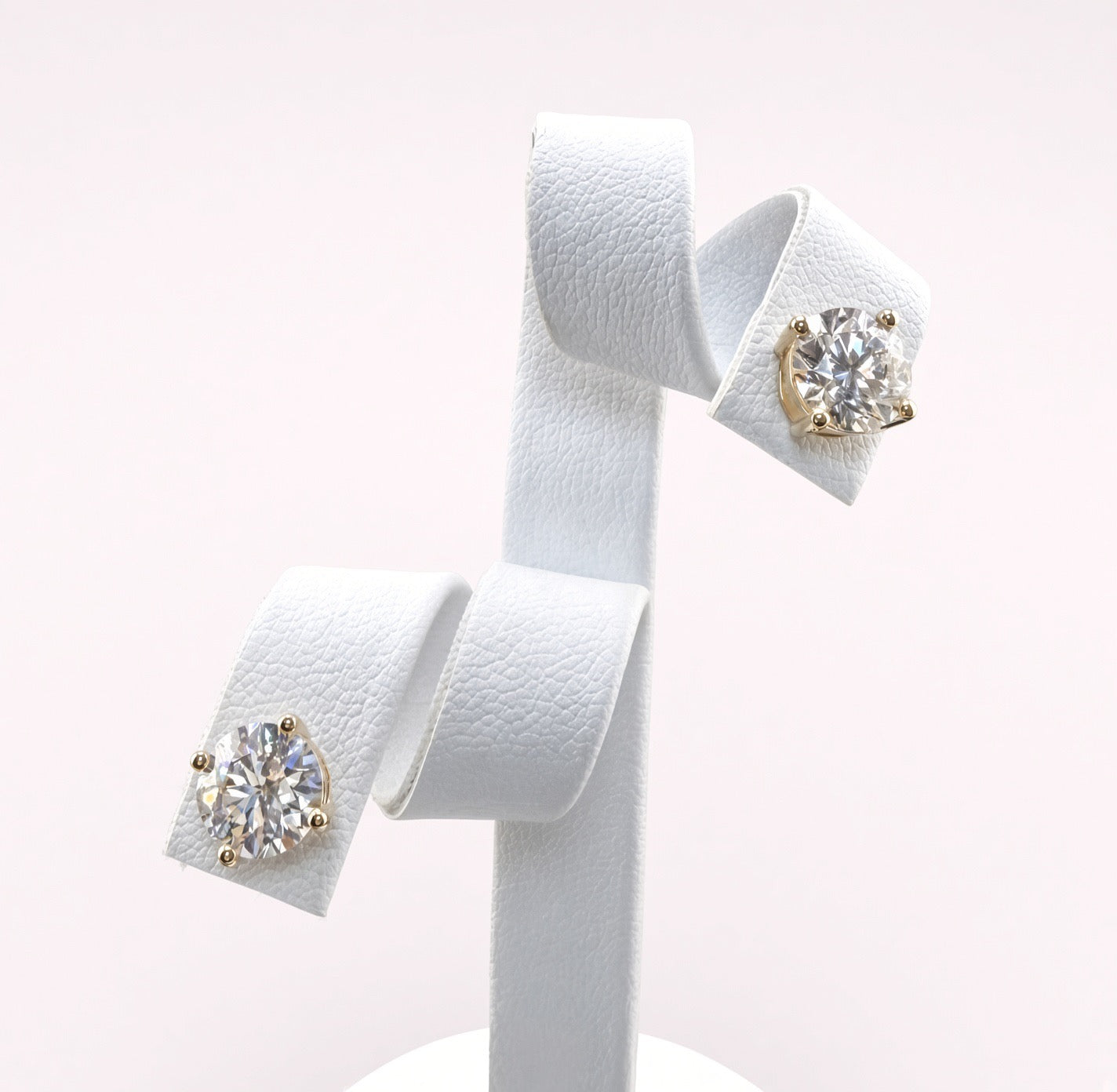
Recommended Diamond Stud Total Weight by Engagement Ring Scale
Delicate solitaire ring 1 to 2 cttw
Halo or three-stone ring 2 to 3 cttw
Statement ring 3 to 4 cttw
Layer Studs Without Over-Accessorizing
Layering works when each piece has room to breathe. The mistake is adding earrings until the ear competes with the ring.
A simple ear stack:
- Start with your diamond studs as the anchor
- Add one small hoop or huggie above, in the same metal
- Stop at two or three piercings total
- Keep the ring as the focal point
The same logic applies to necklaces and bracelets. If the ring is the star, the rest of your jewelry should support it. Over-accessorizing happens fast when every piece is fighting for attention.
Consider your neckline, too. A high neckline leaves the ear as the main jewelry moment, so studs can be a touch larger. A lower neckline shares attention with a necklace, so keep the studs quieter.
Shop Studs That Work With Your Ring
The right pair of diamond studs should feel like it was always part of the set. Start with your ring's metal, choose a shape that echoes or contrasts on purpose, and size the studs to the ring's scale.
Our collection features IGI-certified lab-grown diamonds, with a lifetime warranty on all diamond jewelry and 30-day hassle-free returns.
For a bolder pair, our 4 CTTW round diamond stud earrings in 14K yellow gold carry D color and VS1 clarity, with IGI certification.
Your ring deserves earrings that make it look better, not busier. Native Jewel handcrafts 14K gold studs with IGI-certified lab-grown diamonds, offers customizable ring options across diamond, setting, and metal, and ships free on orders over $1999. Get started with Native Jewel and build a set that works together.
Frequently Asked Questions
Should diamond studs match the shape of your engagement ring?
They do not have to, but echoing the shape is the easiest way to look coordinated. A round brilliant ring pairs naturally with round diamond studs, while an oval or pear center stone looks intentional beside elongated studs. If you want contrast instead, keep the studs simple and small so the ring stays the focal point. The rule is one clear relationship between the two pieces, whether that is shape, metal, or setting style.
Can you mix gold colors between earrings and an engagement ring?
Yes. Mixed metals read as deliberate when you repeat one element, such as wearing white gold studs with a yellow gold ring that has a white gold prong setting. Keep the studs smaller than the ring's center stone so the eye lands on the ring first. If mixing feels risky, choose a metal that appears somewhere in the ring already, including the prongs or pavé band, rather than introducing a third color.
What size diamond studs look best with an engagement ring?
For everyday wear, a total weight around 1 to 2 carats keeps diamond studs noticeable without competing with the ring. A 2 cttw pair, such as 1 ct per ear, sits well beside most solitaires. Save 3 to 4 cttw pairs for evenings or for rings with larger center stones, where the extra scale stays balanced. Proportion matters more than carat count alone.
Can you wear diamond stud earrings with an engagement ring every day?
Yes, and studs are the easiest earring to wear daily because they sit close to the lobe and catch on clothing less than drops or hoops. Choose secure push backs or screw backs, and check the setting tightness every few months.


