

Cart
1

Quick Summary
Choose an engagement ring setting by starting with your daily lifestyle, then weighing how much light, protection and upkeep you want. Prong settings show the most light, bezels offer the strongest protection, and halos add sparkle but need more cleaning. Match the setting to your stone shape and check how it will sit with a wedding band.
- Start by asking whether you work with your hands and how often you wear the ring.
- Prong settings let the most light reach the stone but expose the girdle to wear.
- Bezel settings offer the strongest protection against chipping and snagging.
- Pointed shapes like pear and marquise need prong or bezel protection.
- Check how the setting will sit with a future wedding band before buying.
Table of Contents
- Start With Your Lifestyle, Not the Trend
- Types of Ring Settings and Mountings
- Matching the Setting to Your Center Stone Shape
- Cathedral Setting Engagement Ring Trade-Offs
- Security, Maintenance, and Comfort by Setting Type
- A Step-by-Step Quiz to Choose Your Setting
- Booking Your Native Jewel Ring Consultation
- Frequently Asked Questions
Start With Your Lifestyle, Not the Trend
Choosing an engagement ring setting starts with how you live, not what looks best on a website.
Ask a few direct questions. Do you work with your hands? Wear rings to bed or in the shower?
A common mistake is choosing an engagement ring setting only for proposal day. The ring will be worn daily for decades, so comfort and durability matter just as much.
Types of Ring Settings and Mountings
A setting, also called a mounting, is the metal structure that holds the center stone and any accent diamonds in place. The style you choose determines how much metal shows, how exposed the stone is, how well it is protected, and how easily it can be cleaned and inspected. Each style trades off among light return, security, and everyday wear, so it helps to understand the mechanics before you fall for a photo.
How a Setting Holds and Protects the Center Stone
Every setting does two jobs: grips the stone and shields it. Prongs fold metal over the girdle; bezels wrap a rim of metal around it; tension settings rely on spring pressure from the band. Protection depends on how much metal sits above the stone's edge, a high-crown prong leaves the girdle exposed, while a bezel or low-profile prong puts metal between the stone and the world.
Prong Settings and Their Variations
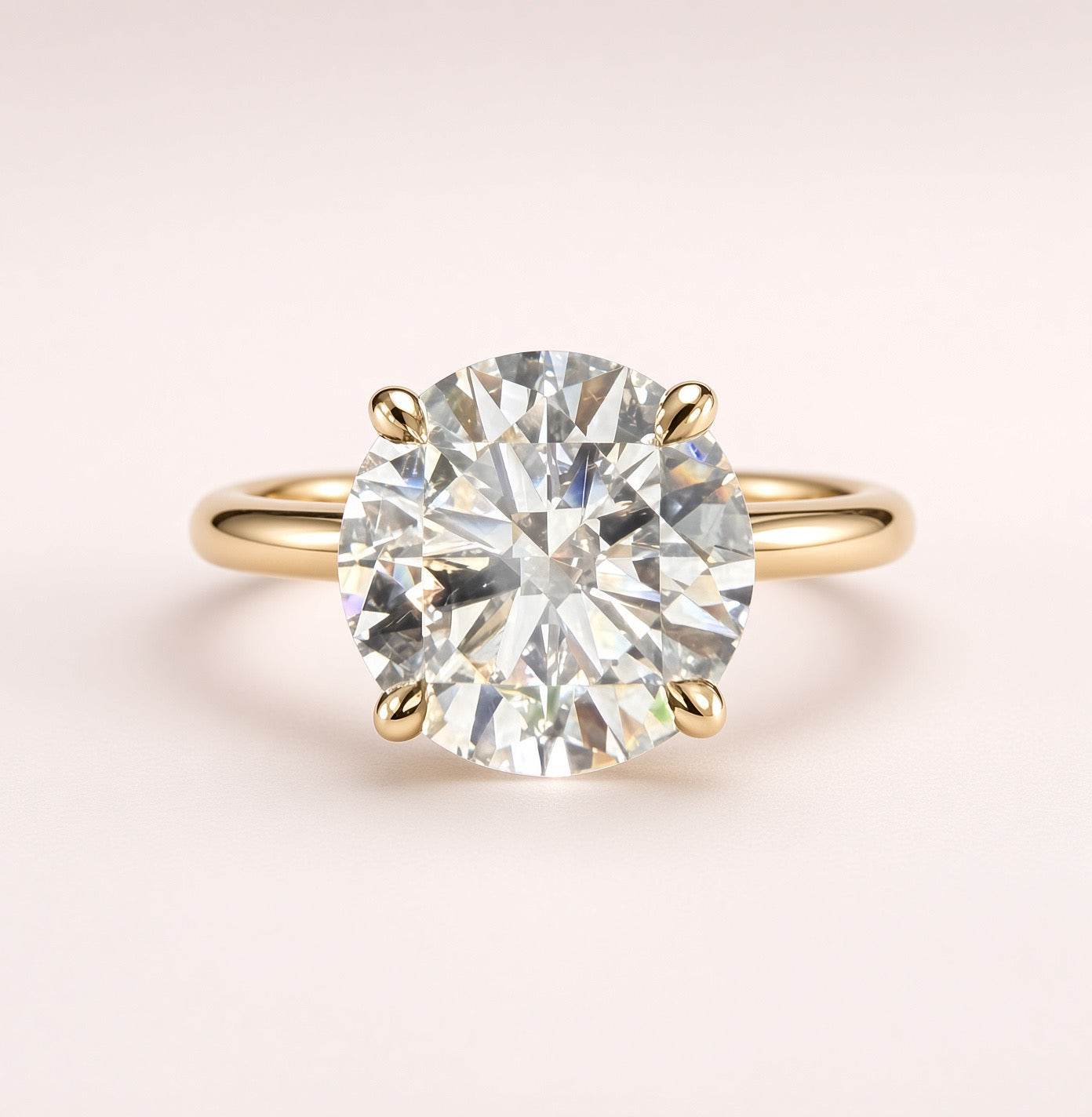
Prong settings use thin metal claws and are the most common choice because they let the most light reach the diamond. See how prong solitaires compare with modern pavé to weigh brilliance against accent styling. Our 3 Carat Round Solitaire Engagement Ring in 14K yellow gold uses a classic prong setting that keeps all attention on the center stone.
Bezel Settings
A bezel setting surrounds the stone with a continuous rim of metal, offering the strongest protection against chipping and snagging, a strong choice for active lifestyles and pointed shapes like pear and marquise. A full bezel encloses the entire girdle; a partial bezel leaves more of the stone visible. The trade-off is light: a bezel blocks some edge light, so the stone can look slightly smaller and less brilliant than in a prong setting.
Solitaire Settings
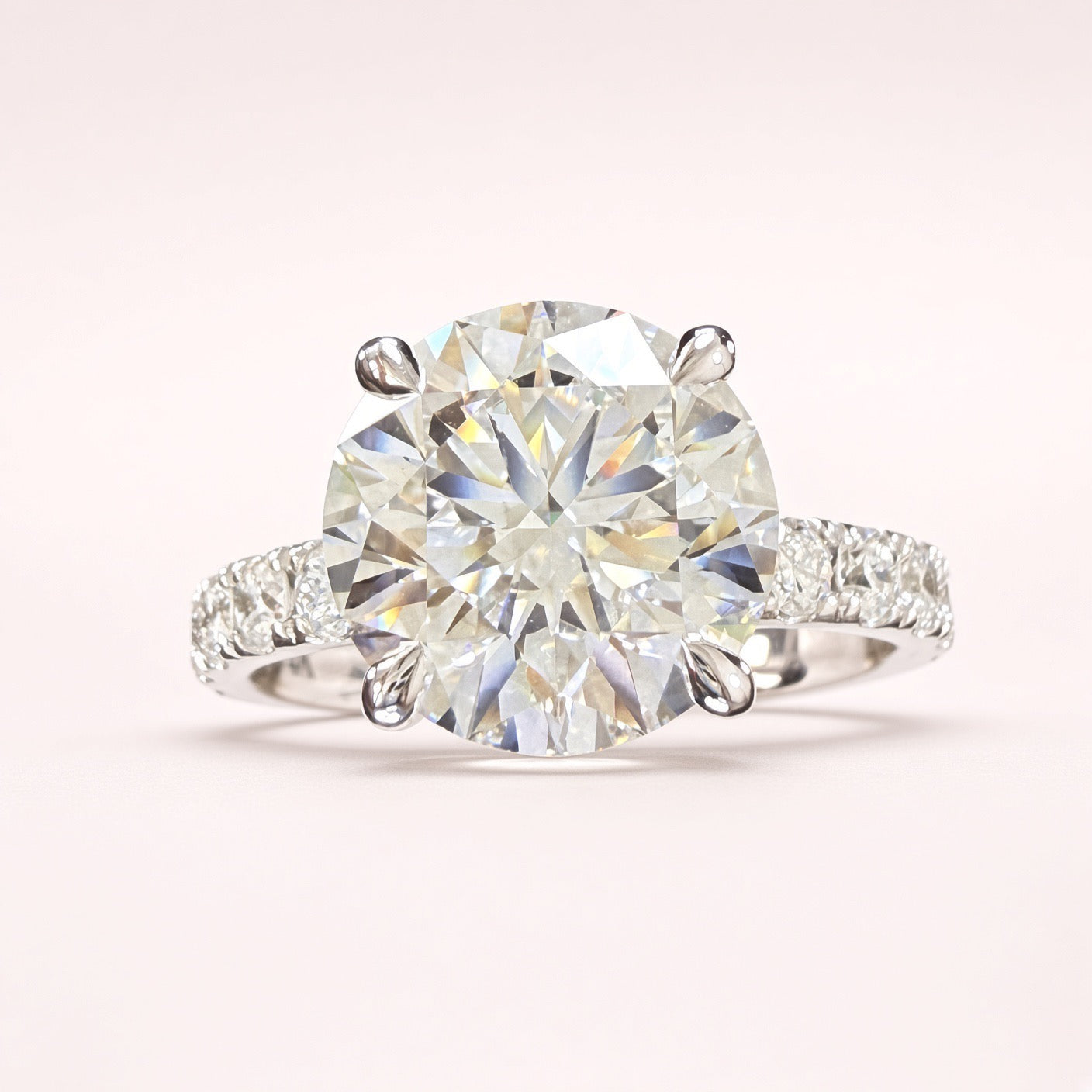
A solitaire setting features a single stone with minimal metal, emphasizing simplicity. It's less a mounting style than a design choice, since a solitaire can use prongs, a bezel, or cathedral shoulders. Solitaires are easy to clean and inspect, and leave room for almost any wedding band. Our 4.05 TCW Round Diamond Engagement Ring in 14K white gold combines a 3.00ct center diamond with pavé accents for extra brilliance.
Halo Settings
A halo setting places a ring of smaller diamonds around the center stone, making it look larger and adding sparkle. Compare the pros and cons of halo and solitaire settings before you decide. The extra stones mean more points to clean and check, and small pavé stones can loosen with daily wear. Halos sit higher than a plain solitaire, so they catch on gloves and sweaters.
Three-Stone Settings
A three-stone setting places a center stone between two side stones, traditionally representing past, present, and future. Side stones can be smaller accents or near-equal in size, set in prongs or bezels. Three-stone rings cover more of the finger and are harder to resize than a plain solitaire, so confirm band construction before purchase, and have each side stone checked for looseness along with the center.
Cathedral Settings
A cathedral setting raises the center stone on arching metal shoulders that rise from the band. The design adds height and a sense of architecture, and because the stone sits higher it gets more light. The raised structure also increases the chance of catching on fabric, and dirt and oils collect at the arch, so the prongs and shoulders need checking each time the ring is cleaned.
Tension and Flush Settings
A tension setting holds the stone by spring pressure from the band, with no prongs above the girdle, giving a modern floating look. It depends on precise metal tension, is best left to experienced makers, and isn't suited to very soft or fragile stones. A flush setting sinks the stone into the metal so its table sits level with the surface, very secure and snag-free, but it hides much of the stone and is common for accent stones and wedding bands rather than large centers.
Metal Choices and Their Appearance
Metal choice affects look and wear. Yellow and rose gold show scratches less than white metals; white gold is usually rhodium-plated, and the plating wears and needs re-plating. Platinum is denser and heavier than gold. Ask which metal the prongs use, since some makers use a harder white metal for prongs on a yellow gold band to reduce wear.
Matching the Setting to Your Center Stone Shape
The shape of your center stone influences which setting looks and performs best. Round and cushion cuts are forgiving and pair with most settings.

Stone shape also affects how much engagement ring setting height matters. A tall setting raises the stone off the finger, improving light return but catching on clothing; a low profile sits closer to the hand.
Cathedral Setting Engagement Ring Trade-Offs
Cathedral settings need extra care at the arch, where dirt and oils collect. Check the prongs and shoulders each time you have the ring cleaned. If you want a higher stone without the same wear risk, a low-profile prong or bezel setting may suit you better.
Security, Maintenance, and Comfort by Setting Type
Security, upkeep, and comfort are where engagement ring setting choices show up years after the proposal. This section covers what each setting needs, where it fails, how it fits with a wedding band, and what to ask before you buy.
Setting-Specific Security and Durability Trade-Offs
Stone exposure, snagging, and protection trade off differently by style. Prong settings expose the girdle, most light, least protection; a knock to a high prong can chip a stone or bend a prong. Bezels cover the girdle and resist snagging best, but the rim can wear thin over years. Halo and pavé settings multiply small stones and prongs, so more points loosen and more edges catch.
Maintenance, Repair, and Inspection by Setting Type
Each setting type has its own routine and failure points. Prong settings should be checked regularly for loose, bent, or worn prongs, since a missing prong puts the center stone at risk. Bezels need less tightening but are harder to clean underneath, and the rim should be inspected for thinning. Halo and pavé settings need regular cleaning and inspection, since tiny metal beads can wear and release a stone.
Comfort and Everyday Usability
Comfort varies by profile and hand. Low-profile engagement ring setting styles fit closely against the band and suit daily wear, typing, and glove use. Taller settings can rotate, catch on sweaters, and feel top-heavy on smaller hands. A bezel is easier to keep clean for someone who rarely removes a ring, while a halo with many small stones rewards frequent cleaning. If you wear gloves for work or sport, a lower, smoother setting reduces snagging.
Wedding-Band Fit and Future Customization
How a setting sits with a wedding band matters more than most buyers expect. A high center stone or wide halo can leave a gap against a straight band, so many buyers choose a curved or contoured band, or one with a cutout, to sit flush. Ask whether the setting is designed for a flush-fit band, whether the band can be stacked, and how resizing would affect the setting.
Setting-Only Cost Factors
Ring prices depend on the center stone, metal, and design. Ask what is included in any inspection, tightening, or re-tipping service before you buy, so you can compare options on the same basis.
Each setting type trades off security, upkeep and comfort in different ways, summarised below.
| Setting | Main strength | Main drawback |
|---|---|---|
| Prong | Most light reaches the stone | Exposed girdle, prongs can bend or catch |
| Bezel | Strongest protection against snagging | Blocks some edge light, harder to clean |
| Halo | Extra sparkle and apparent size | More small stones that can loosen |
| Three-stone | Covers more of the finger | Harder to resize, more stones to check |
| Cathedral | Higher stone gets more light | Catches fabric, dirt collects at the arch |
| Flush | Very secure and snag-free | Hides much of the stone |
A Step-by-Step Quiz to Choose Your Setting
Use these steps to narrow your engagement ring setting options:
- Describe your daily routine. Note whether you work with your hands, exercise often or rarely wear jewelry.
- Pick your priority. Choose one: maximum sparkle, maximum protection or a clean, simple look.
- Match the stone shape. Pointed shapes such as pear and marquise need prong or bezel protection.
- Set your maintenance tolerance. If you want minimal upkeep, favor bezel or solitaire designs. If you enjoy regular care, halo and pavé settings work well.
- Check the band fit. Consider how the setting will sit with a future wedding band.
- Compare two finalists. Look at them in person or with a clear photo at the size you will wear.
Most people end with one or two clear favorites after these steps.
Booking Your Native Jewel Ring Consultation
Choosing an engagement ring setting is easier when you can compare rings side by side. Native Jewel offers engagement rings with a 30-day return window and complimentary resizing after purchase. Explore the full range of engagement rings and start narrowing your choice with a setting that fits the way you live.
Frequently Asked Questions
How do you pick an engagement ring setting?
Start with how you live. If the ring will be worn daily while working with your hands, choose a lower-profile setting with secure prongs or a bezel, which protects the stone and snags less. If you want maximum visible sparkle, a prong solitaire lets the most light reach the center stone. Next, match the setting to the center stone shape, since elongated cuts like an emerald cut look best in a plain or lightly detailed mounting that shows the step facets. Finally, set a budget for the setting itself, because metal weight and pavé work change cost even when the stone stays the same. A lab-grown round 3.00ct solitaire in 14K yellow gold, for example, is priced around $3,200.00 with resizing included.
What is the difference between a prong setting and a bezel setting?
A prong setting holds the center stone with small metal claws, usually four or six, which lets the most light enter the diamond and makes it look largest. A bezel setting surrounds the stone with a continuous metal rim. Bezels offer better security and protection against knocks and snagging, which suits active daily wear, but they cover more of the stone's edge and reduce some brilliance. Prongs need periodic checks for wear, since a loose prong is the most common reason a stone is lost. Bezels need less routine attention. Choose prongs for maximum light and classic appeal, and bezels for durability.
Is a prong setting engagement ring more secure than other styles?
Not automatically. A well-made prong setting with four or six claws holds a stone securely for normal wear, but the exposed claws can catch on fabric and wear thin over years. Security depends on the quality of the setting, prong thickness, and how often the ring is inspected. Have a jeweler check the prongs every six to twelve months, especially if you wear the ring daily. Bezel and cathedral settings offer more physical protection, while prongs offer more light. A 14K yellow gold prong solitaire can last decades with routine care.
Can I change the engagement ring setting after buying it?
Yes, in many cases. Native Jewel includes complimentary resizing after purchase on its rings, so sizing changes are straightforward. Before changing a setting, confirm that the new mounting fits the stone's girdle and shape, and ask a jeweler to check the stone's security after any remount. Plan for the cost of the new metal and labor, and keep the original IGI report with the stone.


