

Cart
0
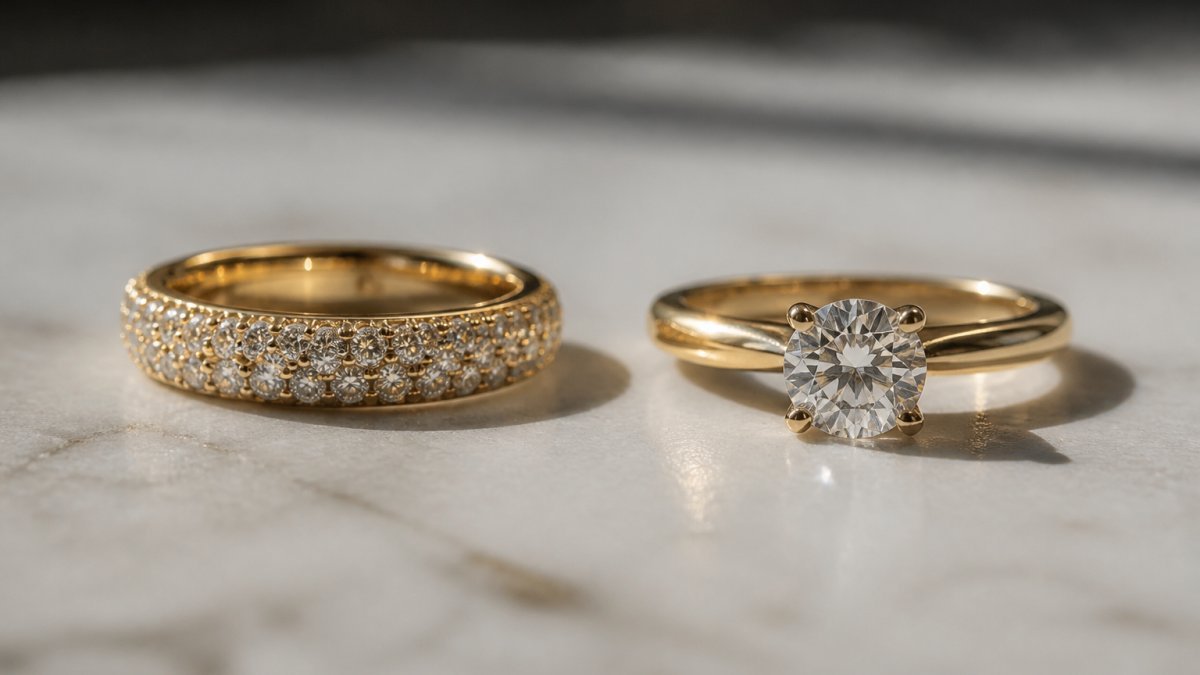
Table of Contents
- Modern Pavé Setting vs Solitaire: Quick Comparison
- What Is a Pavé Setting?
- Pavé Engagement Ring Pros and Cons
- Solitaire Engagement Ring Pros and Cons
- Pavé Ring Maintenance: Cleaning, Comfort, and Everyday Wear
- Total Cost of Ownership: Pavé vs Solitaire
- How to Choose: A Decision Framework for Your Lifestyle
- Frequently Asked Questions
Last Updated: October 8, 2026
Modern Pavé Setting vs Solitaire: Quick Comparison
Choosing between a pavé setting and a solitaire comes down to one question: do you want sparkle spread across the band, or all eyes on a single center stone?
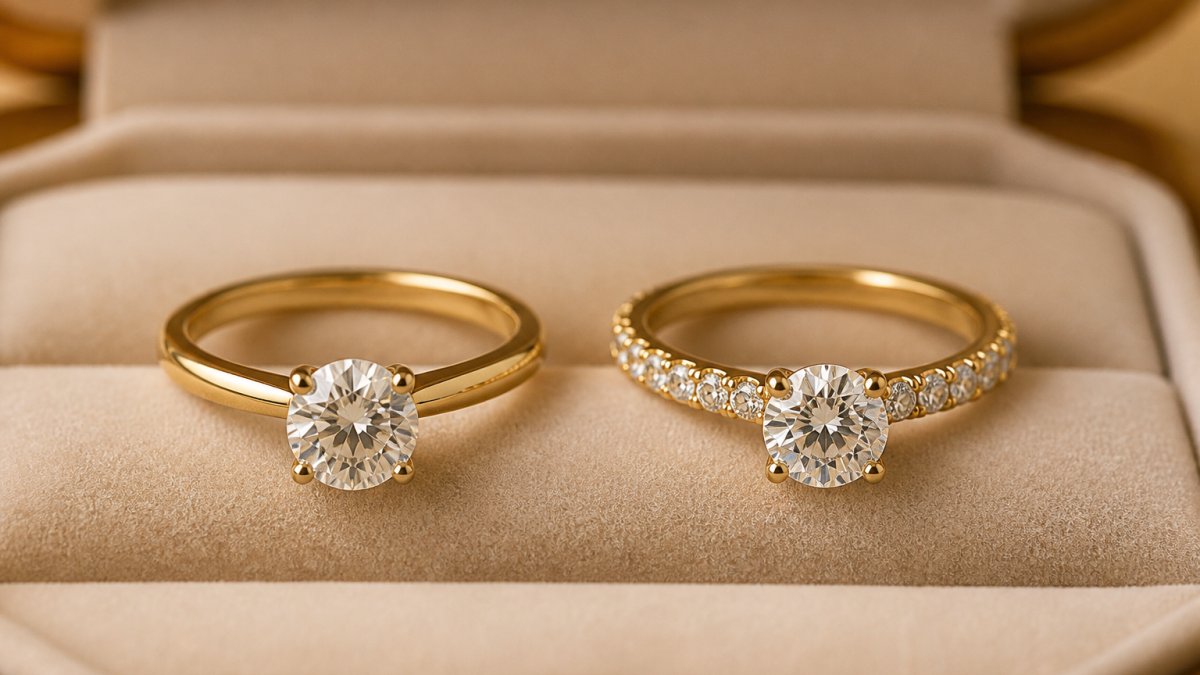
Here is the short version. Solitaire rings win on durability, easier cleaning, and lower total cost. Pavé rings win on visual impact, added brilliance, and a more detailed, modern look.
| Feature | Pavé Setting | Solitaire |
|---|---|---|
| Band | Diamond-set with accent stones | Plain polished metal |
| Sparkle | Brilliance across the whole band | Focused on the center stone |
| Stone security | Many small stones to check | One stone, fewer points of failure |
| Cleaning | More effort, needs a soft brush | Quick and simple |
| Everyday comfort | Can catch on fabric | Smooth and low-profile |
| Cost | Higher, more diamonds and labor | Lower for the same center stone |
| Best for | Detail lovers, dressier styles | Active wearers, timeless taste |
If you want the decision made for you: choose solitaire if the ring will be worn daily through workouts, travel, and hands-on work. Choose pavé if the wearer loves detail and does not mind a little upkeep.
What Is a Pavé Setting?
A pavé setting is a ring style in which many small diamonds are set side by side along the band, held in place by tiny metal beads so the surface looks almost entirely covered in stone.
The accent stones are the key difference. In a pavé band, small diamonds run along the shoulders and often partway around the band, so the ring sparkles from every angle, not just at the top.
Modern pavé has moved well beyond a single uniform row. Today you will see:
- Micro pavé: very small stones set tightly for a delicate, fine line of sparkle
- Scalloped and French-cut pavé: each stone sits in its own opening, which can show more of the diamond and let more light in
- Channel-set accents: stones set between two metal rails for a smoother, more protected finish
- Three-sided pavé: stones on the sides of the band as well as the top
- Mixed shapes: round stones combined with baguette or other cuts for a more sculptural band
These construction details matter because they change how much the band sparkles, how comfortable it feels, and how easily it can be cleaned. A well-built pavé band with a gallery rail, a thin metal bar that runs under the stones, adds security and helps prevent stones from catching.
Pavé Engagement Ring Pros and Cons
Pavé engagement rings trade a little practicality for a lot of visual impact. The style is popular for good reason, but it comes with real trade-offs on stone security, maintenance, and cost.

Pavé Pros: Sparkle, Style, and Modern Appeal
The biggest advantage is sparkle. With accent stones running along the band, a pavé ring delivers brilliance from every angle, not just straight down at the center stone. That added brilliance makes the ring look larger and more detailed than a plain band of the same width.
Pavé also reads as modern. Where a solitaire is classic and minimal, a pavé band feels contemporary and a touch more substantial. It pairs beautifully with a matching pavé wedding band, creating a stacked look that many buyers want.
A few more reasons people choose pavé:
- More visual detail in the same footprint
- A larger-looking overall ring without a bigger center stone
- Easy to customize with different metals and stone shapes
- Works well with a cushion cut or round center stone
Pro Tip
If you love the pavé look but worry about wear, ask about a ring with a gallery rail and slightly thicker band. The extra metal is invisible in photos but adds meaningful protection to the small stones.
Pavé Cons: Stone Security, Maintenance, and Cost
The honest downside of pavé is maintenance. Every small accent stone is a potential point of failure. Tiny stones are held by small metal beads, and with daily wear those settings can loosen over time. A loose stone can fall out, and small stones are easy to lose without noticing.
Cleaning takes more effort too. Lotion, soap, and hand sanitizer collect in the small gaps between stones, dulling the sparkle faster than on a smooth band. A pavé ring needs more frequent cleaning with a soft brush to keep it looking its best.
Cost is the third trade-off. Pavé uses more diamonds and more skilled labor, so it costs more than a solitaire at the same center-stone weight. You are paying for the band, not the main stone.
Watch Out
Skipping a yearly professional check on a pavé ring is a common mistake. A stone that loosens and falls out is far more expensive to replace than a routine tightening.
Solitaire Engagement Ring Pros and Cons
Solitaire engagement rings are the most durable and lowest-maintenance option, which is exactly why the style has never gone out of fashion. One center stone, one clean setting, nothing to fuss over.
Solitaire Pros: Simplicity, Durability, and Value
Durability is the headline. A solitaire has a single setting to protect, so there are far fewer points of failure than a pavé band. There are no small stones to loosen, no gaps to trap dirt, and no beads to wear down.
Cleaning a solitaire takes seconds. A quick soak and a soft brush restores full sparkle because there are no tight spaces between stones. The smooth band also sits more comfortably against the finger and is less likely to catch on clothing or hair.
Value is the third win. Because all the budget goes into one center stone instead of a band full of accent stones, a solitaire typically gives you a larger or higher-quality center diamond for the same money.
Solitaire Cons: Less Sparkle and Limited Detail
The main drawback is sparkle across the band. A solitaire shines from the center stone only, so the band itself is quiet. If you love a ring that catches light from every angle, a plain band can feel understated.
Detail is the other limitation. A solitaire is deliberately minimal, which some wearers find too simple. It offers less room for personalization on the band, and it can look smaller on the hand than a pavé ring with the same center stone.
1.50ct Round Lab Diamond Pavé Engagement Ring | 14K Yellow Gold | D/VS1 | IGI →
Some people also find the look dated, though we would push back on that. A solitaire is timeless rather than trendy, and a plain band is easy to pair with almost any wedding band, including a pavé band if you want sparkle added later.
Pavé Ring Maintenance: Cleaning, Comfort, and Everyday Wear
Pavé ring maintenance comes down to three habits: clean it more often, check the stones regularly, and give it a professional inspection once a year.
For cleaning, soak the ring in warm water with a drop of mild dish soap, then gently work a soft brush around the stones. Rinse and pat dry.
Comfort matters just as much. A pavé band with exposed beads can catch on sweaters, hair, and gloves, so if the wearer works with their hands, a lower-profile or channel-set band is worth considering.
| Task | Pavé Ring | Solitaire Ring |
|---|---|---|
| Routine cleaning | Weekly soak and soft brush | Quick soak as needed |
| Stone check | Monthly look for loose stones | Occasional check |
| Professional inspection | Yearly | Yearly |
| Everyday comfort | Can catch on fabric | Smooth and low-profile |
| Best lifestyle fit | Desk and dressy wear | Active, hands-on wear |
For wedding band pairing, pavé gives you more options to match, while a solitaire pairs with almost anything. If you plan to stack, decide early so the profiles sit flush together.
Total Cost of Ownership: Pavé vs Solitaire
Total cost of ownership favors the solitaire once you factor in more than the sticker price. A pavé ring costs more upfront because of the extra diamonds and labor, and it costs more over time through cleaning, inspections, and the occasional stone replacement. A solitaire is cheaper to buy and cheaper to keep.
That does not make pavé a bad value. If the sparkle and detail are what you want, the extra cost is buying a look you love, not waste. The point is to budget for the whole picture, not just the purchase.
At Native Jewel, our 1.50ct Round Lab Diamond Pavé Engagement Ring in 14K yellow gold and our 1.50ct Round Lab Diamond Solitaire in 14K yellow gold are both priced at $1,900.00 with the same D/VS1, IGI-certified center diamond. That is a useful comparison: at the same price, the pavé gives you a diamond-set band, while the solitaire gives you a cleaner, lower-maintenance design.

Key Takeaway
At the same center-stone quality and price, the real choice is between a diamond-set band and a plain one. Pick the band that matches how the ring will be worn, not just how it looks in the box.
How to Choose: A Decision Framework for Your Lifestyle
The right choice comes down to lifestyle, comfort, and personal preference, not to which style is objectively better. Use this framework to decide quickly.
Choose a solitaire if:
- The ring will be worn daily through workouts, travel, or hands-on work
- You want the largest or highest-quality center stone for your budget
- You prefer minimal, timeless design and easy cleaning
- The wearer dislikes fussy upkeep
Choose a pavé setting if:
- The wearer loves detail and sparkle across the whole band
- The ring is worn mainly for dressier occasions or desk work
- You want a more modern, substantial look
- You are happy to clean and check the ring regularly
Consider a hybrid if:
- You want sparkle but less maintenance: a channel-set or three-sided band
- You want a plain band with a little extra detail: a sculptural or knife-edge profile
- You want options later: start with a solitaire and add a pavé wedding band
A three-stone ring or a cushion cut center can also shift the decision, since a more detailed center stone may need less band sparkle to feel complete.
Best For
A solitaire suits active wearers who want one brilliant center stone with almost no upkeep. A pavé setting suits detail lovers who want brilliance across the band and do not mind regular cleaning.
If you are still torn, think about the ten-year picture, not the proposal day. The ring that fits the wearer's daily life is the one that stays beautiful longest.
The hardest part of choosing a ring is not the style, it is trusting the quality behind it. Native Jewel makes that easier with IGI-certified lab-grown diamonds, ethically sourced materials, and handcrafted 14K gold designs backed by a lifetime warranty on all diamond jewelry.
Frequently Asked Questions
Which is more expensive, a pavé ring or a solitaire?
A pavé ring usually costs more than a solitaire at the same center-stone weight because of the added accent stones and the labor to set them. For example, Native Jewel's 1.50ct Round Lab Diamond Pavé Engagement Ring in 14K yellow gold is $1,900, the same price as its 1.50ct Round Solitaire. Pricing depends on the specific design and total diamond weight, so compare total carat weight and setting style rather than assuming one is always pricier.
Is a pavé setting more sparkly than a solitaire?
Yes, a pavé setting typically appears more sparkly because the small accent stones along the band add extra brilliance and create a continuous line of light. A solitaire, by contrast, focuses all attention on the center stone. If you want maximum overall sparkle across the whole ring, pavé delivers that. If you prefer one bold focal point, a solitaire is the better choice.
Are pavé engagement rings harder to maintain?
Pavé rings require more frequent cleaning because the small stones and their settings can trap dirt, lotion, and soap. A soft brush and mild soap solution every week or two keeps them bright. Solitaires are simpler to clean since there are no accent stones. For pavé ring maintenance, also have a jeweler check the prongs annually to catch any loose stones early.
Do pavé diamonds fall out easily?
Pavé diamonds can loosen or fall out over time, especially with daily wear or if the ring is knocked against hard surfaces. Well-made pavé settings with proper prongs and a gallery rail reduce the risk. Regular inspections, ideally every six to twelve months, let a jeweler tighten any loose stones before they are lost. A lifetime warranty on craftsmanship, like the one Native Jewel offers, adds peace of mind.
Can you resize a pavé engagement ring?
Resizing a pavé ring is possible but more complex than resizing a solitaire because the accent stones run along the band. A skilled jeweler can adjust the size, but significant changes may require rebuilding part of the pavé section. Many retailers, including Native Jewel, include complimentary resizing with purchase, which simplifies the process if the initial fit is not perfect.


