

Cart
1

Table of Contents
- The 5 Engagement Ring Styles Defining 2026
- 1. The Oval Solitaire: The Most-Searched Shape of the Year
- 2. Emerald and Step Cuts: Architecture Over Sparkle
- 3. Vintage-Inspired Cuts: Marquise, Old Mine, and Rose
- 4. Sculptural Gold Bands and Bezel Settings
- 5. Toi et Moi and Multi-Stone Designs
- 2026 Engagement Ring Trends: What's Rising and What's Fading
- How to Choose an Engagement Ring Style That Fits Her Life
- Frequently Asked Questions
Last Updated: October 7, 2026
The 5 Engagement Ring Styles Defining 2026
The engagement ring styles dominating 2026 share one trait: they say more with less.

This guide covers the five styles leading the year, plus the practical details most trend roundups skip: durability, budget, and how to pick a ring she'll still love in 2046.
How We Picked These Five Styles
This list was built from three signals: search demand for specific diamond shapes, what customers actually order, and which designs hold up to daily wear. Style matters, but so does whether a setting snags on sweaters or loosens its prongs within a year. Every pick here passes both tests.
The throughline for 2026 is personal expression over convention. Buyers want a ring that looks like her, not like a catalog page.
1. The Oval Solitaire: The Most-Searched Shape of the Year
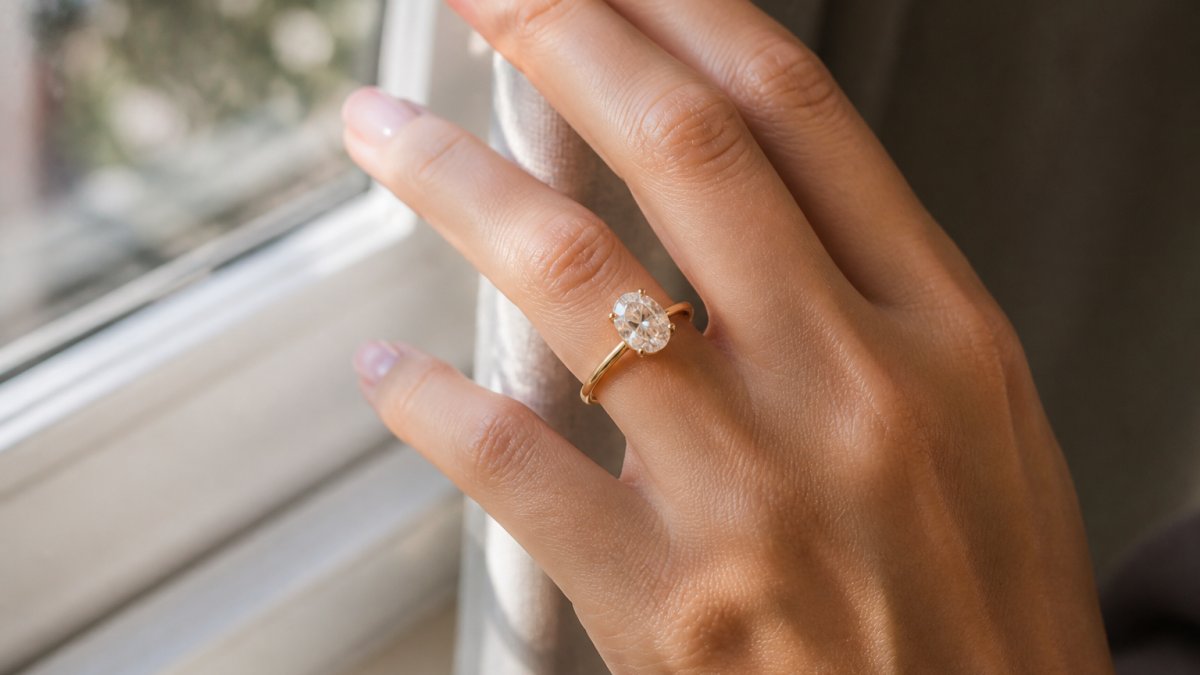
The oval solitaire is the single most requested engagement ring style right now, and the reason is simple: an elongated cut makes the stone look larger and the finger look longer. A 2ct oval reads closer to a 2.5ct round, which matters when you're comparing value.
Our 2ct Oval Lab Diamond Engagement Ring in 14K yellow gold is the configuration driving this trend: one D-colorless, VS1, IGI-certified center stone on a plain polished band, with nothing competing for attention.
Pro Tip
Ovals hide color and inclusions better than rounds. Look for an Excellent cut grade, and check for a heavy "bowtie" shadow across the middle before you commit.
If you want the diamond to be the entire statement, this is the setting that gets out of its way.
2. Emerald and Step Cuts: Architecture Over Sparkle
Emerald and Asscher cuts are having a genuine moment, and it's a reaction against a decade of maximum-sparkle brilliants.
The trade-off is honesty. Step cuts have nowhere to hide: clarity and cut quality are visible to the naked eye. That's exactly why they appeal to buyers who want restraint over noise.
Our 2ct Emerald Lab Diamond Solitaire in 14K yellow gold pairs a D-colorless, VS1 emerald center with a slim unadorned band.

Watch Out
Emerald cuts show every mark, so they need more care than a brilliant. Clean it weekly with a soft brush and mild soap, and remove the ring before lotion, dishes, or the gym.
3. Vintage-Inspired Cuts: Marquise, Old Mine, and Rose
Vintage-inspired cuts are the fastest-rising niche in engagement ring trends for 2026. Marquise, Old Mine, Old European, and rose cuts all carry a soft, antique character that modern brilliants can't replicate.
The marquise is the most wearable of the group. Its pointed silhouette elongates the finger dramatically, and in yellow gold it reads warmer and closer to the estate rings the cut is associated with. Our 2.75ct Marquise Lab Diamond Ring in 14K yellow gold sets a 2ct D-colorless center point-to-point above a pavé band.

Marquise points are the most vulnerable part of any fancy shape. Choose a setting with well-protected tips.
| Cut | Look | Durability | Care Level |
|---|---|---|---|
| Marquise | Elongating, dramatic | Moderate, exposed points | Higher |
| Old Mine | Cushiony, antique | Good, rounded corners | Standard |
| Rose | Flat, subtle, romantic | Delicate, low profile | Higher |
| Oval | Elongating, bright | Good, no sharp points | Standard |
| Emerald | Architectural, mirror-like | Good, vulnerable corners | Higher |
4. Sculptural Gold Bands and Bezel Settings
Chunky, sculptural gold bands are the year's clearest departure from the thin-band era. Wider 14K gold shanks, east-west settings, and bezel mounts all point the same direction: jewelry that feels substantial in the hand.
An east-west setting rotates an elongated stone horizontally, so an oval or marquise sits sideways across the finger.
Bezels solve a practical problem too. A bezel wraps metal around the stone's edge, protecting it from knocks, which makes it the smartest choice for nurses, teachers, and anyone who works with her hands.
Key Takeaway
For everyday wear, band width matters more than most buyers expect. A band 2mm and up holds its shape and resists bending.
5. Toi et Moi and Multi-Stone Designs
Toi et Moi, French for "you and me," is the oldest romantic setting in jewelry and the hardest to execute well.
Our 4.05ct Toi et Moi Emerald and Pear Ring in 14K yellow gold pairs a 1.5ct emerald cut with a 1.5ct pear, both D-colorless and VS1.
Multi-stone designs also let you represent two people, two families, or two stories in one piece, which is why personalization is driving so much of this category.
3.03ct Oval Lab Diamond Engagement Ring | 3.03ct Center | D/VS1 IGI Certified →
2026 Engagement Ring Trends: What's Rising and What's Fading
Most trend roundups tell you what's popular this year. Fewer tell you why, and almost none tell you how to tell the difference between a design that will still look right in 2046 and one that will look like a timestamp. That distinction is the whole game when you're buying a ring meant to be worn for decades.
The Mechanism Behind a Trend
Engagement ring trends move on three levers, and knowing which lever is driving a look tells you how long it will last.
- Manufacturing capability. Lab-grown diamonds made larger carat weights affordable, which made elongated cuts practical at scale. This lever produces durable shifts because the underlying economics don't reverse.
- Cultural mood. The move away from pavé-everything toward clean solitaires reflects a broader preference for restraint. Mood-driven trends last years, not months, but they do cycle.
- Styling detail. A specific prong shape, a particular engraving pattern, a named micro-trend. These are the fastest to date because they're surface-level and easy to copy.
When a look is driven by levers one and two, it tends to stick. When it's driven by lever three, it tends to look dated within a few seasons.
Rising: Elongated Cuts, Warm Gold, Personalization
Three things are rising, and each is backed by a durable lever.
- Elongated cuts, oval, marquise, elongated cushion. Driven by manufacturing capability. A 2ct oval reads closer to a 2.5ct round.
- Warm yellow gold. Driven by cultural mood. Yellow gold flatters a wider range of skin tones than white metal and photographs warmer in natural light.
- Personalized multi-stone designs. Driven by both. Toi et Moi and trilogy settings let buyers encode a specific story, and the two-stone format has existed for over a century, so the underlying structure isn't novel, only the personalization is.
Fading: Heavy Halos and All-White-Metal Everything
Two things are fading, and it's worth understanding why so you don't overcorrect.
- Heavy halo settings. A halo surrounds the center stone with a ring of smaller diamonds to make it look larger. Once lab-grown stones made actual carat weight affordable, the halo's original job, visual size on a budget, became redundant. Halos aren't gone; they've shrunk into delicate hidden halos and under-bezels that add sparkle without dominating.
- All-white-metal everything. This is a mood shift, not a durability problem. White gold and platinum remain excellent choices; they're just no longer the default. If she already wears white metal, matching it is still the right call.
How to Tell a Durable Design From a Dated One
Run any style through these four questions before you commit:
- Does it depend on a specific styling detail, or on the stone and setting geometry? Geometry ages well. Details date.
- Would it have looked reasonable 30 years ago? Solitaires and step cuts pass this test. Hyper-specific novelty settings don't.
- Is the trend driven by cost, culture, or styling? Cost and culture produce staying power. Styling produces churn.
- Can it be modified later? A ring that can be reset, resized, or re-tipped adapts as taste shifts. A ring with an integrated, unmodifiable structure locks you in.
The Lab-Grown Layer Underneath All of This
Lab-grown diamonds sit underneath every trend on this list. That certification is your proof of quality, and it's what separates a real lab diamond from a cubic zirconia imitation.
According to IGI's diamond grading standards, certified stones carry a unique report number you can look up directly in the grading laboratory's database. Ask for that number before you buy anywhere.
The practical effect on trend longevity is significant.
How to Choose an Engagement Ring Style That Fits Her Life
The right engagement ring style is the one that suits how she actually lives: her work, her hobbies, and how often she takes her jewelry off.
Run through this decision framework before you buy:
- Does she work with her hands? Nursing, teaching, cooking, or trades point to bezel settings and rounded cuts with no exposed points.
- What metal does she already wear? Match her existing jewelry. Yellow gold flatters a wider range of skin tones; white gold keeps the palette cool and modern.
- How much maintenance will she tolerate? Step cuts and rose cuts need more cleaning. Ovals and rounds are forgiving.
- What's the budget? Our collection runs from $2,000 to $3,500.
- Does she want to be involved? Multi-stone and Toi et Moi designs are the easiest to personalize together.
Durability deserves its own moment here. A 14K gold band is harder than 18K because it contains more alloy, which makes it the better choice for a ring worn every day. It will develop fine scratches over time; that's normal.
Pro Tip
Ask about resizing and repairs before you buy, not after. We include complimentary resizing and a lifetime warranty on craftsmanship with every ring.
Ethical sourcing closes the loop for a lot of buyers. Lab-grown diamonds avoid the mining concerns that come with extracted stones, and they're traceable from growth to grading.
Frequently Asked Questions
What are the engagement ring trends for 2026?
The dominant engagement ring styles for 2026 center on elongated cuts like oval and marquise, step cuts such as emerald and Asscher, vintage-inspired shapes, sculptural gold bands, and multi-stone designs like Toi et Moi. Personalization and individual expression drive most choices, with buyers favoring settings that reflect a specific person rather than a generic template. Lab-grown diamonds have also moved from alternative to mainstream, making larger carat weights more accessible across every one of these styles.
Are vintage-inspired engagement rings still popular in 2026?
Yes. Vintage-inspired cuts including marquise, Old Mine, Old European, and rose cuts remain on the rise because they offer a distinct silhouette that stands apart from the oval and round cuts everyone else is wearing. A marquise set in 14K yellow gold, for example, reads warmer and softer than the same shape in white metal, closer to the estate rings these cuts are associated with. Buyers drawn to vintage style often pair it with a plain band to keep the focus on the stone.
How do I choose an engagement ring style that suits my partner?
Consider what she already wears. If her everyday jewelry is minimal, a solitaire in a plain band will feel natural. If she stacks rings or favors statement pieces, a pavé band or multi-stone design fits better. Consider her daily routine too: a bezel setting protects the stone if she works with her hands, while a prong-set marquise has delicate points that need more care. Finally, look at her metal preference. Yellow gold flatters a wider range of skin tones, while white gold keeps the palette cool and modern.
Are lab-grown diamond engagement rings a popular choice in 2026?
Lab-grown diamond engagement rings are now a mainstream choice, not a niche one. They offer the same optical and physical properties as mined diamonds, come with certification from grading labs like IGI, and typically cost less at the same carat weight. That price difference lets buyers put more budget toward a larger center stone or a more detailed setting. For shoppers who care about ethical sourcing and transparency, lab-grown stones also provide a documented origin that mined diamonds often cannot match.
Which diamond shapes are gaining the most popularity in 2026?
Elongated shapes are leading the rise. Oval has overtaken round as the most searched engagement ring shape, and marquise, elongated cushion, and pear cuts are all climbing alongside it. Step cuts like emerald and Asscher are also gaining ground among buyers who prefer architectural lines over maximum sparkle. Radiant cuts sit in between, combining a rectangular outline with brilliant-style faceting, and their trimmed corners make them one of the more durable fancy shapes for everyday wear.
Choosing a ring she'll wear for decades comes down to matching style to her real life, not chasing whatever is trending this month. Native Jewel handcrafts 14K gold rings around IGI-certified lab-grown diamonds, with customizable options across diamond, setting, and metal, complimentary resizing, a lifetime warranty, and 30-day returns if it isn't right. Browse the collection and find the style that fits her.


