

Cart
0
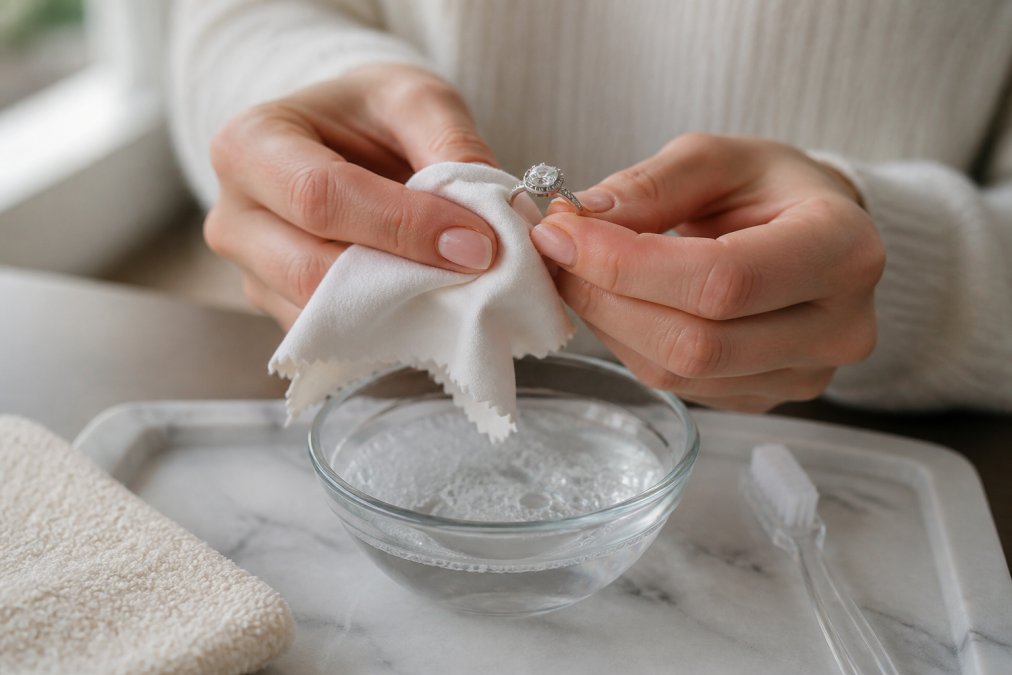
Table of Contents
- What You'll Need Before You Clean Lab Diamond Ring
- Step-by-Step: How to Clean Lab Diamond Ring at Home
- The Best Jewelry Cleaner for Lab Diamonds (and What to Avoid)
- How Often to Clean Engagement Ring Based on Daily Wear
- Can You Use Ultrasonic Cleaner on Lab Diamonds? Risks to Know
- Metal and Setting Compatibility: 14K Gold, Prongs, and Pavé
- Troubleshooting Cloudy Buildup and Haziness on Lab Diamonds
- Storage and Preventative Care Between Cleanings
- Frequently Asked Questions
Last Updated: September 12, 2026
What You'll Need Before You Clean Lab Diamond Ring
You do not need a jeweler's bench to keep a lab-grown diamond looking brilliant. A lab diamond is chemically identical to a mined one, so the same gentle routine works: warm water, a drop of mild dish soap, and a soft brush. This guide from Native Jewel walks through exactly how to clean lab diamond ring jewelry at home without risking the setting, the metal, or the stone.

The tools take two minutes to gather. Skip the expensive kits until you know what your ring actually needs.
- A small bowl of warm water
- One drop of mild dish soap, unscented and dye-free
- A soft-bristled toothbrush or a jewelry brush
- A lint-free microfiber cloth
- A fine-mesh strainer (optional, but it saves stones)
Pro Tip
Never clean your ring over an open drain. A common mistake is rinsing directly over the sink, and loose stones or a slipped ring disappear fast. Plug the drain or work over a bowl instead.
Step-by-Step: How to Clean Lab Diamond Ring at Home
The soak-and-brush method takes about ten minutes and works on almost every ring. Follow the three steps below in order, and avoid scrubbing harder when a spot resists.
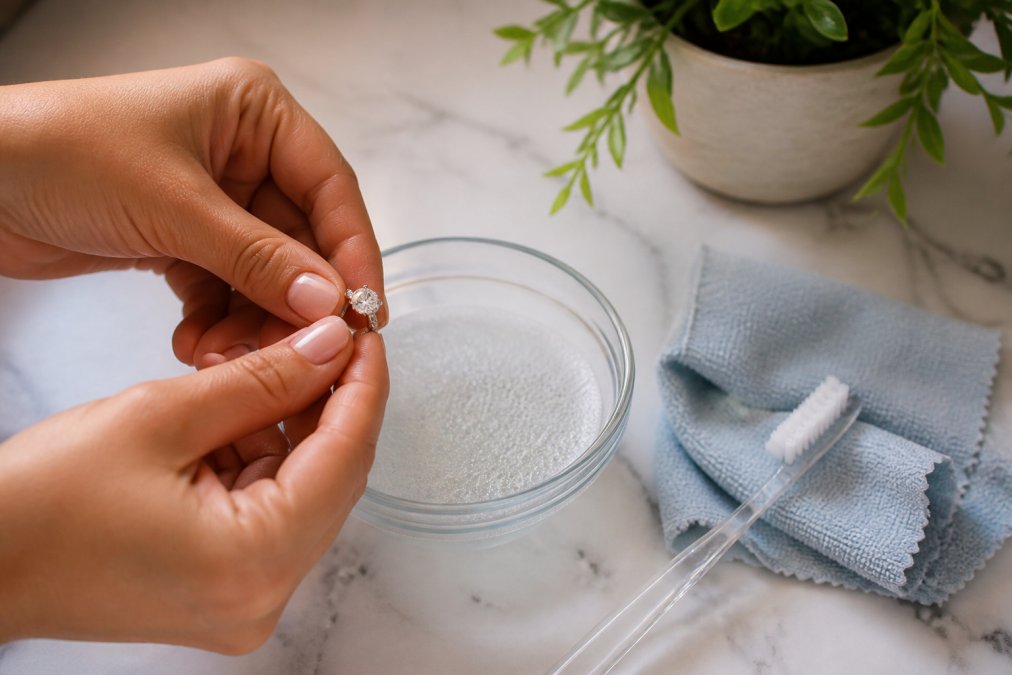
Step 1: Soak in Warm Water and Mild Dish Soap
Fill a bowl with warm, not hot, water and add one drop of mild dish soap. Let the ring soak for 15 to 20 minutes. The soak loosens lotion, skin oils, and cosmetic residue trapped under the prongs and around the pavé before you touch a brush.
Step 2: Brush the Setting, Prongs, and Pavé Gently
Lift the ring out and brush the stone, the prongs, and the underside of the setting with a soft-bristled toothbrush. Work in small circles. The girdle and the space beneath the diamond collect the most buildup, so spend your time there rather than on the open face of the stone.
Step 3: Rinse, Pat Dry, and Check for Residue
Rinse the ring under warm running water, or dip it in a second bowl of clean water. Pat it dry with a lint-free microfiber cloth rather than rubbing, which can snag prongs. Hold the ring up to a light and check for a foggy appearance or a dull film. If you still see residue, repeat the soak once before moving on.
The Best Jewelry Cleaner for Lab Diamonds (and What to Avoid)
The best jewelry cleaner for lab diamonds is mild dish soap and water. Commercial jewelry cleaner works too, but only if the label confirms it is safe for the metal and the setting. Read the ingredients before you buy.
Avoid these, which cause chemical damage or dull the finish over time:
- Chlorine and bleach, which attack gold alloys
- Abrasive powders and whitening toothpaste
- Ammonia on certain treated or filled stones
- Acetone and nail polish remover
Watch Out
Household cleaners are the leading cause of avoidable damage. Bleach and chlorine weaken the alloy in gold settings, and repeated exposure can pit the metal around the prongs.
How Often to Clean Engagement Ring Based on Daily Wear
How often to clean engagement ring jewelry depends on how you wear it. A ring worn daily collects oils faster than one saved for occasions. Most people find a quick soak every one to two weeks keeps the stone bright, with a deeper clean monthly.
| Wear Pattern | Quick Clean | Deep Clean |
|---|---|---|
| Daily wear, hands-on work | Every 3-5 days | Every 2 weeks |
| Daily wear, office or desk | Weekly | Monthly |
| Occasional wear | Before each outing | Every 2-3 months |
| Stored long-term | On removal | Before wearing again |
Can You Use Ultrasonic Cleaner on Lab Diamonds? Risks to Know
A home ultrasonic cleaner is the most misunderstood tool in jewelry care. It works by generating high-frequency vibrations in a liquid bath, which creates microscopic bubbles that implode against the ring and lift debris out of crevices a brush cannot reach. That mechanism is exactly why it is both effective and risky.
When an ultrasonic cleaner is safe:
- The stone is undamaged, with no chips, cracks, or feathers.
- The setting is tight and the prongs are in good condition.
- The metal is solid gold or platinum, not plated or filled.
- The ring has no glued-in stones, no pearls, no opals, no emeralds, and no treated or fracture-filled diamonds.
When to keep the ring out of the ultrasonic bath:
- Fracture-filled or clarity-enhanced diamonds. The filler material can be shaken out or clouded by the cleaning solution, leaving the stone worse than before.
- Treated colored diamonds. Some treatments are surface-level and can be stripped by heat or vibration.
- Tension settings. The stone is held by metal pressure alone, and vibration can release it.
- Glued or epoxy-set stones. The adhesive softens and fails.
- Pavé and micro-pavé. Tiny stones with minimal metal are the most common casualties of home ultrasonic units.
- Plated or gold-filled bands. Vibration and cleaning solution can accelerate plating wear.
- Rings with known loose prongs. The ultrasonic unit will finish what time started.
Steam cleaners carry a parallel risk profile. The heat and pressure can loosen adhesive, stress a fracture-filled stone, and force moisture into a setting that then traps it against the metal. Both ultrasonic and steam cleaning are best done by a professional who can inspect the setting before and after.
If you own a home ultrasonic unit and want to use it, follow these rules:
- Confirm with a jeweler that your stone is untreated and your setting is tight.
- Use only the manufacturer's recommended solution, never ammonia or bleach.
- Run the shortest cycle available.
- Inspect the ring immediately after, looking for loose stones or a dulled finish.
- Skip the ultrasonic entirely on any ring you are unsure about.
Watch Out
A home ultrasonic cleaner can loosen a weak prong or dislodge a small pavé stone in a single cycle. If you cannot verify the stone's treatment history and the setting's condition, use the soak-and-brush method instead.
Metal and Setting Compatibility: 14K Gold, Prongs, and Pavé
Most cleaning guides treat the diamond as the only variable. In practice, the metal band is what limits which cleaners you can use. A lab diamond shrugs off warm soapy water, but the alloy holding it may not.
Here is how the common ring metals behave:
- Platinum. Dense, naturally white, and the most chemically tolerant of the group. It resists chlorine better than gold alloys and handles repeated soap-and-water soaks without dulling. Platinum develops a soft satin patina over time rather than losing metal, so a jeweler can re-polish it back to a mirror finish. Avoid abrasive powders, which scratch the surface and force more frequent polishing.
- 14K and 18K white gold. White gold is yellow gold alloyed with white metals, then plated with rhodium for that bright silver look. The gold itself tolerates mild soap, but the rhodium plating wears thin with abrasion and repeated exposure to ammonia-based cleaners. Once the plating thins, the ring looks yellowish and needs re-plating. Skip ultrasonic units and abrasive toothpaste on plated white gold.
- 14K and 18K yellow gold. Durable and forgiving with warm soapy water. The copper and silver in the alloy are what chlorine attacks, so keep yellow gold away from pools, hot tubs, and bleach-based bathroom cleaners.
- Rose gold. The copper content that gives rose gold its color is also its weak point. Copper reacts with chlorine, ammonia, and even some skin acids, which can darken the alloy or leave a reddish film. Stick to plain dish soap and water, dry thoroughly, and store rose gold separately from harder metals.
- Plated and gold-filled. The thinnest layer of gold over a base metal. Any abrasive, any ultrasonic vibration, and any ammonia-based cleaner risks wearing through the plating. Treat these with the gentlest routine in this guide.
Setting type matters just as much as metal:
- Prong settings expose the girdle and clean easily with a soft brush.
- Pavé and channel settings hold dozens of tiny stones with minimal metal, so a hard brush can catch and lift them. Use a soft brush and light pressure only.
- Bezel settings enclose the stone in metal, which protects it but traps lotion and soap film along the bezel edge. A soak does more work here than brushing.
- Tension settings hold the stone by metal pressure alone. Never put a tension-set ring in an ultrasonic cleaner.
Key Takeaway
Match your cleaning method to the setting and the metal, not just the stone. A soft brush and mild dish soap are safe on nearly every combination; ultrasonic units, ammonia, and abrasives are not.
Troubleshooting Cloudy Buildup and Haziness on Lab Diamonds
A cloudy or foggy appearance almost always traces to buildup, not the stone itself. Film from lotion, soap scum, and hard-water minerals sits on the pavilion, the underside of the diamond, and blocks light from returning to your eye. That is why a diamond can look dull even when the top face seems clean.
Work through these fixes in order:
- Re-soak for 20 minutes in warm soapy water
- Brush the pavilion and the area under the prongs
- Rinse in distilled water if your tap water is hard
- Dry fully with a microfiber cloth
If haziness persists after two full cleaning cycles, the cause may not be surface residue. A professional can check for a loose stone, a scratched setting, or damage that a home clean cannot fix.
Storage and Preventative Care Between Cleanings
Storage prevents most of the buildup you spend time removing. Keep each piece in its own soft pouch or a lined compartment so diamonds do not scratch softer metals or each other. Diamonds are the hardest gemstone, and a loose diamond in a shared box will mark gold and softer stones over time.
A few habits cut cleaning time in half:
- Remove your ring before applying lotion, sunscreen, or hair products
- Take it off before dishes, cleaning, or swimming
- Wipe the stone with a dry cloth at the end of the day
- Schedule a professional inspection and deep clean once a year
A professional inspection checks the prongs, tightens loose stones, and catches wear before a stone falls out. Combined with a home routine, that annual visit is the single best way to protect a ring you plan to wear for decades.
Frequently Asked Questions
Do lab grown diamonds lose their sparkle over time?
Lab diamonds do not lose sparkle on their own. Dullness comes from surface buildup of lotion, soap film, and skin oils, which blocks light from entering the stone. Cleaning your ring regularly with warm water and mild dish soap restores brilliance. Unlike cubic zirconia, lab diamonds are real diamonds with the same hardness, so they resist scratching and keep their luster for decades with basic care.
How often should you clean a lab grown diamond ring?
Clean your lab diamond ring every one to two weeks if you wear it daily. If you apply lotion, sunscreen, or hair products while wearing it, clean it weekly. A quick soak in warm water with mild dish soap takes five minutes. Schedule a professional inspection once or twice a year to check prongs, tighten settings, and catch any buildup you cannot reach at home.
Can I shower with my lab grown diamond ring?
You can, but it is not recommended. Shampoo, conditioner, and body wash leave a residue that dulls the stone and builds up around prongs and pavé settings. Hot water and steam can also loosen a prong over time. Remove your ring before showering, swimming, or using a hot tub to protect both the diamond and the 14K gold band.
Is it safe to use an ultrasonic cleaner on a lab diamond ring?
Ultrasonic cleaners can be safe for a simple solitaire with no inclusions near the surface, but they carry real risks. Vibration can loosen prongs, and stones with feathers or fractures near the girdle may crack. Skip ultrasonic cleaning for pavé, halo, or channel-set rings, and never use one on emeralds or opals. A soft brush and mild soap is safer for most rings.
Lab-grown diamonds hold their brilliance for a lifetime, but only if the setting and metal stay sound. Native Jewel crafts each piece with IGI-certified lab-grown diamonds in 14K gold, backed by a lifetime warranty on all diamond jewelry and a 30-day hassle-free return window, so you can care for it with confidence. Browse the collection and find a ring built to last. SHOP RINGS


