

Cart
0
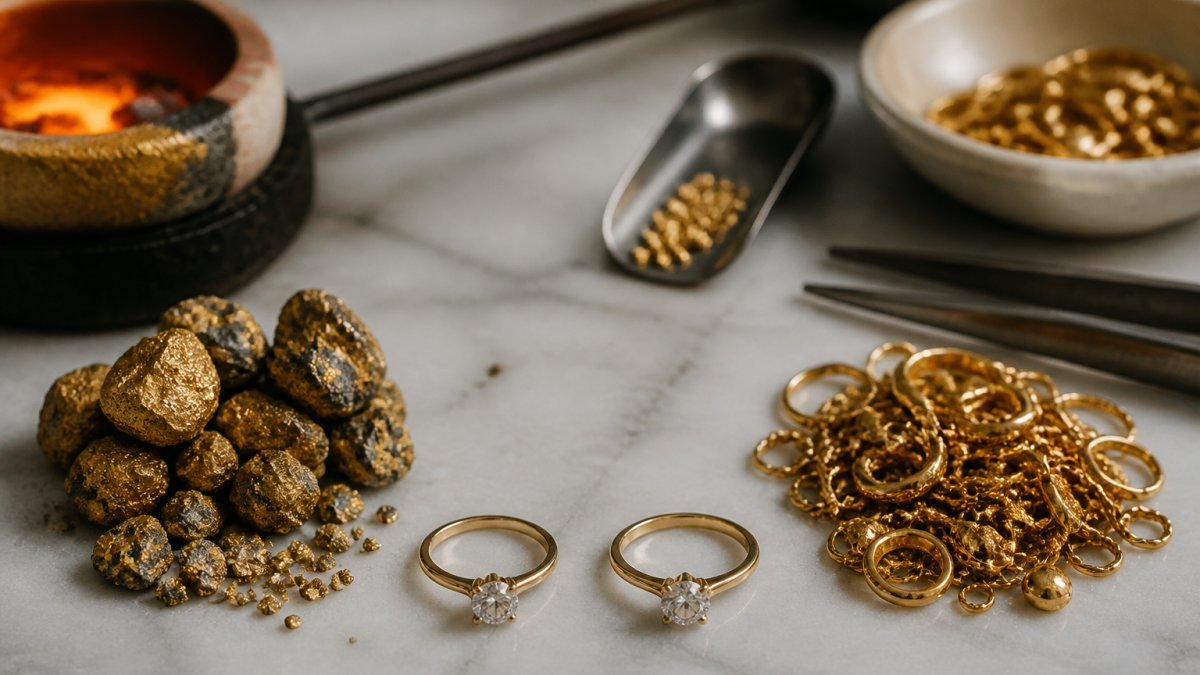
Table of Contents
- Recycled Gold vs Mined Gold for Engagement Rings: What's the Difference?
- Recycled Gold vs New Gold: Cost, Purity, and Appearance
- The Environmental Impact of Gold Mining
- Recycled Gold Engagement Rings: Durability and Daily Wear
- How to Verify Recycled Gold Before You Buy
- Choosing Your Ring: A Decision Framework
- Conclusion
- Frequently Asked Questions
Last Updated: October 9, 2026
Recycled Gold vs Mined Gold for Engagement Rings: What's the Difference?
The gold in your engagement ring is chemically identical whether it comes from a mine or a recycling facility.

Here is the part most guides skip. Refined gold is refined gold. Once metal passes through a refinery, its source is erased.
Recycled gold is recovered from old jewelry, industrial scrap, and electronics, then refined back to pure metal. Mined gold is extracted from the earth, then refined into new metal.
How Recycled Gold Is Refined
Recycling starts with collection: old rings, broken chains, dental scrap, and electronics all contain recoverable gold. Refiners melt these items down, then use chemical or electrolytic processes to separate pure gold from alloys.
The output is fine gold, typically 99.5% pure or higher, then re-alloyed to whatever karat the jeweler needs, a 14K ring is roughly 58% gold mixed with other metals for strength and color.
How Mined Gold Reaches the Market
Mined gold follows a longer path. Ore is extracted from open-pit or underground mines, crushed, and treated with chemicals to leach out the gold. That raw material is smelted into doré bars, shipped to refineries, purified, traded, and finally alloyed into jewelry-ready metal, a chain with more parties, transport, and documentation to trace.
Recycled Gold vs New Gold: Cost, Purity, and Appearance
Recycled gold and newly mined gold cost about the same per gram, because both trade on the same global commodity price.
Appearance is where buyers expect a difference and there isn't one. Color depends on the alloy mix, not the source: a 14K yellow gold ring looks the same either way.

| Factor | Recycled Gold | Mined Gold |
|---|---|---|
| Purity standards | Same karat system | Same karat system |
| Typical cost | Tied to spot price | Tied to spot price |
| Color and finish | Set by alloy mix | Set by alloy mix |
| Traceability | Depends on refiner records | Depends on mine-to-market chain |
| Supply volume | Limited by scrap supply | Limited by mining output |
The real difference is traceability and environmental footprint, not the metal itself.
Key Takeaway
If a jeweler claims recycled gold is "purer" or "stronger" than mined gold, that claim does not hold up. Karat and alloy determine performance, not origin.
The Environmental Impact of Gold Mining
Gold mining moves enormous volumes of rock and consumes significant water and energy. Open-pit operations reshape land, and some extraction methods involve chemicals that require careful containment, as documented in U.S.
Recycling avoids most of that footprint. Recovering gold from scrap uses far less energy than extracting it from ore, because the metal is already concentrated and separated.
This is where the recycled gold engagement ring conversation gets practical: choosing recycled metal does not change how your ring looks or wears, only what had to happen before the metal reached the bench.
Recycled Gold Engagement Rings: Durability and Daily Wear
Durability has nothing to do with whether gold was recycled. A 14K gold band wears the same way in both cases, because the alloy recipe and setting construction determine how it holds up. What most guides gloss over is that the setting, not the metal origin, is where rings actually fail.
What Actually Drives Wear
- Karat choice. 14K gold (roughly 58% gold) balances hardness and color for everyday wear. 18K is softer and scratches faster; 10K is harder but duller.
- Setting construction. Prong count, prong thickness, gallery rails, and how accent stones are seated matter more than metal origin. A well-built pavé band in 14K outlasts a poorly built solitaire in the same alloy.
- Wear patterns. Rings worn during workouts, cleaning, gardening, or manual work accumulate scratches and impact faster. The biggest predictor of damage is exposure, not where the gold came from.
Pavé Construction: Why the Details Matter
"Pavé" is not one thing, the construction method determines how secure the small stones are and how the band feels.
- Micro-pavé uses very small stones (often under 1.5 mm) set close together with minimal metal between them. It produces the most continuous sparkle, but each stone has less metal holding it, making it the most inspection-sensitive style.
- French pavé cuts a V-shaped channel into the band and seats each stone so the metal rises to a point between them. The stones sit lower and are supported on more sides, improving security and reducing snagging.
- Shared-prong pavé uses one prong to hold two adjacent stones. It shows more metal than micro-pavé but each stone has more contact points, a compromise between sparkle density and security.
Solitaire Construction: Where the Risk Actually Sits
A plain-band solitaire has no accent stones to lose, so the only real wear points are the center-stone prongs and the shank.
- Four-prong vs. six-prong. Four prongs show more of the stone; six distribute impact across more contact points. For a large center stone, six prongs are the more conservative choice.
- Gallery rail. A rail under the center stone adds rigidity and stops a bent prong from dropping the stone. It also raises the stone slightly, affecting how the ring stacks.
- Shank thickness. Thin shanks (under about 1.8 mm) look elegant but deform faster under daily wear. A slightly thicker shank is the cheapest durability upgrade.
A Realistic Maintenance Schedule
This cadence catches problems before they become losses:
- Weekly: wipe the ring with a soft cloth and gently press the center stone, if it moves or clicks, stop wearing it until a jeweler looks at it.
- Monthly: inspect pavé sections under bright light. A loose accent stone usually wiggles or sits slightly proud before falling out.
- Every 6-12 months: professional cleaning and prong tightening, the single highest-value habit for any ring with accent stones.
Watch Out
Skipping annual prong checks is the most common way people lose an accent stone. A loose stone rarely falls out without warning; it usually wiggles first, and a jeweler can tighten it in minutes.
Repair Realities
- Tightening a prong is a quick, inexpensive bench job.
- Replacing a single accent stone is usually straightforward if the setting is intact, but matching an older stone's color and cut can be harder than the repair.
- Rebuilding a worn pavé section costs more than a single-stone fix because the jeweler must reset a run of stones.
None of this changes based on whether the gold was recycled or mined, only on the setting you choose and how consistently you maintain it.
We include a lifetime warranty on all diamond jewelry and complimentary resizing, because these are the maintenance points that actually come up.
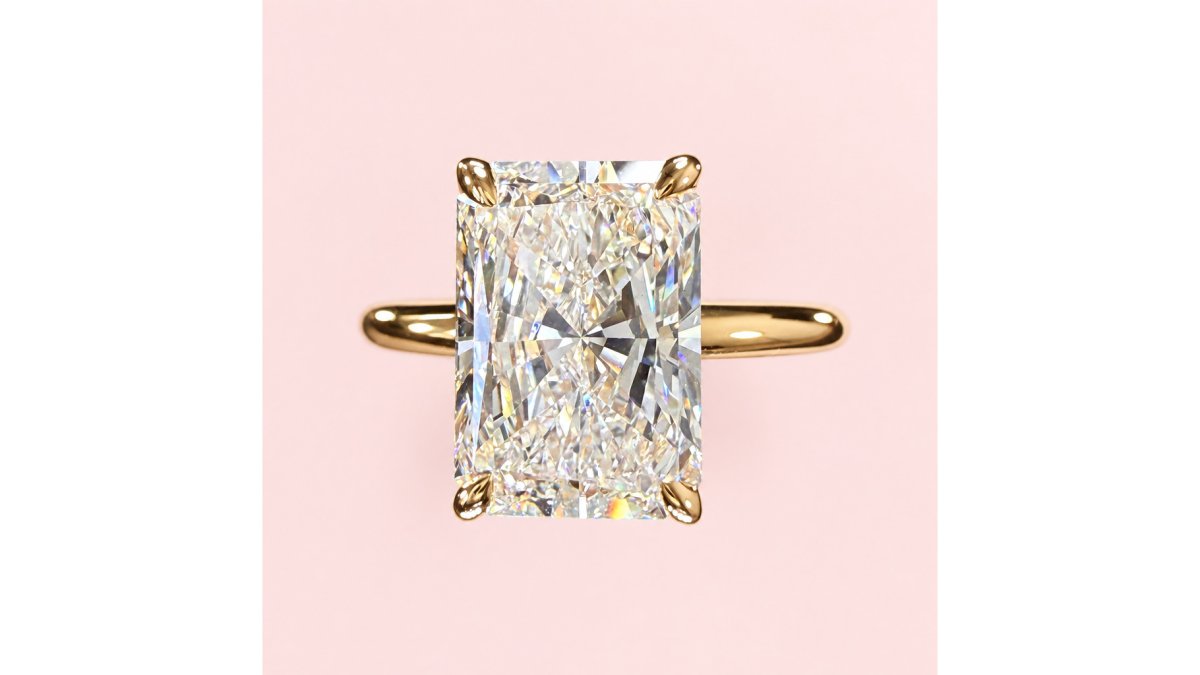
3ct Radiant-Cut Lab Diamond Solitaire Engagement Ring | 14K Yellow Gold →
How to Verify Recycled Gold Before You Buy
Ask for documentation, not a verbal promise. Reputable sellers can show refinery records, chain-of-custody paperwork, or certification from a recognized standards body.
A practical verification checklist:
- Request written confirmation of the gold's origin and refining source
- Confirm the karat stamp and check it matches the paperwork
- Ask which refinery processed the metal and whether it holds third-party certification
For diamond certification, the International Gemological Institute's report verification portal lets you look up a grading report by its unique number. Every Native Jewel diamond is laser-inscribed and IGI-certified, so you can confirm the stone matches its report before the ring ever ships.
The certificate number is the proof, not the sales pitch. Look it up yourself in the IGI portal and compare the carat weight, color, and clarity grades against the listing. It takes two minutes.
Choosing Your Ring: A Decision Framework
Start with what you actually care about, then let that drive the metal and setting choice. Most buyers weigh three things: ethics, budget, and durability. But the setting decision, pavé versus solitaire, is where the ring's daily reality is set.
Pavé vs. Solitaire: A Side-by-Side
| Factor | Pavé Band | Plain Solitaire Band |
|---|---|---|
| Sparkle across the band | Continuous, high | None beyond the center stone |
| Center-stone emphasis | Can compete with or frame the center | All attention on the center stone |
| Perceived center size | Pavé can make the center read larger by contrast | Center stone reads at its true size |
| Accent-stone risk | Higher, many small settings to inspect | None |
| Cleaning effort | More crevices, more frequent cleaning | Simple |
| Snagging on fabric/hair | More likely, especially micro-pavé | Minimal |
| Resizing | Harder, pavé sections can be damaged | Straightforward |
| Comfort on the finger | Depends on stone height and edge finish | Generally the most comfortable |
| Wedding-band pairing | Often needs a curved or contoured band | Usually accepts a straight band |
How Pavé Changes the Center Stone's Appearance
Pavé does two optical things at once. First, the line of small stones creates a continuous band of light that draws the eye around the finger, which can make the center stone feel larger by comparison. Second, if the accent stones are too large or bright relative to the center, they compete with it rather than frame it. A plain band does the opposite: it removes all competing light so the center stone is the only thing the eye lands on.
Wedding-Band Fit and Stack Planning
This is the part most buyers only think about after the proposal, and the hardest thing to change later.
- Low-profile settings sit close to the finger and usually let a straight wedding band sit flush.
- High-profile or cathedral settings lift the center stone and often leave a gap under it, so a straight band will not sit flush.
- Gallery rails add height under the center stone, which can push a straight band outward.
If you plan to wear the engagement ring and wedding band together every day, decide the stack before finalizing the engagement ring setting. It is far easier to choose a compatible setting up front than to reshape a band later.
Matching the Choice to the Buyer
- If sourcing transparency matters most: ask for refinery documentation and choose a seller who provides it as standard.
- If budget is the priority: recycled and mined gold price out similarly, so put the savings toward cut quality or carat weight instead of metal origin.
- If daily durability matters most: prioritize setting construction and karat over the gold's source. A plain solitaire in 14K is the lowest-maintenance combination.
That last point is where our own collection does the work. Our 3ct Radiant-Cut Lab Diamond Solitaire Engagement Ring | 14K Yellow Gold pairs a D-color, VS1 radiant-cut stone with a low-profile four-prong setting in solid 14K yellow gold; the trimmed corners add chip resistance, which matters for a stone this size. If you prefer a warmer, more classic profile, the 2ct Oval Lab Diamond Engagement Ring | 14K Yellow Gold Solitaire keeps the band plain so the oval carries the whole ring.
Both are built to order, IGI-certified, and backed by a lifetime warranty on craftsmanship plus 30-day returns.
Conclusion
The harder question is not which gold is better, because the metal performs identically either way. The real challenge is finding a seller who documents their sourcing and stands behind the setting for years, not just at checkout.
That is the standard we hold ourselves to at Native Jewel. Every piece uses ethically sourced materials and IGI-certified lab-grown diamonds, with handcrafted designs, a lifetime warranty on all diamond jewelry, and 30-day hassle-free returns.
Frequently Asked Questions
What is the difference between recycled gold and mined gold?
Recycled gold is refined from existing gold items like old jewelry, coins, or industrial parts. Mined gold is newly extracted from the earth. Chemically, they are identical: both are pure elemental gold. The difference is origin and supply chain. Recycled gold avoids new mining, while mined gold requires extraction, processing, and refining that carries a larger environmental footprint.
Is recycled gold as durable as mined gold for an engagement ring?
Yes. Recycled gold goes through the same refining and alloying process as mined gold, so a 14K recycled gold ring has the same hardness, scratch resistance, and structural integrity as a 14K mined gold ring. Durability depends on the karat and alloy mix, not the gold's origin. Both require similar care and maintenance over time.
Does recycled gold cost less than mined gold?
Recycled gold typically costs the same as mined gold because the refining process is similar and gold trades at a global spot price regardless of origin. Any price difference comes from the brand's sourcing practices, not the material itself. At Native Jewel, for example, a 1.50ct Round Lab Diamond Solitaire in 14K yellow gold starts at $1,900, and the gold content is priced the same whether recycled or mined.
Can recycled gold be used in 14K engagement rings?
Absolutely. Recycled gold is refined to pure 24K gold and then alloyed with other metals to reach 14K, 18K, or any other karat. The result is indistinguishable from mined gold in color, strength, and finish. Many jewelers now offer recycled gold as a standard option for engagement rings, wedding bands, and fine jewelry across all karat levels.
How can I tell whether an engagement ring is made with recycled gold?
Ask the jeweler for documentation. Reputable brands provide a certificate or statement confirming the gold's recycled content and chain of custody. Look for third-party verification like a written sourcing policy. If a brand cannot explain where its gold comes from, that is a red flag. At Native Jewel, every ring includes IGI certification for the diamond, and you can request details about the gold sourcing directly.


