

Cart
0
Table of Contents
- Brilliant Earth vs Blue Nile: Quick Comparison
- Diamond Selection and Inventory Size
- Diamond Certification Explained: IGI vs GIA
- Pricing and Budget Considerations
- Engagement Ring Buying Guide: Settings and Customization
- The Best Place to Buy Lab Grown Diamonds Online
- Post-Purchase Support: Returns, Resizing, and Maintenance
- Frequently Asked Questions
Last Updated: September 25, 2026
Brilliant Earth vs Blue Nile: Quick Comparison
The Brilliant Earth vs Blue Nile decision comes down to what you value most: Blue Nile's massive inventory and long track record, or Brilliant Earth's sustainability focus and showroom experience. Both are established online jewelry retailers, and both sell lab-grown diamonds. This guide from Native Jewel breaks down where each one wins, where each falls short, and which questions matter most before you spend thousands on an engagement ring.

The short answer: Blue Nile suits buyers who want the widest possible selection and a straightforward e-commerce checkout. Brilliant Earth appeals to shoppers who want to see a ring in person and care about ethical sourcing claims. Neither is a bad choice. But the details, from diamond certification to post-purchase support, are where the real differences show up.
| Factor | Brilliant Earth | Blue Nile |
|---|---|---|
| Inventory depth | Moderate, curated | Very large |
| Lab-grown focus | Strong | Strong |
| Showroom access | Yes, multiple locations | Limited |
| Certification | GIA and IGI | GIA and IGI |
| Return window | 30 days | 30 days |
| Best for | Sustainability-minded buyers | Selection-focused buyers |
Diamond Selection and Inventory Size
Blue Nile wins on raw inventory size. Its catalog runs into the hundreds of thousands of loose stones, which means more chances to find an exact combination of carat weight, cut quality, clarity grade, and color grade. If you have a very specific spec in mind, Blue Nile's diamond search filter is hard to beat.
Brilliant Earth takes a more curated approach. The selection is smaller, but the company leans heavily into lab-grown and ethically sourced stones. Fewer options, more intentional ones.
Here's the trade-off most buyers miss: a huge inventory sounds great until you realize you're filtering through thousands of near-identical stones. A curated inventory can actually be faster to shop. Neither approach is wrong. It depends on whether you enjoy the hunt or want to be guided.
Pro Tip
Filter by certification first, then cut, then carat. Most shoppers do it backward and end up overpaying for size while sacrificing cut quality, which is what actually drives sparkle.
Diamond Certification Explained: IGI vs GIA
Diamond certification explained simply: a grading report is an independent lab's written assessment of a stone's carat weight, color, clarity, and cut. It is not an appraisal, and it is not a guarantee of beauty, it is a standardized scorecard that lets you compare two stones as if they were sitting side by side. Two labs dominate the market, and the distinction matters when you're comparing stones across retailers.
The Gemological Institute of America (GIA) is the older, more traditional authority. Its reports carry a reputation for strict grading, and its cut grade scale for round brilliants is the one most of the industry references. The International Gemological Institute (IGI) grades a large share of lab-grown diamonds and is widely accepted, though some buyers perceive GIA as slightly stricter. That perception has a price tag: a stone graded by one lab may not receive identical grades from the other, and a one-grade difference in color or clarity can move the price by hundreds or thousands of dollars at larger carat weights.
What this means in practice:
- Compare like with like. Never compare a GIA-graded stone against an IGI-graded stone and assume the grades mean the same thing. Ask for the lab name on every listing.
- Read the report, not the summary. Retailers paraphrase. The report itself lists proportions, fluorescence, polish, symmetry, and any comments about treatments.
- Verify the number. Every report has a unique number you can look up directly on the lab's website. If the number doesn't return a match, walk away.
- Check the date. A report issued years ago may describe a stone that has since been recut or reset. A recent report is a safer bet.
Both Brilliant Earth and Blue Nile supply certified stones, typically GIA or IGI depending on the diamond. Ask for the report number before you buy, and verify it directly with the lab. The GIA's guide to diamond grading reports walks through what each section of a report means.
Pro Tip
When you're comparing two stones at the same price, pull both reports and check the cut grade first, then the clarity grade. A stone with an excellent cut and a slightly lower clarity grade will usually out-sparkle a poorly cut stone with a higher clarity grade, and it will often cost less.
Pricing and Budget Considerations
Pricing is where the comparison gets murky, because neither retailer publishes a simple price list. Both price loose stones individually based on the 4Cs, and both price settings separately. That structure means two rings with similar specs can land thousands of dollars apart.
A few practical rules for budgeting:
- Lab-grown diamonds cost substantially less than natural diamonds of comparable specs, which is why both retailers push them hard
- The setting often adds a meaningful percentage on top of the stone price
- Metal choice matters: platinum typically costs more than 14K or 18K gold
- Sales and promotions can shift the math significantly, so timing a purchase matters
For a concrete reference point, Native Jewel lists a 4.05ct oval lab diamond engagement ring with a 3ct D/VS1 IGI-certified center in 14K white gold at $2,500, and a 3.00ct round solitaire in 14K yellow gold at $3,200. That kind of transparent, itemized pricing is worth seeking out wherever you shop.
4.05ct Oval Lab Diamond Engagement Ring →
Watch Out
Never compare a stone's price across retailers without matching all four Cs and the certification lab. A cheaper stone is often cheaper because the cut grade or clarity is lower, not because the retailer is more generous.
Engagement Ring Buying Guide: Settings and Customization
An engagement ring buying guide that ignores settings misses half the decision. The setting determines how large the stone appears, how protected it is, and how the ring wears day to day.
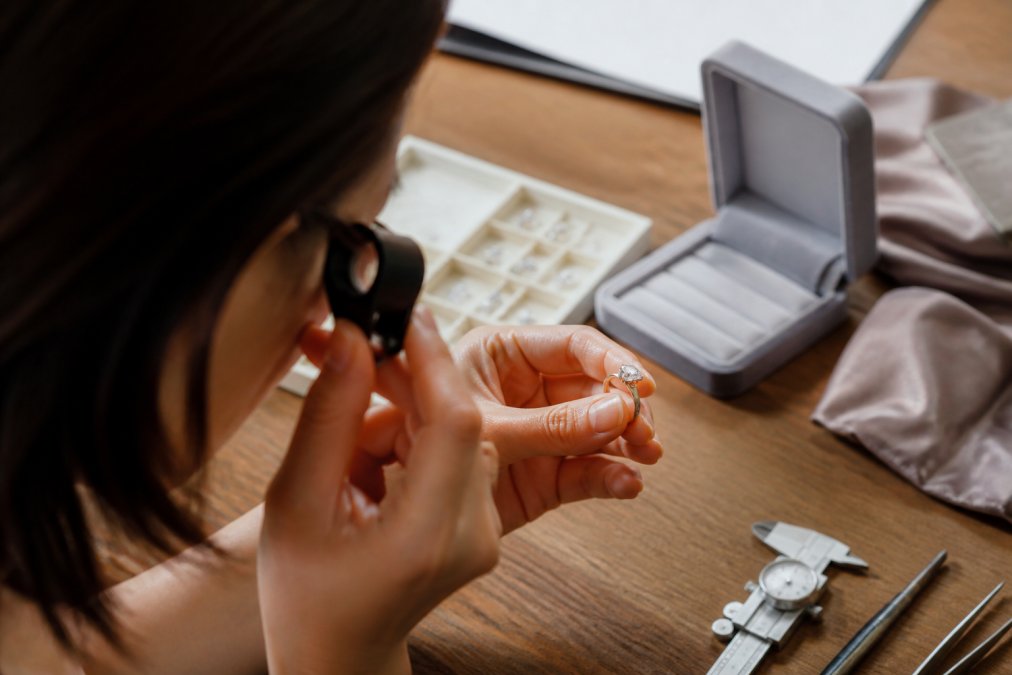
The main setting styles to know:
- Solitaire: one stone, no accent diamonds, maximum focus on the center
- Pavé: small diamonds set along the band for continuous sparkle
- Halo: a ring of smaller stones around the center, making it read larger
- Three-stone: a center diamond flanked by two others, often symbolizing past, present, and future
- Bezel: a metal rim encircling the stone for protection
Brilliant Earth offers strong bespoke design tools and many setting styles. Blue Nile's customization is solid but leans more toward build-your-own from preset options. Both let you choose metal types including platinum, 18K gold, and 14K gold.
Metal choice deserves a closer look than most buyers give it.
The Best Place to Buy Lab Grown Diamonds Online
The best place to buy lab grown diamonds online is the retailer that gives you certified stones, transparent pricing, clear visuals, and real post-purchase support, not simply the one with the biggest ad budget. That combination matters more than brand recognition.
A practical checklist for evaluating any online retailer:
- Does every listing name the certification lab and report number?
- Are 360-degree views or high-resolution video available?
- Is the return window stated clearly, with no restocking fees?
- Is there a written resizing policy, and is it free?
- Does the retailer offer a lifetime warranty on craftsmanship?
- Can you reach a human by phone or chat before buying?
Post-Purchase Support: Returns, Resizing, and Maintenance
Post-purchase support is where most comparison articles stop, and it's exactly where buyers get burned. A ring is not a one-time transaction. It needs resizing, cleaning, occasional repair, and sometimes a stone tightening. The sale is the easy part; the ten years after the sale are where the retailer's real policies show up.
Key Takeaway
The retailer that answers your resizing, repair, warranty, and upgrade questions in writing before you buy is the one worth trusting with a several-thousand-dollar purchase. If the terms only exist in a phone call, they don't exist.
Frequently Asked Questions
Is Brilliant Earth or Blue Nile better for lab-grown diamonds?
Both retailers offer extensive lab-grown diamond inventories. Brilliant Earth emphasizes ethical sourcing and transparency, while Blue Nile focuses on competitive pricing and a streamlined online experience. The better choice depends on whether you prioritize detailed sourcing information or upfront cost savings. For buyers who want a curated selection with IGI certification and a lifetime warranty, Native Jewel provides an alternative with clear specifications and direct-to-consumer pricing.
How do the return policies compare between Brilliant Earth and Blue Nile?
Blue Nile offers a 30-day return policy on most items, while Brilliant Earth also provides a 30-day window but may charge restocking fees on certain custom pieces. Both require the item to be unworn and in original packaging. Always review the fine print for exclusions on engraved or customized rings. A clear return policy is essential when buying an engagement ring online, as sizing and personal preference can only be confirmed in person.
Are the diamond grading reports from both retailers reliable?
Both Brilliant Earth and Blue Nile primarily use GIA and IGI grading reports, which are respected industry standards. GIA is often considered the most stringent for natural diamonds, while IGI is widely used for lab-grown stones. The key is to verify that the report matches the stone's specifications and comes from an independent lab. Native Jewel uses IGI-certified lab diamonds, and each ring includes the report for full transparency.
Which retailer offers a better in-person showroom experience?
Brilliant Earth operates showrooms in select cities where you can view a limited selection of rings by appointment. Blue Nile has a few showrooms but primarily operates online. If seeing and trying on rings before buying is important, check for a showroom near you. Otherwise, both offer 360-degree viewing and high-resolution imagery online. Many buyers find that online retailers provide more detailed diamond search filters and better value without the overhead of physical stores.
Why is Blue Nile so much cheaper than Brilliant Earth?
Blue Nile's lower prices often stem from a business model that minimizes physical retail overhead and focuses on high-volume online sales. Brilliant Earth invests more in ethical sourcing initiatives, showrooms, and brand marketing, which can add to the cost. Neither approach is inherently better; it depends on what you value. When comparing, look beyond the sticker price to included services like resizing, warranty, and shipping insurance.


