

Cart
1
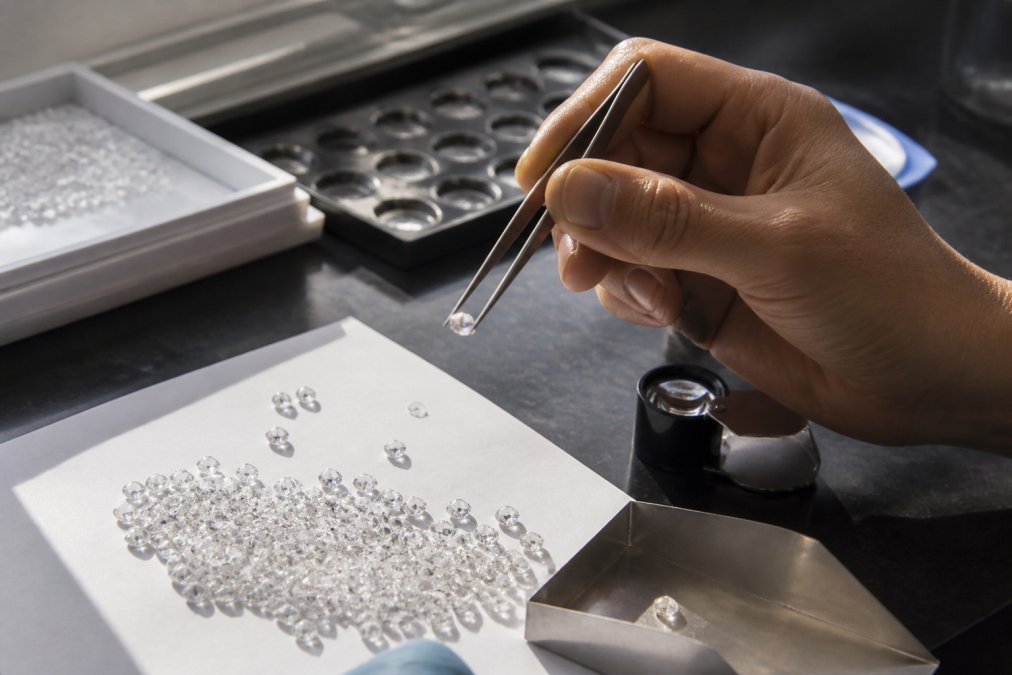
Table of Contents
- The Science Behind Lab Diamond Pricing: CVD and HPHT Growth
- Lab Grown vs Natural Diamond Price: A Side-by-Side Breakdown
- Supply, Scale, and the Economics of Diamond Manufacturing
- Do Lab Diamonds Hold Value? Resale, Appraisal, and Long-Term Outlook
- Lab Grown Diamond Certification: What IGI and GIA Reports Confirm
- What Actually Drives the Price of a Lab Diamond: The 4Cs and Beyond
- How to Get the Most Value From a Lab Diamond Purchase
- Frequently Asked Questions
Last Updated: September 20, 2026
The Science Behind Lab Diamond Pricing: CVD and HPHT Growth
Lab diamonds cheaper is the headline: they are grown in weeks rather than mined over millions of years, and the two dominant production methods, CVD and HPHT, have become dramatically more efficient. CVD (chemical vapor deposition) builds a diamond from carbon-rich gas inside a vacuum chamber. HPHT (high-pressure high-temperature) replicates the conditions deep underground where natural diamonds form, using intense pressure and heat to crystallize carbon into diamond.
Both methods produce stones with the same chemical composition, optical properties, and refractive index as mined diamonds.
Lab Grown vs Natural Diamond Price: A Side-by-Side Breakdown
The lab grown vs natural diamond price gap is the single biggest reason buyers switch. A lab-grown stone typically costs a fraction of a comparable natural diamond, and the gap widens as carat weight climbs. The reason is not that lab-grown stones are 'less real.' It is that the cost structure behind them is fundamentally different, and that difference compounds at every carat weight.
Where the Money Goes
A natural diamond's retail price carries costs a lab-grown stone never incurs:
- Extraction. Moving and processing ore to recover a single carat of rough. Most mined ore yields well under one carat of gem-quality rough per ton processed.
- Sorting and cutting losses. Rough natural diamonds lose a large share of their weight during cutting, and the cutter has to plan around inclusions that lab-grown stones largely avoid.
- Supply chain markup. Rough goes from mine to sorter to cutter to wholesaler to retailer. Each step takes a margin.
- Scarcity premium. Natural supply is fixed by geology. Lab-grown supply is fixed by how many reactors are running.
The Comparison at a Glance
| Factor | Lab-Grown | Natural (Mined) |
|---|---|---|
| Origin | Grown in a reactor | Formed underground, extracted |
| Production time | Weeks | Millions of years |
| Supply control | Scalable with reactor capacity | Limited by mining output |
| Certification | IGI, GIA available | GIA, AGS standard |
| Typical price level | Lower, and falling | Higher, and relatively stable |
| Resale market | Thin | Established but illiquid |
| Price behavior over time | Declines as production scales | Holds or rises slowly |
What the Gap Looks Like in Practice
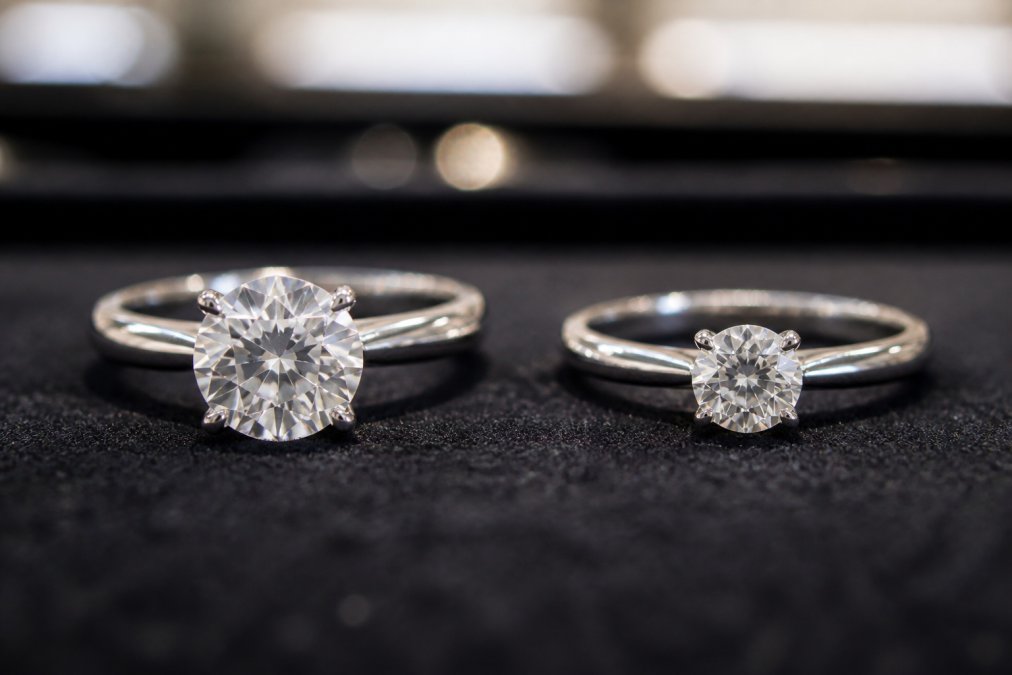
The practical takeaway: for the same budget, a lab-grown purchase usually buys a larger, higher-clarity stone. At Native Jewel, for example, a 3ct oval center with D color and VS1 clarity in 14K white gold is priced at $2,500, a specification level that would cost substantially more in a mined equivalent. The 4.05ct total oval ring pairs a 3ct center with 1.05ct of pavé for the same $2,500, and the 5.11ct radiant option steps up to a 4.06ct center in 14K yellow gold at $4,500.


Pro Tip
When you compare two stones, compare them at the same carat weight, color, clarity, and cut grade. A lab-grown stone is not cheaper than a natural stone of a different specification. It is cheaper than a natural stone of the same specification.
Supply, Scale, and the Economics of Diamond Manufacturing
Manufacturing scale explains most of the price trajectory. When a handful of facilities produce lab diamonds, prices stay high. When dozens of reactors come online and each one runs continuously, output rises and per-carat costs fall.
Pro Tip
Ask for the growth method (CVD or HPHT) when you buy. It does not change the price much, but it tells you how the stone was made and signals a seller who actually knows their supply chain.
Do Lab Diamonds Hold Value? Resale, Appraisal, and Long-Term Outlook
Lab diamonds do not hold resale value the way natural diamonds are marketed to, and pretending otherwise does the buyer no favors. The resale market for lab-grown stones is thin because new stones keep getting cheaper, which undercuts any secondary price.
- Choose a stone with strong cut quality, since cut drives sparkle more than any other factor
- Buy certified, so the specifications are documented and verifiable
- Treat the purchase as a piece you will wear, not an investment you will flip
- Insure the ring for replacement value, not resale value
Watch Out
Do not buy a lab diamond expecting it to appreciate. Buy it because it gives you more stone for your budget. Buyers who expect investment returns from either lab or natural diamonds are usually disappointed.
Lab Grown Diamond Certification: What IGI and GIA Reports Confirm
Lab grown diamond certification is the paperwork that separates a verified stone from a claim. A grading report from a recognized lab documents the stone's measured characteristics: carat weight, color grade, clarity grade, cut quality, and whether the diamond is lab-grown. Most guides stop there. The part they skip is that lab-grown grading is not a carbon copy of natural-diamond grading, and the differences matter when you are comparing two stones at the same price.
How Lab-Grown Reports Differ From Natural Reports
Three differences show up on almost every lab-grown report:
- A growth-method disclosure. Reports for lab-grown stones typically state whether the stone was produced by CVD or HPHT. Natural-diamond reports have no equivalent line, because there is nothing to disclose. This is the single most useful field on the report if you care about how the stone was made.
- A 'Laboratory-Grown' identifier. The report will say so explicitly, usually in the header and again in the comments. There is no ambiguity to argue about later.
- A different color and clarity distribution. Because growth conditions are controlled, lab-grown stones cluster at the top of the color and clarity scales. A G-color lab-grown stone is not rare the way a G-color natural stone is. That means the price premium you would pay for a D-F natural stone does not carry the same weight on a lab-grown stone.
IGI vs. GIA for Lab-Grown Stones
Both labs grade lab-grown stones, but they are not interchangeable in practice:
| IGI | GIA | |
|---|---|---|
| Lab-grown volume | High, the dominant grader for lab-grown retail | Lower, more selective intake |
| Report format | Detailed, includes growth method | Detailed, includes growth method |
| Typical use | Mass-market lab-grown retail | Premium and high-carat lab-grown |
| Consumer lookup | Online report number verification | Online report number verification |
What to Check Before You Buy
- Get the report number and look it up directly on the issuing lab's site. Do not accept a photocopy or a screenshot.
- Confirm the report says 'Laboratory-Grown' and names the growth method.
- Check that the carat weight, color, and clarity on the report match the listing.
- If the seller cannot produce a verifiable report number, treat the stone as ungraded regardless of what the tag says.
Key Takeaway
A certification report is not a marketing document. It is a measurement record. If a seller cannot give you a report number you can verify, walk away.
What Actually Drives the Price of a Lab Diamond: The 4Cs and Beyond
The 4Cs (cut, color, clarity, carat weight) set the base price of any diamond, lab or natural. Cut quality has the largest effect on how the stone looks, while carat weight has the largest effect on price. Color and clarity grades refine the number from there.
- Growth method and yield: reactors that produce more usable carat weight per run lower the cost per stone
- Certification: a graded stone carries a premium over an ungraded one, because the buyer has proof
- Setting and metal: the ring's 14K gold band, pavé work, and finishing add cost independent of the stone
How to Get the Most Value From a Lab Diamond Purchase
Getting the most value comes down to prioritizing what shows and skipping what does not. Use this checklist before you buy:
- Confirm the stone is IGI or GIA certified and get the report number
- Prioritize cut grade over color and clarity, since cut drives visible sparkle
- Choose a slightly lower color grade if the setting is yellow gold, where warmth is less visible
- Compare total carat weight, not just center stone weight, when pavé is involved
- Verify the metal: 14K gold balances durability and cost for everyday wear
- Ask about resizing, returns, and warranty terms before checkout
- Insure the finished ring for replacement value
Buyers who want maximum visible size per dollar and are comfortable choosing a certified lab-grown stone over a mined one.
Frequently Asked Questions
Are lab-grown diamonds worth it for engagement rings?
Lab-grown diamonds offer the same optical properties, chemical composition, and durability as mined diamonds, but at a much lower price. For couples who prioritize size, cut quality, and ethical sourcing over resale speculation, they are absolutely worth it. A 3ct oval lab diamond engagement ring from Native Jewel, for example, costs $2,500 with IGI certification and a lifetime warranty, delivering exceptional value.
What is the downside of a lab-grown diamond?
The main downside is resale value. Lab diamonds typically resell for less than natural diamonds because their supply can be scaled quickly. Some traditional jewelers also dislike them because they disrupt the natural diamond market. However, for buyers who plan to keep and wear their jewelry long-term, these concerns rarely outweigh the savings and ethical benefits.
Do lab-grown diamonds hold their value over time?
Lab diamonds do not hold value the way natural diamonds do. Their prices have fallen as production technology like CVD and HPHT improved and supply increased. That said, well-certified lab diamonds from reputable brands still retain some resale value, and their upfront affordability means buyers lose less capital overall. Think of them as beautiful, wearable purchases rather than investments.
How is the price of a lab-grown diamond determined?
Price depends on the 4Cs: cut quality, color grade, clarity grade, and carat weight. Certification from IGI or GIA also affects price, as does the growth method (CVD or HPHT). Larger, higher-clarity stones with excellent cut grades cost more, but all lab diamonds remain significantly cheaper than mined equivalents because they are grown in weeks, not mined over years.
The challenge with lab diamonds is not the price, it is trusting the seller behind it. Native Jewel addresses that directly with IGI-certified lab-grown diamonds, handcrafted 14K gold designs, a lifetime warranty on all diamond jewelry, complimentary resizing, and 30-day hassle-free returns. Every stone ships with documentation you can verify, and free shipping applies on orders over $1999. Get started with Native Jewel and choose a ring built around verified quality rather than a markup.


