

Cart
1
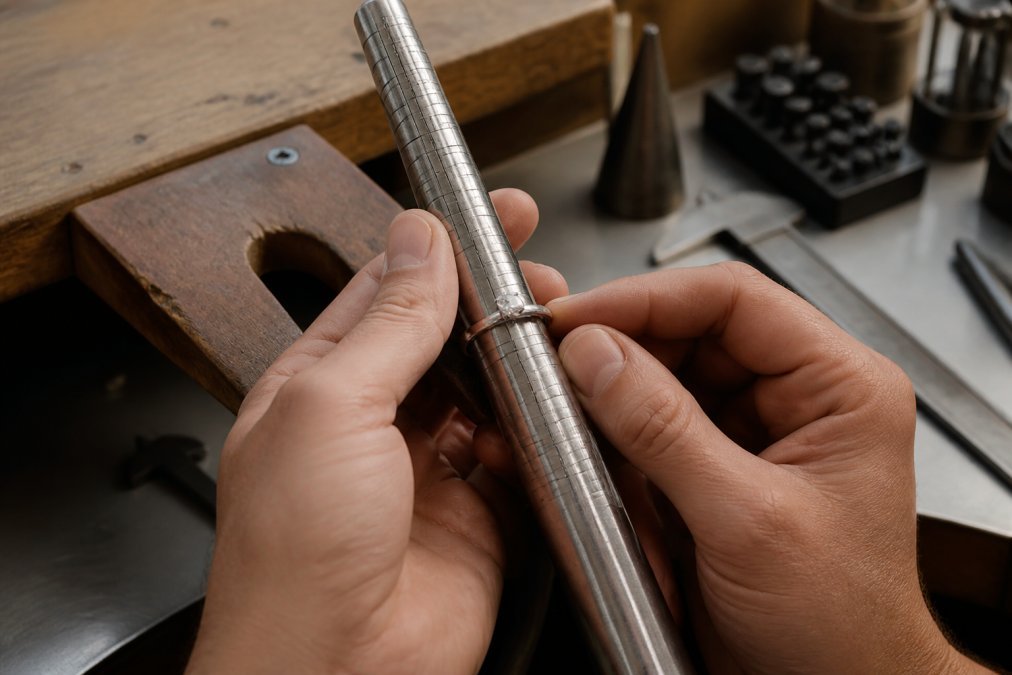
Table of Contents
- Signs Your Engagement Ring Needs Resizing
- How the Ring Resizing Process Works
- Rings That Cannot Be Resized
- Cost to Resize an Engagement Ring
- Ring Size Adjusters and Temporary Fixes
- Risks of Resizing and Long-Term Structural Integrity
- Insurance, Warranty, and Appraisal Implications
- Conclusion
- Frequently Asked Questions
Last Updated: September 21, 2026
Signs Your Engagement Ring Needs Resizing
A ring that spins, sticks, or feels tight in warm weather is telling you something. Learning how to resize engagement ring correctly starts with reading those signs early, before a loose stone or a lost band forces the issue.
At Native Jewel, we hear the same story from customers: the ring fit perfectly in the store, then felt wrong two weeks later. That is normal. Fingers change size more than most people expect.
Watch for these signals:
- The band spins freely and the stone drifts off-center
- You can slide the ring off without uncurling your finger
- It leaves a red mark or feels tight after salty meals
- It slips off in cold water or during winter months
- The ring catches on sweaters, hair, or gloves
Temperature fluctuations and finger swelling drive most of these changes. Fingers are smallest in the morning and after cold exposure. They swell in heat, after exercise, and late in the day.
So measure twice, and measure at the right time. A ring that feels snug at noon may slide off at dawn.
Pro Tip
Get sized at the end of the day, when your fingers are at their largest. A ring bought for morning fingers will feel tight by evening, and a ring bought for evening fingers usually stays comfortable all day.
How the Ring Resizing Process Works
Resizing an engagement ring means altering the band's circumference so it fits your finger. A jeweler either removes metal to shrink the band or adds metal to enlarge it, then refinishes the seam so it disappears. The method chosen depends on how far the size needs to move, the metal, and how close stones sit to the work area.
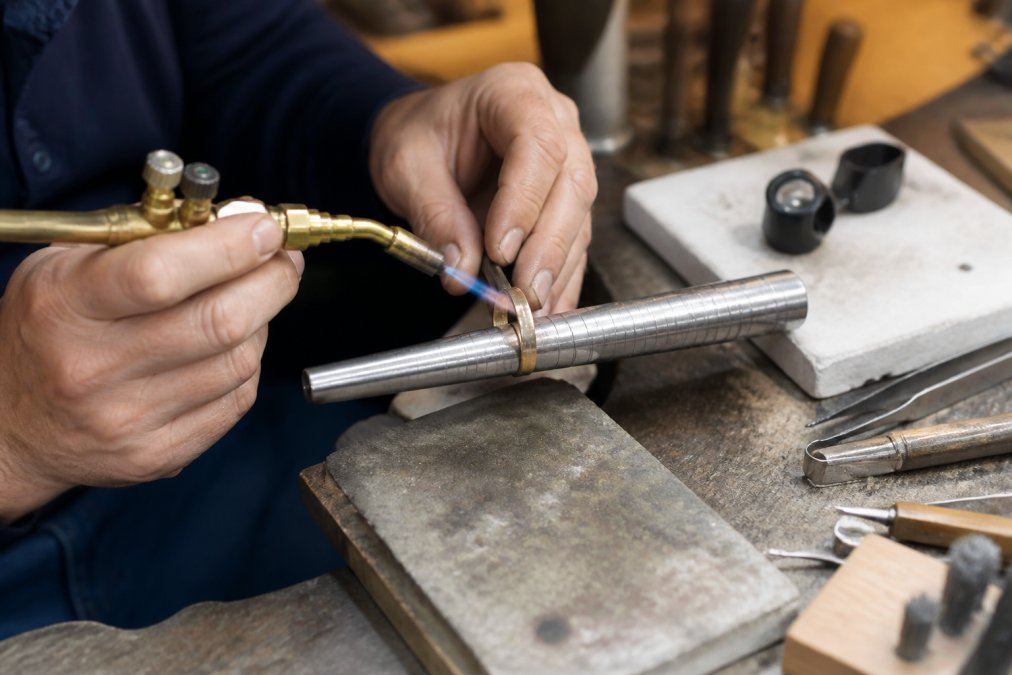
The process takes a few days at most shops.
- The jeweler measures your finger and the ring's inner diameter
- The band is marked at the bottom, away from the setting
- Metal is cut, added, or compressed
- The seam is soldered and polished
- Stones are checked for security before pickup
Sizing Down vs. Sizing Up
Sizing down removes a small section of the shank and solders the band back together. It is usually the simpler job because no new metal has to be sourced or matched. Sizing up requires adding metal, which can thin the band if the jump is large. A jeweler typically stretches the band on a mandrel for small increases, or cuts and inserts a piece of matching metal for larger ones.
Cut and Join: The Standard Method
Cut and join is the standard method for most resizing work. The jeweler cuts the band at the bottom, adjusts the gap, and solders the seam closed. The seam is the weak point, so how it is finished matters as much as how it is cut.
- Solder match: the solder should match the metal's color and karat so the seam disappears after polishing
- Seam placement: the cut goes at the bottom of the shank, the least visible and least stressed point
- Reinforcement: some jewelers add a small inner sleeve or weld for large size changes
- Finishing: the seam is filed, sanded, and polished until it is invisible under a loupe
How the Method Changes by Metal
The metal dictates the technique. Gold and platinum are malleable and solder cleanly, so cut-and-join works well. Platinum has a higher melting point and needs a different torch setup, which is why platinum work often costs more and takes longer.
Watch Out
A ring resized more than two sizes up or down can lose structural integrity. Repeated resizing thins the metal, and thin metal bends, cracks, and drops stones. If you need a big change, ask about a rebuild instead.
Pro Tip
Ask the jeweler to show you the seam under a loupe before you leave. A clean seam is nearly invisible; a cloudy or lumpy one is a sign the polish was rushed and may fail later.
Rings That Cannot Be Resized
Not every ring can be resized, and forcing it usually damages the piece. Full eternity bands, tension settings, and some tungsten rings fall into this group. Most guides stop at naming them. The more useful question is why each one resists alteration and what your real options are.
Here is why each one resists alteration:
- Full eternity bands: diamonds run all the way around, so there is no plain metal to cut. Cutting anywhere risks loosening a stone, and there is no seam-free spot to hide the solder.
- Tension settings: the band's tension holds the stone in place. Altering the band releases that pressure, and the stone can shift or fall out.
- Tungsten and titanium: these metals are extremely hard and often cannot be soldered or stretched. Many jewelers will not touch them.
- Channel-set and pave bands: stones sit close to the cut line and can loosen during the work, especially if the setting runs most of the way around.
Metals That Resist Resizing
Platinum, gold, and palladium resize well. Platinum is dense and holds its shape after soldering. Gold and palladium behave similarly with the right solder.
Complex Settings and Eternity Bands
Complex settings raise the risk. Prongs, channel walls, and tension shoulders all sit near the work area, so the jeweler has less plain metal to work with.
What to Do Instead When a Ring Cannot Be Resized
If your ring falls into one of these categories, you are not out of options. The right path depends on how much the fit needs to change and how attached you are to the original piece.
- Small fit issue: a ring guard or sizing beads soldered inside the band can tighten the fit without cutting the shank
- Half-eternity band: a jeweler may be able to resize it if the plain bottom section is wide enough
- Full eternity or tension setting: a rebuild by the original maker, or a new band in the correct size, is usually the only durable fix
- Sentimental piece: some jewelers specialize in rebuilding complex settings and can preserve the original stones in a new shank
Key Takeaway
If a jeweler says your ring cannot be resized, ask what they would do instead. A good answer names a specific alternative, sizing beads, a rebuild, or a new band, rather than simply turning the job down.
Long-Term Structural Integrity
Every resize carries some risk, and the biggest one is metal thinning. Each cut, solder, and polish removes a little material. Do it enough times and the band weakens. A ring resized once and cared for properly can last a lifetime. A ring resized four times will not.
Cost to Resize an Engagement Ring
The cost to resize engagement ring varies widely, and no single number covers every case. Pricing depends on the metal, the size change, the setting, and whether stones need to be removed and reset.
Expect the price to rise with these factors:
- Larger size changes take more labor and more metal
- Platinum costs more to work than gold
- Pave, channel, and eternity settings add stone-handling time
- Rings with engraving may need the engraving redone
Ring Size Adjusters and Temporary Fixes
Ring size adjusters are temporary tools that make a loose ring fit better without metalwork. They buy you time, but they are not a fix.
Common options include:
- Silicone spiral adjusters: coil around the band and add bulk
- Ring guards: clip over the shank to narrow the fit
- Adhesive strips: stick inside the band for a quick fix
- Spring inserts: sit inside the band and grip the finger
Key Takeaway
Adjusters are for short-term comfort, not a permanent solution. If a ring needs an adjuster to stay on, it needs professional resizing.
Risks of Resizing and Long-Term Structural Integrity
Every resize carries some risk, and the biggest one is metal thinning. Each cut, solder, and polish removes a little material. Do it enough times and the band weakens.
The main risks to weigh:
- Stone damage: heat from the torch can affect some stones
- Metal thinning: repeated work reduces the band's strength
- Seam failure: a weak solder joint can crack under daily wear
- Plating loss: rhodium or gold plating may need to be reapplied
Insurance, Warranty, and Appraisal Implications
Resizing can affect your insurance, your warranty, and your appraisal. Most policies and warranties have rules about who can work on the ring.
Check these before you hand the ring to anyone:
- Does your warranty require an approved jeweler for repairs?
- Does your insurer need an updated appraisal after resizing?
- Will a third-party repair void your coverage?
Conclusion
Sizing a ring is simple in theory and full of small decisions in practice. The right jeweler, the right method, and the right timing protect both the ring and your peace of mind.
Frequently Asked Questions
How much does it cost to resize an engagement ring?
The cost to resize an engagement ring depends on the metal, the number of sizes changed, and whether the band has stones or engraving. Simple gold or platinum bands typically fall in a modest range, while sizing up several sizes or working around diamonds adds labor. Ask your jeweler for a written quote before work begins, and confirm whether the fee includes refinishing and rhodium plating.
What rings cannot be resized?
Rings that cannot be resized usually share one trait: the band has no plain metal to cut and rejoin. Full eternity bands set with diamonds all the way around, tension settings, tungsten and titanium rings, and heavily engraved or channel-set bands often fall into this group. In those cases, a jeweler may recommend remaking the band, adding a sizing bead, or using a ring guard instead of permanent alteration.
Is it safe to resize an engagement ring multiple times?
Each resize involves cutting the shank, soldering it back together, and refinishing the seam. Doing this repeatedly thins the metal and can weaken the band over time, especially near the prongs that hold the center stone. Most jewelers suggest limiting a ring to one or two resizes and choosing the correct size up front, or using removable ring size adjusters for temporary changes.
How long does the ring resizing process typically take?
A straightforward resize on a plain gold or platinum band often takes a few days to a week at a local jeweler. Rings with complex settings, engraving, or platinum solder work can take longer because platinum requires higher heat and more careful finishing. If you need the ring for a specific date, tell the jeweler upfront and ask about rush options before leaving the ring.


