

Cart
1
Last Updated: November 14, 2026
Quick Summary
A custom ring usually takes six to fourteen weeks from first consultation to delivery, depending on the design and how quickly approvals move. Most of the time goes to the CAD revision loop, so deciding stone, size, metal and setting before the first render keeps your custom ring timeline on track.
- Design consultation typically takes one to two weeks, and moves faster when you know the style you want.
- Revisions after the CAD render are the biggest source of delay, so settle major choices before the first render.
- Approval releases production, so a slow reply delays the whole order by the same amount.
- Order at least three months before your proposal date, and add a two-week margin beyond the estimate.
- Simple solitaires finish in about three to four weeks, while intricate multi-stone designs can take seven to ten weeks or longer.
Need your ring by a set date?Native Jewel builds custom lab-grown diamond engagement rings with IGI-certified stones and a lifetime warranty.
Start Your Custom Ring
Table of Contents
- How Long a Custom Ring Takes From Start to Finish
- Stage 1: Consultation and Design Phase
- Stage 2: CAD Rendering, Revisions and Approval
- Stage 3: Casting, Stone Setting and Polishing
- Factors That Affect Production Time, Including Sourcing Delays and Seasonal Demand
- Custom Engagement Ring Timeline by Ring Complexity
- How Far in Advance to Order Your Engagement Ring
- Booking Your Custom Ring Build With Native Jewel
- Frequently Asked Questions
How Long a Custom Ring Takes From Start to Finish
A custom ring usually takes somewhere between six and fourteen weeks from first consultation to delivery, though the exact timing depends on the design and how quickly approvals move. Understanding each stage helps you plan a custom ring timeline that holds up when a proposal date is fixed.
At Native Jewel, we build custom pieces in a clear sequence, and most delays come from the same few places. This guide walks through each stage, then covers the factors that stretch production time and how far ahead to order. Many couples find that the custom ring timeline is easiest to manage once they see the full sequence laid out.
Our advice is to start earlier than you think you need to. A custom ring takes longer than a catalog piece because each step depends on the one before it. A rushed order rarely gets a better result, so build in room for review.
Stage 1: Consultation and Design Phase
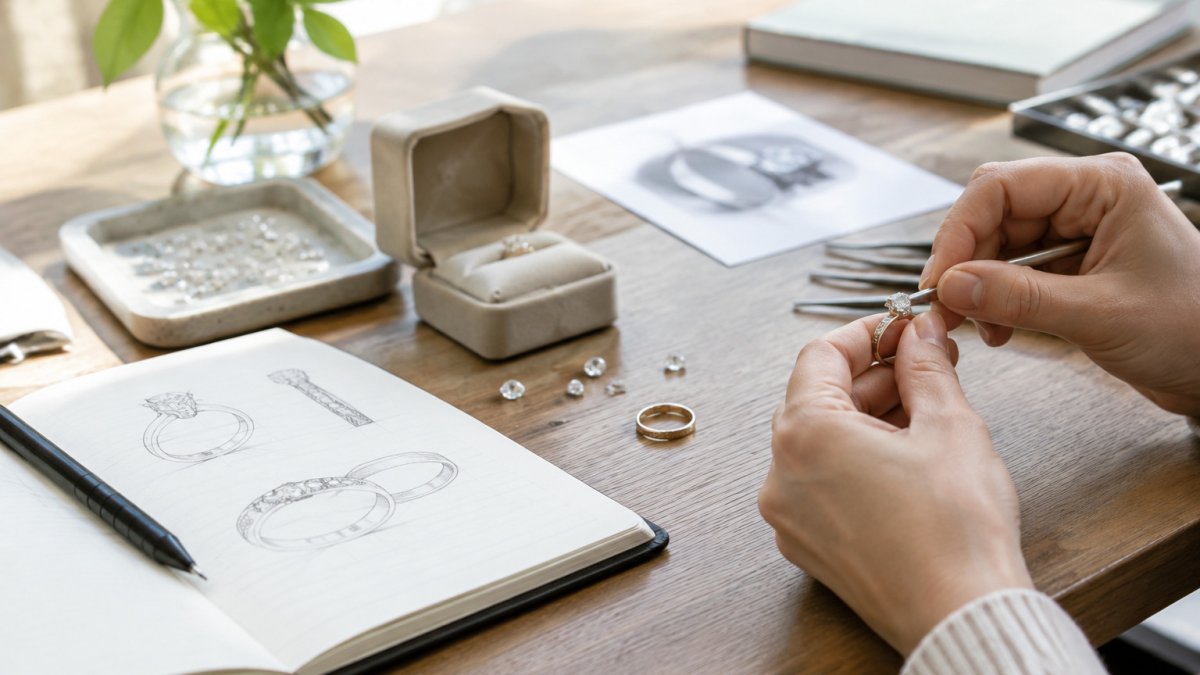
The first stage sets the direction for everything that follows. You choose a setting style, a stone shape and size, and a metal. Most of the decisions that affect timing are made here, so it pays to be specific.
Expect this stage to take roughly one to two weeks. It moves quickly when you already know the style you want. It slows down when you are comparing several directions at once. A common mistake is changing the stone size after the design is locked, because that forces a new drawing. To see how these costs add up before you commit to an order timeline, review the typical budget breakdown.
Watch out: a vague brief costs more time than any workshop delay. Bring photos, a ring size or measurement method, and a firm budget range to the first call.
Stage 2: CAD Rendering, Revisions and Approval
Once the design is agreed, we produce a computer-aided design (CAD) rendering. This digital model shows the ring from several angles so you can check proportions, prong placement and stone position before any metal is cut. It is the most important checkpoint in the whole process, and it is where most of the calendar time in a custom build actually goes.
The revision loop is the single most misunderstood part of the timeline.
Where projects slip is beyond that normal range. A common pattern is that rounds three through five each add roughly a week, because changes start to interact, moving a prong to secure a stone can change the profile, which changes the band width, which changes the setting height. By round five or six, you are often re-solving earlier decisions rather than refining them, and several weeks can disappear. The practical rule: decide stone shape, size, metal and setting style before the first render, and treat the CAD stage as confirmation rather than exploration.
Approval is the gate that releases production. Work does not begin until you sign off on the final render, so a slow reply here delays the whole order by the same amount. Before this stage, learn how to confirm your ring size at home. Watch out: a render that sits in your inbox for a week costs exactly as much calendar time as a week in the workshop, and it is the delay most easily avoided.
Stage 3: Casting, Stone Setting and Polishing
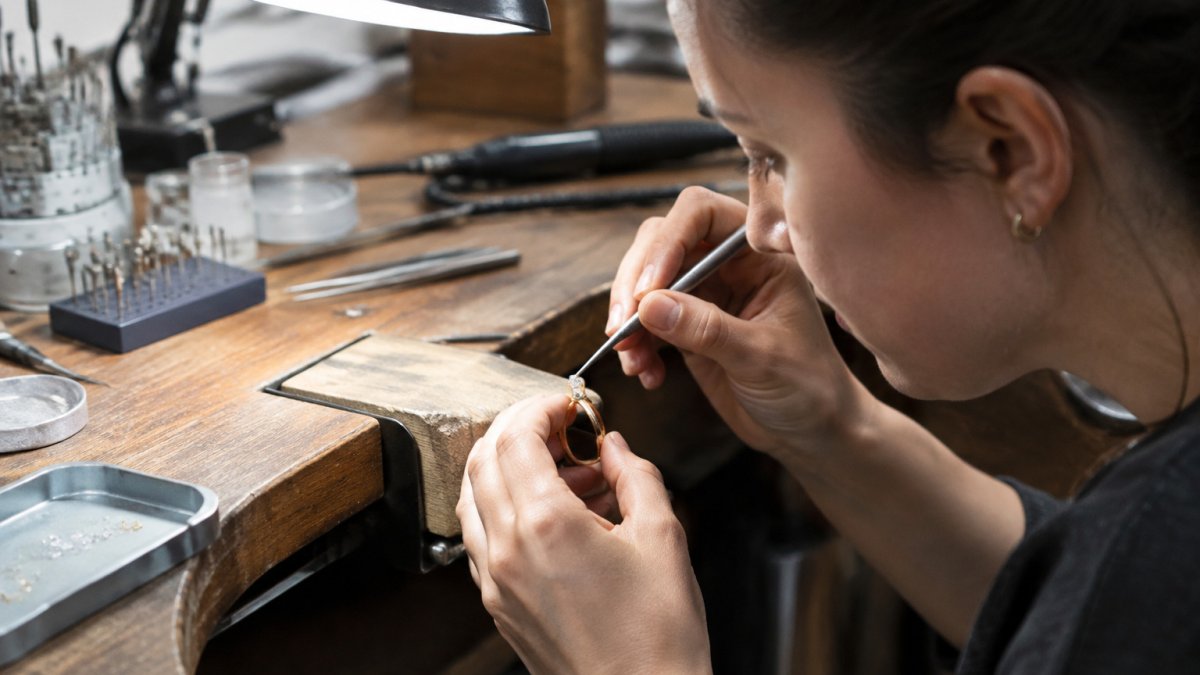
After approval, the ring moves to the workshop.
Factors That Affect Production Time, Including Sourcing Delays and Seasonal Demand
Several factors can shift the custom ring timeline in either direction. Some are within your control. Others are not. The two that catch most buyers off guard are stone sourcing and seasonal demand, so they deserve more than a passing mention.
Stone and metal sourcing.
The revision loop. As noted above, every change to a rendered design restarts part of the process. Decide on the major points early.
Seasonal demand.
Approval speed. A design that sits waiting for a reply costs time just as surely as a slow workshop.
Ring complexity. Simple solitaires move faster than multi-stone or intricate designs. Each additional stone adds setting time, and pavé or channel settings take the longest because every stone is set by hand.
Shipping and delivery method. International shipping adds customs time that is outside the jeweler's control.
Custom Engagement Ring Timeline by Ring Complexity
The table below gives a general planning guide. Actual times vary with revisions and sourcing, so treat each row as a starting estimate.
| Ring type | Design and approval | Production | Typical total |
|---|---|---|---|
| Simple solitaire, standard stone | 1 to 2 weeks | 2 weeks | About 3 to 4 weeks |
| Solitaire with a custom setting | 2 to 3 weeks | 2 to 3 weeks | About 4 to 6 weeks |
| Three-stone or pavé band | 2 to 4 weeks | 3 to 4 weeks | About 5 to 8 weeks |
| Intricate or multi-stone design | 3 to 5 weeks | 4 weeks or more | About 7 to 10 weeks or longer |
Design and approval
Simple solitaire, standard stone 1 to 2 weeks
Solitaire with a custom setting 2 to 3 weeks
Three-stone or pavé band 2 to 4 weeks
Intricate or multi-stone design 3 to 5 weeks
Add time for shipping and any resizing after delivery. Ask early whether your date is realistic.
How Far in Advance to Order Your Engagement Ring
Plan backward from your proposal date. A common approach is to order at least three months ahead, which leaves a buffer for revisions, sourcing and shipping. Simple solitaires can sometimes be ready sooner. Complex designs and proposals tied to a fixed date need more room.
Build in a margin of at least two weeks beyond the estimate. Sizing, shipping and an unexpected revision can all push a date back. Ordering early is the single most effective way to protect a proposal date.
Booking Your Custom Ring Build With Native Jewel
If you are ready to start, the next step is a design consultation. You can browse our engagement ring styles to see the settings and stone options we build, and our setting guide explains how to choose the right style for your ring. When you have a rough plan, our three-stone timeline guide shows how design complexity affects the schedule.
Our team can walk you through each stage and help you plan a realistic date for your proposal. Pricing depends on the stone, metal and design, so for current prices and a quote, visit Native Jewel directly. Start your custom ring with Native Jewel and plan your timeline with confidence.
Frequently Asked Questions
How long does it typically take to make a custom ring?
Lead times depend on how intricate the design is, how many revision rounds are requested, and whether the stones and metal are available. Ask for a written timeline at consultation so you know which stage is driving your date, and confirm any lead time against your actual order rather than assuming it.
How long does it take to set a diamond in a ring?
Setting time is only one part of production, so a fast setting step does not shorten the overall timeline if casting or approval is still pending.
How far in advance should I order a custom engagement ring?
Plan well ahead of your intended proposal date so you have room for design, approval, production and shipping. Ordering during busy seasons can add time, and starting earlier protects you from rush-order pressure and gives you space to review the finished ring before the proposal.
What can delay the custom ring-making process?
Common causes of delay across the industry include sourcing problems, extra revision rounds, resizing and seasonal demand. Slow responses to approval requests also stall any schedule, so confirm your ring size and design early, respond to approval requests promptly, and ask the jeweler how they handle back-orders so you understand the risk before you commit.


