

Cart
1

Last Updated: October 27, 2026
Quick Summary
Prevent scratches on gold jewelry by removing it before heavy activity, keeping it away from chlorine and harsh chemicals, and storing each piece separately in a soft pouch or lined box. Most light scratches are preventable with these simple daily habits.
- Take off rings and bracelets before lifting weights, gardening, or using tools.
- Remove gold jewelry before swimming and before using bleach or household cleaners.
- Store each piece in its own soft pouch or lined compartment to avoid rubbing.
- 14K gold is 58.3% pure gold, making it harder and more scratch-resistant than 24K.
- Use a soft polishing cloth in small circles; skip toothpaste and baking soda.
Table of Contents
- Why Gold Jewelry Scratches and What Affects It
- Does 14K Gold Scratch Easily?
- How to Care for 14K Gold Jewelry Day to Day
- How to Store Gold Jewelry to Prevent Scratches
- Yellow, White, and Rose Gold: Do Alloys Change Scratch Risk?
- How to Remove Scratches From Gold Jewelry
- Booking a Professional Polish or Repair for Your Native Jewel Piece
- Frequently Asked Questions
Gold jewelry looks flawless right out of the box, then a few weeks of daily wear leaves tiny marks you can barely see until the light hits them just right. No metal is immune to scratches. The good news is that most scratches are preventable with a few simple habits. This guide walks through why gold scratches, how 14K compares with other gold, and everyday care steps.
Why Gold Jewelry Scratches and What Affects It
Gold is a soft metal in its pure form, so jewelry is always made from alloys. Mixing gold with metals like copper, silver, or zinc makes it harder and more durable. Gold jewelry scratches when something harder than the surface drags across it. Common culprits include dust and grit, household surfaces, and other jewelry rubbing together.
Several factors decide how fast a piece picks up marks:
- Gold purity: Lower karat gold contains more alloy metal and is generally harder.
- Alloy blend: The metals mixed in change the color and the hardness.
- Daily activity: Typing, lifting weights, and gardening create constant friction.
- Storage: Pieces tossed loose in a drawer rub against each other.
Does 14K Gold Scratch Easily?
14K gold is 58.3% pure gold, with the rest made of alloy metals. That extra alloy makes it noticeably harder than 24K gold, which is why most everyday fine jewelry is 14K. It resists scratches well for daily wear, though it can still pick up fine marks over time.
Keep these points in mind:
- 14K handles normal wear better than softer high-karat gold.
- Scratches are usually shallow and can often be polished out.
- Hard knocks and abrasive surfaces cause deeper damage.
For a closer comparison with 18K, see our guide on 14K Gold vs 18K Gold Durability: Which Lasts Longer?. Readers weighing gold choices may also find Is 18k Gold Better for Daily Wear? Durability Guide useful.
How to Care for 14K Gold Jewelry Day to Day
Good daily habits prevent most scratches before they start. Build a simple routine and it becomes second nature.
Remove Jewelry Before Heavy Activity
Take off rings and bracelets before you lift weights, garden, clean, or work with tools. These activities expose gold to grit and impacts that scratch quickly. A small dish near the sink works well for keeping pieces off your hands.
Keep Gold Away From Chlorine and Harsh Chemicals
Pool water, hot tub chemicals, and strong cleaners can dull gold and weaken the alloy over time. Remove your jewelry before swimming and before using bleach or household cleaners. Rinse pieces with warm water and mild soap after exposure.
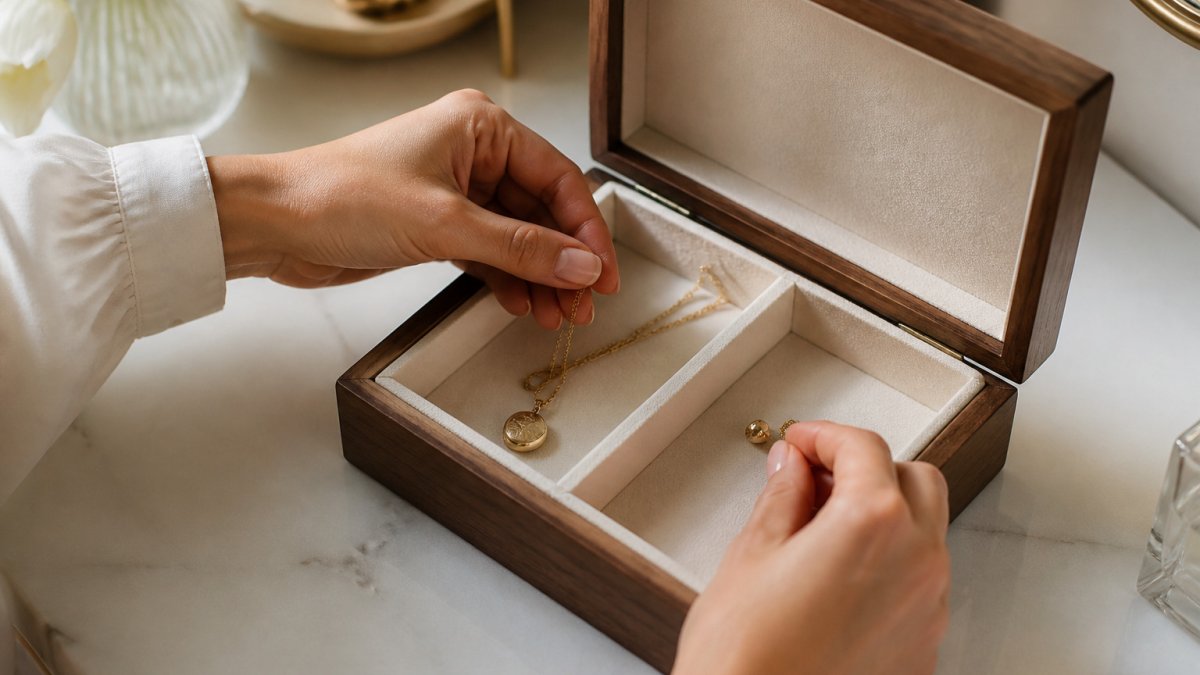
How to Store Gold Jewelry to Prevent Scratches
Storage matters more than most people expect. Pieces that rub against each other in a jumbled pile pick up scratches fast.
- Keep each piece in its own soft pouch or lined compartment.
- Hang necklaces on a hook or lay them flat so chains do not tangle.
- Store jewelry away from humidity, such as a bathroom shelf.
- Use a lined box with separate slots for rings, earrings, and chains.
Yellow, White, and Rose Gold: Do Alloys Change Scratch Risk?
Yes, and the reason comes down to which metals are mixed with gold and how those metals behave on the Mohs hardness scale. For a side-by-side look at how solid gold and gold vermeil differ in wear and scratch resistance, the comparison is worth a read. Pure gold is soft (about 2.5 to 3 on the Mohs scale), so every piece of jewelry gold is alloyed with harder metals to make it wearable. The specific alloy recipe determines both color and scratch resistance.
Yellow gold is typically alloyed with copper and silver (and sometimes zinc). Copper adds hardness and a warm tone; silver lightens the color. A standard 14K yellow gold blend is roughly 58.3% gold, with the remainder split between copper and silver. This combination gives yellow gold solid everyday durability and makes it the most traditional choice for rings and chains.
White gold is alloyed with white metals such as palladium, nickel, or manganese, and it is almost always finished with a rhodium plating for a bright, reflective surface. Two practical points matter here:
- Rhodium plating is a wear layer, not the metal itself. It typically wears thin over months to a few years of daily wear, especially on rings. When it wears, the piece reveals a slightly warmer, grayer tone underneath. This is normal and does not mean the gold is damaged, a jeweler can re-plate it.
- Nickel in white gold is a common skin-sensitivity trigger. If you have reacted to costume jewelry, look for white gold labeled nickel-free or palladium-based, or ask your jeweler about the alloy before buying.
Rose gold gets its pink hue from a higher copper content. Copper is harder than pure gold, so rose gold is not inherently softer than yellow gold, in many 14K blends it is comparably durable. The trade-off is color: copper-rich alloys can develop a slightly deeper patina over time, and some wearers notice more skin sensitivity with high-copper blends.
2ct Oval Lab Diamond Engagement Ring | 2ct Center | D/VS1 IGI Certified | 14K →
Key Takeaway
The same karat can scratch differently depending on color. Yellow and rose gold in 14K are generally robust for daily wear; white gold adds a rhodium wear layer that needs periodic re-plating. If skin sensitivity is a concern, ask about nickel content before choosing white gold.
For a deeper comparison of how 14K and 18K alloys differ in daily wear, see our guide on 14K Gold vs 18K Gold Durability: Which Lasts Longer?. Readers weighing gold choices may also find Is 18k Gold Better for Daily Wear? Durability Guide useful.
How to Remove Scratches From Gold Jewelry
Most light surface scratches, the kind you see only when light hits the piece at an angle, can be reduced at home. Deeper scratches, dents, and worn plating need a jeweler. The key is knowing which category you are dealing with before you touch the piece.
Step 1: Clean and Inspect
Wash the piece with warm water and a drop of mild dish soap, then dry it completely with a soft, lint-free cloth. Inspect the scratch under bright, angled light. A scratch you can feel with a fingernail is likely too deep for at-home polishing, stop here and plan a professional visit.
Step 2: Choose the Right Cloth
For light marks, use a soft polishing cloth made for gold (often labeled jeweler's rouge or impregnated polishing cloth). Rub in small, gentle circles with light pressure. Do not scrub back and forth, circular motion follows the metal's finish and reduces the risk of creating new micro-scratches.
Step 3: Avoid Abrasives
Skip toothpaste, baking soda paste, scouring powders, and household cleaners. These contain abrasives that can dull the finish and leave new marks. Avoid ultrasonic cleaners on pieces with soft stones or worn plating unless a jeweler confirms they are safe.
Step 4: Know When to Stop
If the mark does not lift after a few gentle passes, stop. Over-polishing removes metal, and gold is soft enough that repeated polishing can thin a ring or chain over time. Deep scratches, dents, and worn rhodium plating are jobs for a jeweler with proper polishing compounds and buffing wheels.
Watch Out
Never use a rotary tool or abrasive pad on gold jewelry at home. The speed and grit can remove more metal than intended and permanently alter the finish.
Professional Polishing and Re-Plating
A jeweler can remove deeper scratches, restore the original finish, and re-plate white gold when the rhodium layer wears thin. Ask what the polishing process involves and whether the piece has stones or plating that need special handling. For pieces with sentimental or high value, request an estimate before work begins.
If you own a Native Jewel piece, reach out with questions about care and maintenance. Keep your receipt and product details handy so the team can help you find the right next step.
The article breaks scratch removal into steps, so this table lists each step with what to do and when to stop.
| Step | What to do | Note |
|---|---|---|
| Clean and inspect | Wash with warm water and mild soap, dry, check under angled light | Scratch you can feel with a fingernail needs a jeweler |
| Choose the right cloth | Use a soft polishing cloth in small, gentle circles | Avoid back-and-forth scrubbing |
| Avoid abrasives | Skip toothpaste, baking soda, scouring powder | Abrasives leave new marks |
| Know when to stop | Stop if mark does not lift after a few gentle passes | Over-polishing thins the metal |
| Professional work | Jeweler handles deep scratches, dents, worn plating | Ask for an estimate first |
Booking a Professional Polish or Repair for Your Native Jewel Piece
When a scratch goes beyond what a cloth can handle, professional polishing or repair is the safer choice. A jeweler can remove deeper marks, restore the finish, and re-plate white gold when needed. Learn more about the team behind Native Jewel before deciding where to have your piece serviced.
If you own a Native Jewel piece, reach out with questions about care and maintenance. Keep your receipt and product details handy so the team can help you find the right next step.
Frequently Asked Questions
Does 14K gold scratch easily?
14K gold is harder than 18K gold because it contains a higher proportion of alloy metals such as copper, silver and zinc. That makes it more resistant to everyday scratching, though it is not scratch-proof. Soft contact with hard materials like sand, grit, tile or dust in a jewelry box can still leave fine marks over time. Routine care, careful storage and occasional professional polishing keep 14K pieces looking new for years.
How do I remove scratches from gold jewelry at home?
Minor surface scratches can sometimes be reduced with a soft microfiber cloth and a dedicated gold polishing compound, rubbed gently in the direction of the scratch. Avoid abrasive household cleaners, baking soda or steel wool, which can cause deeper damage. Deep scratches, or scratches on plated pieces where the gold layer is thin, are best handled by a professional jeweler who can polish or re-finish the metal safely.
How should I store gold jewelry to prevent scratches?
Store each piece separately in a soft pouch, a fabric-lined compartment or a small box with individual dividers. Keep gold away from diamonds, sapphires and other harder gemstones, which can scratch softer metal when stored together. Keep jewelry in a dry place away from humidity, and avoid leaving it loose in a drawer where pieces can rub against each other.
Can I wear 14K gold jewelry every day without scratching it?
To limit scratches, take rings and bracelets off before cleaning, gardening, lifting weights or handling rough surfaces, and remove jewelry before swimming in chlorinated pools.


