

Cart
0
Last Updated: November 4, 2026
Quick Summary
To understand how to tell if gold is 14k or 18k, check the stamp: 14K, 14KT, or 585 commonly indicates 14-karat gold, while 18K, 18KT, or 750 commonly indicates 18-karat gold. A stamp is only a clue, so ask a jeweler to test the piece if the mark is missing, unclear, or you need a dependable answer.
- Look inside a ring band, near a necklace clasp, or on an earring post for a karat mark.
- Compare the stamp with a receipt, appraisal, or manufacturer’s description.
- Color and a magnet check cannot reliably identify a piece’s karat.
- A jeweler may use an electronic tester, XRF analyzer, or acid test.
Table of Contents
- How to Tell if Gold Is 14K or 18K: Start With the Stamp
- How to Read Gold Jewelry Hallmarks
- At-Home Checks for 14K or 18K Gold
- 14K vs 18K Gold Durability
- Can You Wear 14K Gold in the Ocean?
- Choosing Between 14K and 18K: Color, Value, and Wearability
- Shop Native Jewel’s 14K Gold Rings
- Frequently Asked Questions
How to Tell if Gold Is 14K or 18K: Start With the Stamp
A stamp is the quickest clue for how to tell if gold is 14k or 18k, but it is not proof on its own. At Native Jewel, we recommend checking the mark first, then looking at the full piece and seeking a jeweler’s test if the mark is missing or unclear. Gold karat is a measure of how much pure gold an item contains. That distinction matters when you choose jewelry for daily wear or a special occasion.
Look inside a ring band, near a necklace clasp, or on an earring post. Common marks include:
- 14K or 14KT: marked as 14-karat gold
- 18K or 18KT: marked as 18-karat gold
- 585: a common fineness mark for 14-karat gold
- 750: a common fineness mark for 18-karat gold
These marks describe gold content, not the whole alloy recipe or the item’s condition. A stamp can also be hard to see on a small or worn piece. If you cannot find one, don’t guess from color alone.
How to Read Gold Jewelry Hallmarks
To read gold jewelry hallmarks, find the stamp and check what the number says; 585 commonly points to 14K, while 750 commonly points to 18K. A hallmark is a mark used to identify a piece’s metal or maker. The stamp offers a useful starting point, but a jeweler can assess it when the mark is faint or uncertain.
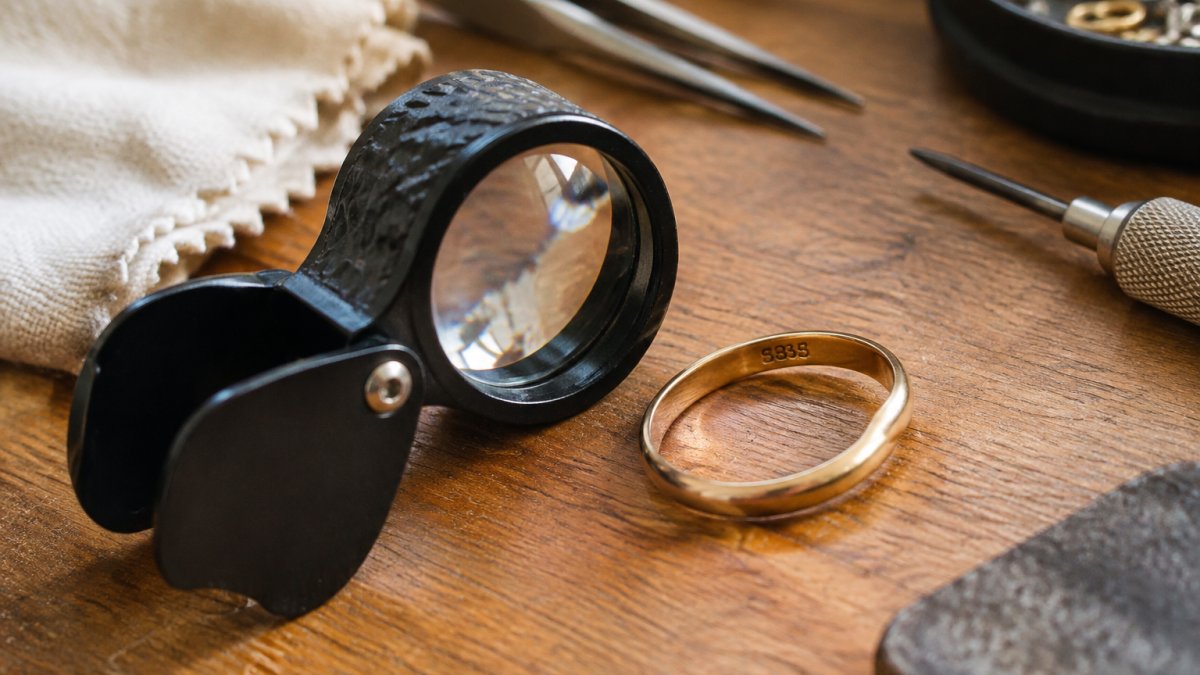
Some jewelry also has a maker’s mark or other symbols. Look for a clear karat mark, but don’t treat every mark as a guarantee of the item’s gold composition. For more on what ocean exposure can mean for gold jewelry, read what to know about 14K gold in the ocean.
A common mistake is to read a number without checking its context. A jeweler can examine the piece and explain what its marks do, and do not, tell you.
At-Home Checks for 14K or 18K Gold
Home checks can narrow down what a piece might be, but they cannot reliably distinguish solid 14K gold from solid 18K gold. Start with non-destructive clues, then have a jeweler test the item if you need a dependable answer, especially before selling, insuring, or repairing it.
- Inspect the stamp. Under bright light, use a magnifier to look inside a ring band, near a necklace clasp, or on an earring post. Marks such as 14K, 14KT, or 585 commonly indicate 14-karat gold; 18K, 18KT, or 750 commonly indicate 18-karat gold. A stamp is a clue, not proof: it may be worn, misleading, or associated with a different part of a mixed-metal piece.
- Check the item’s description and records. Compare the mark with a receipt, appraisal, or manufacturer’s description. Look for wording such as “gold plated,” “gold filled,” or “vermeil,” which describes a gold layer or construction rather than a solid 14K or 18K item. Keep in mind that a chain, clasp, setting, and decorative components may not all be made from the same metal.
- Look for wear, not just color. Discoloration or a different-colored layer showing through at a worn edge can suggest plating or another surface treatment. But an even color does not prove a particular karat, and white or rose gold can look different from yellow gold because of its alloy and finish.
- Treat a magnet as a limited screening check. Gold itself is not magnetic, but jewelry can contain steel springs or other components that respond to a magnet. Conversely, a nonmagnetic result does not establish that the piece is gold, or tell you whether it is 14K or 18K.
- Ask a jeweler about testing. Depending on the item and the question, a jeweler may use an electronic tester, an X-ray fluorescence (XRF) analyzer, or an acid test. XRF can assess the metal near the surface without cutting into the piece, while acid testing involves applying test solutions to a sample or test mark and may leave damage if performed improperly. Ask how the method works and whether it could affect plating, stones, or the finish.
Watch out: Do not scratch the jewelry, apply household chemicals, or use an acid-testing kit on a valuable or plated piece; a damaged surface can be costly to repair, and a surface test may not represent the metal beneath it.
If the stamp is missing, the results conflict, or the piece has sentimental or resale value, a professional assessment is the safer next step. Tell the jeweler whether you need to identify the karat, check for plating, or evaluate the whole item, since those are different questions.
14K vs 18K Gold Durability
For many people, 14K gold is the practical choice for frequent wear, while 18K gold offers a higher share of pure gold. The difference in gold content affects the alloy and can influence hardness, color, and scratch resistance. Neither karat is scratch-proof; the right choice depends on how you plan to wear and care for the piece.
| Feature | 14K gold | 18K gold |
|---|---|---|
| Gold content | Lower share | Higher share |
| Common fineness mark | 585 | 750 |
| Appearance | Often subtler | Often richer |
| Everyday wear | Practical choice | More care may be needed |
| Price | Usually lower | Usually higher |
Those are general comparisons, not a promise about every design. A ring’s shape, setting, and daily use also affect wear. The real difference between 14K and 18K gold durability is not simply “strong versus weak”; it is the balance between gold content and the alloy.
For a closer look, read about 14K vs 18K gold durability and 14K gold for everyday wear.
Can You Wear 14K Gold in the Ocean?
You can wear 14K gold in the ocean, but salt water, sand, and repeated exposure can affect jewelry over time. Remove rings and delicate pieces before swimming if you want to limit wear or avoid losing them in the water. Rinse jewelry with fresh water after exposure, then dry it with a soft cloth.
The stamp does not tell you whether a specific piece is suited to every activity. Settings and other materials matter, too. If a piece has stones or delicate details, check its care guidance before swimming.
Choosing Between 14K and 18K: Color, Value, and Wearability
Choose between 14K and 18K by weighing gold content against how the piece will be worn, how its alloy suits your skin, and how much care you are willing to give it. Neither karat is automatically the better choice: 14K contains a larger share of alloy metals, while 18K contains a larger share of gold. The exact alloy recipe varies by manufacturer and color, so the karat stamp alone cannot tell you every metal in the piece.
Color and appearance
A higher gold content often gives 18K yellow gold a richer, warmer appearance than comparable 14K yellow gold. But color is not a reliable home test for karat. White gold and rose gold get their appearance from alloy choices and may have surface finishes, so two pieces of the same karat can look different. Compare pieces in the same lighting and ask whether a white-gold item has a rhodium finish, which can affect its surface color and may need attention as it wears.
Skin sensitivity and alloy details
If you have a known sensitivity, ask the seller or jeweler for the alloy details and whether the piece is nickel-free. For earrings, rings, or a watch that stays against your skin for long periods, consider how much contact the item has and whether irritation has occurred with similar jewelry before. Stop wearing a piece that causes a rash and seek appropriate medical advice if symptoms persist.
Daily wear, care, and value
For frequent wear, 14K is often chosen for its practical balance of gold content and resistance to everyday wear. 18K provides more gold, but its greater gold content generally means the alloy is less hard than a comparable 14K alloy; design, setting, and use still matter. Remove either karat for activities that could snag, bend, or strike the jewelry, and check prongs and settings periodically if the piece holds stones.
Clean jewelry gently with warm water, mild soap, and a soft cloth or brush, then rinse and dry it thoroughly. Avoid harsh cleaners unless the jeweler confirms they are suitable for the specific piece and any stones or finishes. Professional cleaning can also provide an opportunity to check settings; the right interval depends on how often the item is worn and its construction, rather than on karat alone.
- 14K: Often a practical option for regular wear; its alloy recipe matters if you have metal sensitivities.
- 18K: Higher gold content and often a richer yellow tone; still needs sensible care and may not suit every wearer or design.
- Both: Can scratch, vary in color and alloy composition, and require care suited to their settings and other materials.
For wearability, choose based on the specific piece, your skin, and your routine, not on the assumption that higher karat always means better durability, comfort, or resale value.
Shop Native Jewel’s 14K Gold Rings
If you want a 14K gold ring, Native Jewel offers handcrafted designs and customizable ring options, including the diamond, setting, and metal. Our collection includes IGI-certified lab-grown diamond pieces, with a lifetime warranty on diamond jewelry and 30-day hassle-free returns. Read the product details for the specific design and current price.
Browse Native Jewel’s 14K gold jewelry to find a ring that suits your style. Choosing between 14K and 18K can feel difficult when you are balancing appearance, wear, and value. Get started with Native Jewel and explore customizable 14K gold rings with IGI-certified lab-grown diamonds.
Frequently Asked Questions
What are the visual differences between 14K and 18K gold?
18K gold contains a higher proportion of pure gold, so yellow gold often appears richer in color than 14K. The difference can be less obvious in white or rose gold because alloy metals affect the finished color. Lighting, finish, and the design also influence appearance, so color alone cannot confirm karat. Check the stamp and seek professional testing if the mark is missing or uncertain.
What does 585 or 750 mean on gold jewelry?
These numbers are fineness marks: 585 indicates 58.5% gold, commonly corresponding to 14K, while 750 indicates 75% gold, commonly corresponding to 18K. Look for the mark on an inconspicuous area, such as a ring’s inner band or a clasp. A stamp is a useful clue, but it does not prove the item’s composition on its own. Have questionable or valuable jewelry assessed by a qualified jeweler.
What is the best way to test gold purity at home?
Start with the stamp and any accompanying hallmark, using a loupe and good lighting to read small marks. A magnet test is only a limited screening check: a nonmagnetic result does not establish that an item is gold or identify its karat. Avoid scratch or acid tests on finished jewelry, since they can damage the piece or require specialized handling. Ask a jeweler to test it when the mark is absent or the result matters.
Does 14K gold tarnish faster than 18K gold?
14K contains a larger share of alloy metals than 18K, and those metals can affect how a piece responds to wear and its environment. Tarnish and surface changes depend on the specific alloy and care, so karat alone does not guarantee how a particular item will look over time. Clean jewelry gently according to the seller’s guidance, and ask a jeweler about professional cleaning if the finish changes or the piece has delicate settings.


