

Cart
0

Table of Contents
- How the Direct to Consumer Model Redefines Fine Jewelry Pricing
- The Cost of Traditional Retail Jewelry Markup Explained
- Lab Grown Diamond Jewelry Benefits for Conscious Buyers
- How to Verify Jewelry Quality Online Before You Buy
- The Hidden Costs of DTC Jewelry Nobody Talks About
- Virtual Try-On and AR Technology in Online Jewelry Shopping
- Conclusion
- Frequently Asked Questions
Last Updated: September 15, 2026
How the Direct to Consumer Model Redefines Fine Jewelry Pricing
The benefits of direct to consumer jewelry start with a simple structural fact: when a brand sells straight to you, the middleman markup disappears from the price tag. This guide from Native Jewel examines what that shift means for buyers of fine jewelry, from engagement rings to everyday 14K gold pieces. A traditional retail chain buys from a wholesaler, marks the piece up to cover its storefront, staff, and inventory financing, and passes that total to you. A direct to consumer jewelry brand skips those layers and prices closer to the actual cost of materials and craftsmanship.
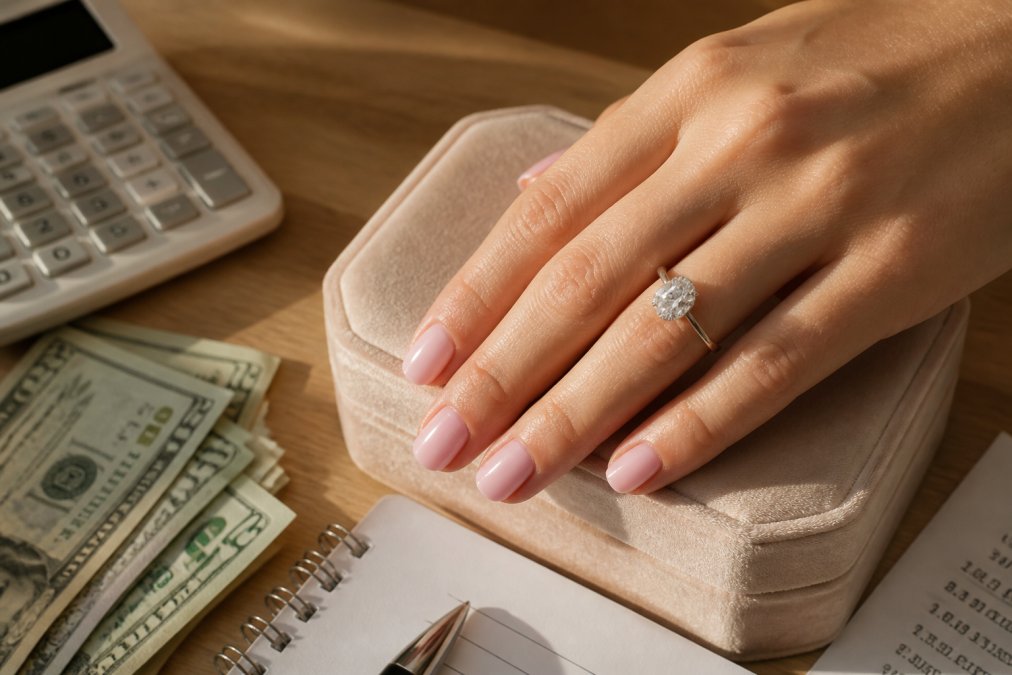
The Middleman Markup You Never See
Every hand that touches a ring before it reaches you adds cost. A typical chain runs through a cutter, a wholesaler, a distributor, and a retail floor, and each one takes a cut. That stacking is the middleman markup, and it is the single largest reason two visually similar rings can carry wildly different price points.
What DTC Pricing Looks Like in Practice
Vertical integration is what makes the difference. When a brand controls sourcing, design, and fulfillment under one roof, it removes the layers that inflate retail markup. A 3.6ct oval lab grown diamond engagement ring in 14K white gold, for example, can be priced at $2,500 direct, a figure that would climb steeply once distributor and retail margins are added.

The Cost of Traditional Retail Jewelry Markup Explained
The cost of traditional retail jewelry markup is not a single fee but a chain of them. Each participant in the supply chain needs a profit margin, and those margins compound as a piece moves from rough stone to finished ring to display case.
Where Your Money Actually Goes at a Traditional Jeweler
Break down a typical retail price and the stone is only part of it. You are also funding the store lease, the sales staff, the insurance on floor inventory, and the marketing that brought you through the door. Those are real costs, but they have nothing to do with the quality of the piece you carry home.
Why DTC Brands Can Charge Less Without Cutting Corners
Lower overhead does not mean lower standards. A cost-effective direct model frees budget for better materials and finishing rather than for intermediaries. The savings come from removing hands, not from downgrading gold, settings, or stones.
Key Takeaway
The gap between a DTC price and a traditional retail price is mostly structural. You are paying for fewer intermediaries, not for a lesser product.
Lab Grown Diamond Jewelry Benefits for Conscious Buyers
Lab grown diamond jewelry benefits buyers on two fronts: value and provenance. Lab grown diamonds are real diamonds, chemically and optically identical to mined stones, and they carry the same brilliance without the environmental footprint of extraction.
IGI Certification and What It Proves
An IGI report is the buyer's proof. The International Gemological Institute grades each stone for the four Cs (cut, color, clarity, and carat) and issues a certificate tied to that specific diamond. At Native Jewel, every lab-grown diamond is IGI-certified, so the grade you see is the grade a neutral lab verified.
Ethical Sourcing and Traceability
Traceability matters as much as grading. A documented chain from growth to setting means no conflict-mining exposure and no ambiguity about origin. That is the practical core of ethical sourcing, and it is why certification and traceability belong together.
How to Verify Jewelry Quality Online Before You Buy
Learning how to verify jewelry quality online comes down to three checks: certification, hallmarking, and the terms behind the sale. Do these before you commit, not after.
Certification Documents and Hallmarking
Ask for the certificate number and confirm it against the issuing lab's records. Then check the metal stamp: 14K or 585 indicates 14-karat gold, and a maker's mark identifies the manufacturer. Hallmarking is your assurance that the metal is what the listing claims.
Return Policies, Warranties, and Post-Purchase Support
A generous return window and a real warranty separate a confident brand from a risky one. Look for a 30-day return policy and a lifetime guarantee on diamond jewelry. Resizing and repair support matter too, since a ring you cannot adjust is a ring you cannot wear.
| Verification Step | What to Check | Why It Matters |
|---|---|---|
| Certification | IGI report number and grade | Confirms the stone is real and graded |
| Hallmarking | 14K or 585 stamp plus maker's mark | Confirms the metal purity |
| Return policy | 30-day window, clear terms | Protects you if the fit or look is wrong |
| Warranty | Lifetime coverage on diamonds | Covers long-term durability and repairs |
| Support | Resizing and repair service | Keeps the piece wearable for years |
Pro Tip
Confirm the certificate number directly with the issuing lab before purchase. A valid IGI report will match the stone's exact specifications, and that two-minute check rules out the most common online jewelry risk.
The Hidden Costs of DTC Jewelry Nobody Talks About
Direct to consumer jewelry is not cost-free, and honest guides say so. The trade-offs are real, and knowing them keeps your expectations grounded. What most guides skip is the fine print: the ancillary costs that sit outside the sticker price and only surface after you click buy.
Shipping Insurance and Signature Requirements
High-value pieces rarely ship with standard parcel coverage. Most carriers cap default liability well below the value of a fine jewelry order, so brands either buy third-party insurance or self-insure and pass a portion of that cost into the price. Insured shipping usually requires an adult signature on delivery, which means someone has to be home. If you miss the delivery, the package may reroute to a hold location, and some carriers charge a redelivery fee. These are not deal-breakers, but they are real logistics you should plan around.
Return Shipping Fees
A 30-day return window sounds generous until you read the fine print. Many DTC brands cover return shipping only for defective items; change-of-mind returns often require you to pay for insured, trackable shipping back to the fulfillment center. On a high-ticket ring, that can mean a meaningful out-of-pocket cost plus the risk of loss in transit if you do not insure the return. Before you buy, confirm who pays return shipping and whether the original shipping cost is refunded.
Resizing Logistics and Turnaround
Resizing is rarely instant online. Even when the service is free, you ship the piece back, wait for the workshop to complete the adjustment, and wait for the return shipment. For a ring with a full eternity setting, resizing may not be possible at all without remaking the band, which is why accurate sizing at home matters more in DTC than in a showroom where a jeweler can measure you in person.
Customs Duties and Sales Tax
Domestic orders typically have sales tax applied at checkout based on your shipping address. Cross-border orders are different: depending on the destination, you may owe import duties, value-added tax, or a customs brokerage fee on delivery. These charges are collected by the carrier or customs authority, not the brand, and they are easy to overlook when comparing a DTC price against a local retail price.
The Trade-Off, Stated Plainly
None of these erase the pricing advantage.
Watch Out
Before checkout, confirm three things in writing: who pays return shipping, whether the piece can be resized, and whether duties or taxes apply to your delivery address. These three answers prevent most post-purchase surprises.
Virtual Try-On and AR Technology in Online Jewelry Shopping
How AR Try-On Actually Works
3D Configurators and Stone Comparison
Sizing Tools and Fit Confidence
What AR Cannot Do
Pro Tip
Use the configurator to compare at least three stone shapes on your hand before deciding. The shape that looks best in a product photo is often not the shape that looks best on your finger.
Watch Out
Do not treat a virtual preview as proof of quality. AR shows shape and scale, not grading. Always pair it with an IGI certificate and a written return policy before you buy.
Conclusion
Frequently Asked Questions
What does direct-to-consumer mean in the jewelry industry?
Direct-to-consumer means the jewelry brand designs, manufactures, and sells its pieces straight to you, skipping the wholesaler and retail store. This cuts out the middleman markup that typically doubles or triples the price. Brands like Native Jewel use this model to offer IGI-certified lab grown diamond rings at prices that reflect the actual cost of materials and craftsmanship, not layers of distribution.
How does the DTC model lower the price of fine jewelry?
Traditional retail jewelry passes through a cutter, wholesaler, and brick-and-mortar store, each adding a markup. The cost of traditional retail jewelry markup often reaches 200% to 300% above manufacturing cost. DTC brands sell directly through their digital storefront, so you pay closer to the true cost. Native Jewel, for example, lists a 3.6ct oval lab grown diamond ring at $2,500, a price that would be far higher at a traditional jeweler.
Is lab-grown diamond jewelry considered direct-to-consumer?
Lab-grown diamond jewelry can be sold through any channel, but many DTC brands specialize in it because the stones are created in a lab, which shortens the supply chain further. Native Jewel offers IGI-certified lab grown diamonds set in 14K gold, sold directly to you. The combination of lab-grown stones and the DTC model means you get traceability, ethical sourcing, and a lower price point than mined diamonds sold through traditional retail.
How do DTC jewelry brands ensure quality without a physical storefront?
Reputable DTC brands rely on third-party certification, detailed product photography, and generous return policies. Native Jewel provides IGI certification for every diamond, a lifetime warranty on diamond jewelry, and a 30-day hassle-free return window. You can verify quality by reviewing the certification documents, checking the metal hallmark, and reading customer feedback. If a brand cannot show you certification or stand behind its return policy, that is a red flag.


