

Cart
0

Table of Contents
- Loose Diamond vs Finished Ring: The Core Trade-Off
- Buying a Loose Diamond and Setting Separately: Pros and Cons
- Buying a Loose Diamond Online: What to Verify Before You Pay
- Diamond Ring Setting Options and Setting Compatibility
- The Custom Engagement Ring Process, Step by Step
- Lab-Grown vs Natural Diamonds in the Loose-vs-Finished Decision
- A Practical Decision Framework for Your Budget and Priorities
- Conclusion: Match the Path to What You Value Most
- Frequently Asked Questions
Last Updated: October 17, 2026
Loose Diamond vs Finished Ring: The Core Trade-Off
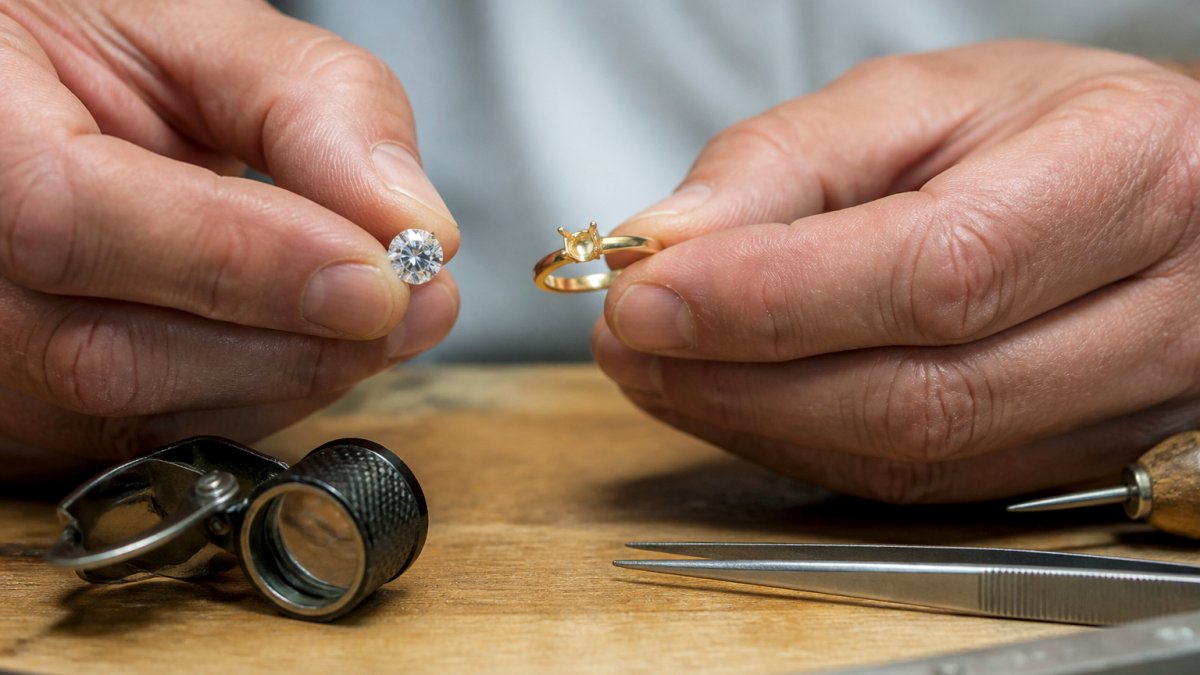
The loose diamond vs finished ring decision comes down to one question: how much control do you want over the final result? Buying a loose diamond means you choose the stone and the setting separately, then have them assembled.
Here's the short version. Loose stones give you maximum choice and often a lower diamond price, because you're paying for a certified stone rather than a finished piece with retail markup baked in.
What most guides get wrong is treating this as a quality question. It isn't. Both paths can produce an exceptional ring. The real difference shows up in cost structure, risk, and how much time you want to spend.
What You Get With Each Path
A loose diamond is a certified, unmounted stone sold on its own, graded for cut, color, clarity, and carat weight before any setting exists. You buy it, then choose a mounting and pay a jeweler to set it.
A finished ring (also called a preset ring) is a complete piece: center stone, setting, and band already assembled and finished. You inspect one object and buy one object.
| Factor | Loose Diamond + Separate Setting | Finished Ring |
|---|---|---|
| Choice of stone | Broadest, stone-first | Limited to what's mounted |
| Choice of setting | Full customization | Fixed or minor tweaks |
| Number of sellers | Two or more | One |
| Warranty coverage | Split between parties | Single source |
| Time to wear | Days to weeks | Often immediate |
| Resizing | Negotiated separately | Usually included |
Total Cost Comparison: Setting, Labor, Resizing, and Insurance
Diamond prices get all the attention, but the setting line item is where loose-diamond buyers get surprised. A mounting carries its own cost, and setting labor is billed separately by most jewelers. Add resizing, and you may pay again for work a finished ring includes.
Insurance adds another layer. Insurers generally want an appraisal or grading report for the finished piece, and a ring assembled from two sources needs documentation that ties the stone to the mounting. Ask for that paperwork up front.
Watch Out
Buying a loose stone and a setting from different sellers can leave you with no clear owner of the finished piece. If a prong fails and the stone is damaged, each seller may point at the other. Confirm in writing who is responsible before you pay.
Buying a Loose Diamond and Setting Separately: Pros and Cons
Sourcing the stone first is the right move for buyers who care most about the diamond itself. You see the grading report before any metal enters the picture, and you can reject a stone on paper without unwinding a whole purchase.
The trade-off is coordination. You're managing two transactions, two shipping timelines, and one setting appointment.
Advantages of Sourcing the Stone First
- Full control over the 4Cs. You decide where to spend: a larger carat weight, a higher clarity grade, or a better cut.
- Cleaner comparison. Loose stones are priced as stones, so you can compare like for like without setting costs muddying the numbers.
- Setting flexibility. A round stone can go into a solitaire, a halo, or a three-stone design. You aren't locked into what a retailer happened to mount.
- Upgrade path. Some buyers set a modest stone now and reset a larger one later. A loose purchase makes that easier.
The cons are real, though. Setting labor is an extra cost. Resizing may not be included. And you carry the risk during transit between parties.
Warranty and Damage Responsibility When Parts Come From Different Sellers
This is the gap nobody warns you about. When one company sells the stone and another sets it, warranty coverage fragments. The stone seller warrants the stone. The jeweler warrants the setting and the labor. Neither warrants the combination.
Ask three questions before you buy from separate sources:
- Who insures the stone during shipping to the setter?
- If a prong fails, who replaces the stone?
- Does the setting warranty survive if a third party does the work?
If any answer is vague, that's your answer.
Pro Tip
Ask the setter to document the stone's grading report number in the work order. That paper trail is what insurers and warranty providers ask for when a claim comes in.
Buying a Loose Diamond Online: What to Verify Before You Pay
Online loose diamond buying works well when you verify four things: the grading report, the return window, the shipping insurance, and the seller's policy on the stone arriving not as described. Skip any one of those and you're taking on risk you don't need to carry.
Start with the report. A grading report is an independent laboratory's written assessment of a diamond's cut, color, clarity, and carat weight, issued under a report number you can look up. For lab-grown stones, IGI's grading standards and report verification explain what each grade means and how to confirm a report is genuine.
Independent Grading Reports and Verification
Verify the report number directly on the laboratory's site, not through a link the seller sends you. Confirm the report matches the stone's weight and measurements. Then confirm the report travels with the stone.
A certification from a recognized lab is what separates a real diamond purchase from a gamble. It's also what your insurer will ask for.
The Federal Trade Commission's jewelry advertising guidance sets out how diamond claims must be described to consumers, including disclosure of lab-grown origin. Read it once. It makes you a harder target.
Diamond Ring Setting Options and Setting Compatibility
Setting choice is where loose-diamond buyers gain the most and risk the most. The setting has to physically fit the stone, and not every shape works in every design.
3 Carat Round Solitaire Engagement Ring | 14K Yellow Gold | D/VS1 IGI Certified →
The main options:
- Solitaire: one stone, plain band. The safest choice for stone security and the easiest to resize.
- Prong setting: metal tips hold the stone. Maximum light, but prongs need periodic inspection.
- Halo setting: a ring of smaller stones around the center. Adds visual size without adding center carat weight.
- Bezel: metal wraps the stone's edge. The most protective option for everyday wear.
Metal matters too. Our 3 Carat Round Solitaire Engagement Ring | 14K Yellow Gold | D/VS1 IGI Certified shows how a plain prong-set solitaire keeps every bit of attention on the stone.

Stone security is the point most buyers underweight. A tall, thin prong setting looks dramatic and catches on sweaters. If the ring will be worn daily, favor a lower profile and sturdier prongs.
The Custom Engagement Ring Process, Step by Step
The custom engagement ring process runs five steps, and the order matters. Get the sequence wrong and you'll pay for it in resizing fees and delays.
- Set the budget. Split it mentally between stone and setting before you shop. Buyers who skip this step overspend on the stone and settle for a mounting they don't love.
- Choose the shape and the 4Cs. Decide the diamond shape first, then allocate across carat weight, color grade, clarity grade, and cut. Cut drives brilliance; don't trade it away.
- Select the stone. Review the grading report, confirm the report number, and check the measurements against the shape's ideal ratios.
- Choose the setting and metal. Match the mounting to the stone's outline and to how often the ring will be worn.
- Confirm sizing and set the stone. Get the ring size right before setting. Resizing after the fact is possible but adds time.
Expect the full process to take anywhere from a few days to several weeks depending on whether the stone is in stock and whether the setting is made to order.
Key Takeaway
Pick the stone shape before you fall in love with a setting. Settings are built around shapes, not the other way around, and switching later means starting over.
Lab-Grown vs Natural Diamonds in the Loose-vs-Finished Decision
Lab-grown diamonds change the math on this decision, and mostly in the buyer's favor.
The practical effect: your budget stretches further, which means the setting and labor costs of the loose path stop feeling like a penalty.
Resale is the honest caveat. Lab-grown stones trade at lower resale values than natural stones, so buy one as jewelry, not as an investment. If resale value is your priority, this isn't the category for you.
Every diamond in our collection is IGI-certified and lab-grown, including the 1.50ct Round Lab Diamond Solitaire Engagement Ring | 14K Yellow Gold | D/VS1 IGI, which pairs a D-color, VS1 stone with a plain polished band.

A Practical Decision Framework for Your Budget and Priorities
Use this framework to settle the loose diamond vs finished ring question in about five minutes. Answer honestly; the framework only works if you do.
| If your priority is... | Choose... | Because... |
|---|---|---|
| Maximum control over the stone | Loose diamond | You select and verify before setting |
| Lowest total hassle | Finished ring | One seller, one warranty, one return policy |
| A specific setting design | Loose diamond | Mountings are chosen, not inherited |
| Fastest path to wearing it | Finished ring | No assembly or setting appointment |
| Simplest warranty and returns | Finished ring | Single point of responsibility |
| Best stone for a fixed budget | Loose diamond | No retail markup on the complete piece |
Two more questions sharpen it. Will the ring be worn daily? If yes, weight stone security and warranty coverage heavily, which favors a finished ring from one seller. Do you already know the exact setting you want? If yes, the loose path gives you a cleaner route to it.
Best For
Buyers who want a certified stone and a specific setting, and who are willing to manage two steps to get both exactly right.
Conclusion: Match the Path to What You Value Most
The harder question isn't which path is better. It's which risk you'd rather carry: the coordination risk of assembling a ring from separate parts, or the limited choice of buying one already finished. Neither is wrong. They just suit different buyers.
At Native Jewel, we've removed most of that trade-off by selling finished rings built around IGI-certified lab-grown diamonds, with customizable ring options (diamond, setting, and metal), a lifetime warranty on all diamond jewelry, and 30-day hassle-free returns.
Browse our 2ct Oval Lab Diamond Engagement Ring | 2ct Center | D/VS1 IGI Certified | 14K Yellow Gold Solitaire or start with the 1.50ct Elongated Emerald Lab Diamond Engagement Ring | 1.50ct Center | D/VS1 IGI Certified | 14K Yellow Gold Solitaire, and let the grading report lead.

Frequently Asked Questions
Is it cheaper to buy a loose diamond and setting separately?
Sometimes, but not always. Buying a loose diamond and setting separately can save money when you source the stone from a seller with lower retail markup and pair it with a simple setting. Native Jewel's finished rings start at $1,600 for a 1.50ct elongated emerald solitaire and $1,900 for a 1.50ct round solitaire, so compare the all-in price of stone plus setting plus labor before assuming separate sourcing wins. Resizing, insurance, and any setting labor should be added to the loose-diamond total.
Can you buy a loose diamond and have it set later?
Yes. You can buy a loose diamond, store it safely, and have a jeweler set it when you are ready. The risk is damage during the setting process and unclear responsibility if a prong fails later. Ask who covers the stone while it is being set and get the policy in writing. A finished ring from one seller, such as a 2ct round solitaire at $2,200 with a lifetime craftsmanship warranty and 30-day returns, keeps that responsibility with one party.
How do you choose a setting for a loose diamond?
Match the setting to the stone's shape and how you will wear the ring. A round or oval diamond works well in a prong-set solitaire that lets light in from the sides. Step cuts like emerald need a setting that protects the corners and keeps clarity visible. Consider metal type (white gold, yellow gold, platinum), ring size, and whether the setting can be resized. Ask for the setting's warranty terms before the stone is mounted.
What are the risks of setting a diamond after you buy it?
The main risks are damage during setting, a poor fit between stone and mounting, and finger-pointing if something goes wrong later. If the stone and setting come from different sellers, each may blame the other for a loose prong or a chipped girdle. Keep the grading report, ask for the setter's insurance coverage, and confirm who handles repairs. Buying a finished ring with an IGI-certified stone and a lifetime craftsmanship warranty removes most of that uncertainty.


