

Cart
0
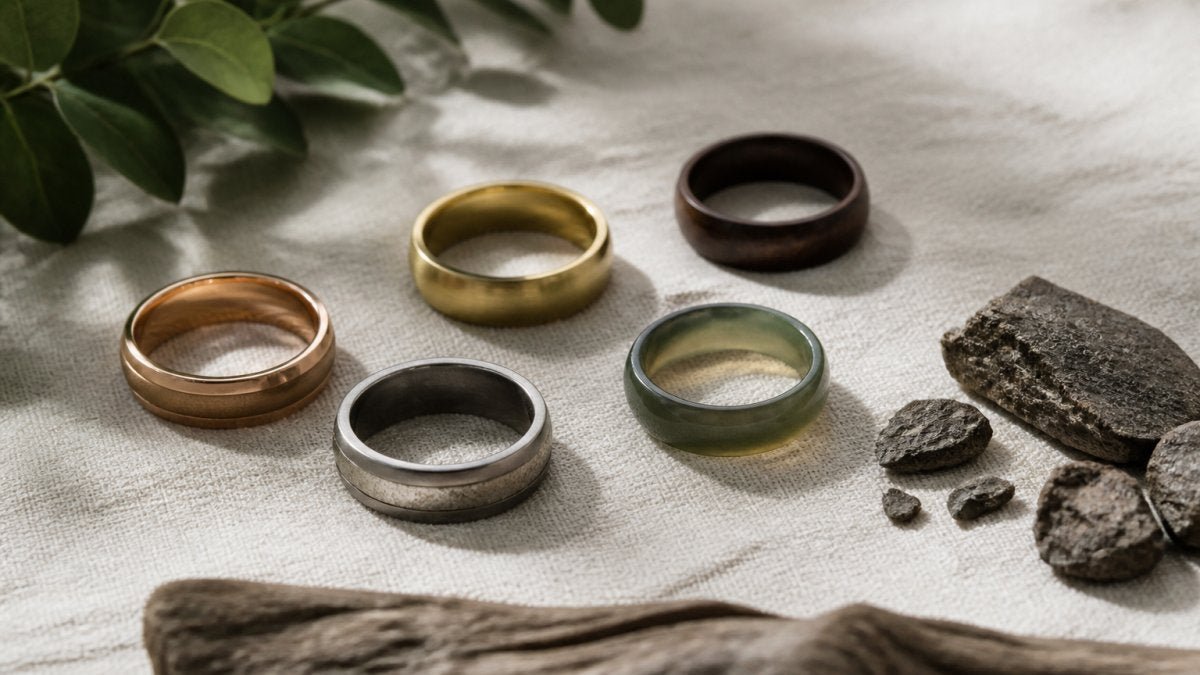
Table of Contents
- Why Couples Are Rethinking the Traditional Wedding Band
- Eco-Friendly Wedding Bands: A Material Comparison
- Recycled Gold Wedding Bands: What the Label Really Means
- Lab-Grown Diamond Wedding Bands: Sparkle Without the Mine
- Heirloom Wedding Rings: The Most Sustainable Ring You Already Own
- How to Verify Sustainability and Ethical Claims
- Pricing Breakdown: Sustainable Bands at Every Budget
- Practical Care, Wear, and End-of-Life Options
- Frequently Asked Questions
Last Updated: October 17, 2026
Why Couples Are Rethinking the Traditional Wedding Band
Sustainable alternatives to traditional wedding bands have gone mainstream: couples now ask where a ring comes from before what it costs.
Recycled gold, lab-grown diamonds, and heirloom resetting let couples keep the symbolism while changing the supply chain behind it.
Below, we break down every major option by material, price, and trade-off. The tension most guides skip: jewelry sustainability is rarely one claim but a stack of decisions about metal, stone, and lifespan.
Key Takeaway
The most sustainable ring is usually the one worn longest, not the one with the greenest label. Durability and repairability matter as much as sourcing.
Eco-Friendly Wedding Bands: A Material Comparison
Eco-friendly wedding bands fall into a few material families, each trading cost, durability, repairability, comfort, or style. Compare them on the same criteria.
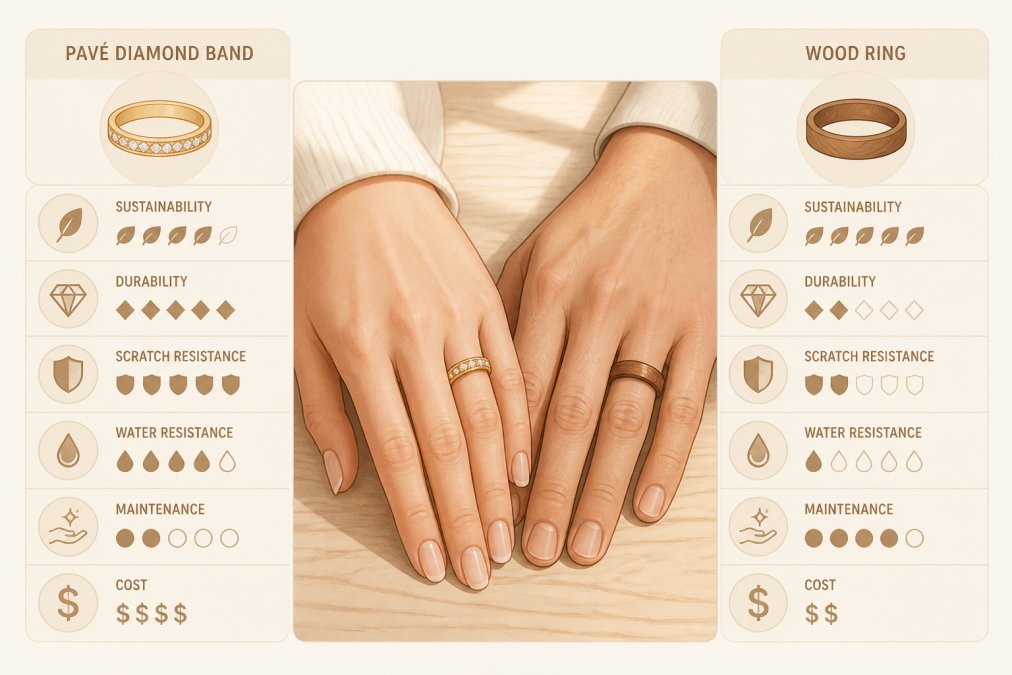
Use this table as a starting point, then read the notes under each material for trade-offs a table cannot capture.
| Material | Durability | Maintenance | Comfort | Resizing | Environmental Considerations | Typical Cost Level | Best For |
|---|---|---|---|---|---|---|---|
| Recycled gold (14K) | High, repairable | Low; annual prong check, periodic polish | Familiar metal feel; heavier than silicone | Yes, within limits | Avoids new mining; alloy still requires refining and finishing | Mid to high | Heirloom-quality everyday wear |
| Recycled platinum | Very high | Low; patina develops, polish optional | Dense and weighty | Yes, by a skilled jeweler | Avoids new mining; high melting point means more energy in refining | High | Maximum longevity |
| Recycled silver | Moderate; softer than gold | Higher; tarnishes, needs polishing | Light and comfortable | Yes, but soft metal wears | Avoids new mining; often alloyed with copper | Low to mid | Budget-friendly fine jewelry |
| Wood / wood inlay | Low to moderate | High; oiling, avoid water | Light and warm | Limited; cracks and splits | Renewable material, but finishes and adhesives vary | Low | Organic style, casual wear |
| Silicone | Moderate | Very low; rinse and dry | Flexible, lightweight | Not applicable | Petroleum-based; degrades and is not repairable | Low | Active lifestyles, travel, safety |
| Twine / braided fiber | Low | High; frays with moisture | Light | Not applicable | Plant or synthetic fiber; short lifespan | Low | Symbolic, short-term |
Recycled Precious Metals
Recycled gold and platinum are chemically identical to newly mined metal.
Mining is a ring's most resource-intensive stage.
The trade-off is verification. "Recycled" is a supply-chain claim, and not every seller documents it. Ask for a refiner name and certificate number rather than accepting a product-page badge.
Alloy choice matters as much as origin. Platinum is denser and more scratch-resistant over decades, but costs and weighs more.
Wood, Silicone, and Alternative Materials
Wooden rings and wood inlay bands offer warmth and an organic look, but wood needs care, can crack with moisture, and is not a forever band.
Silicone rings are flexible, inexpensive, and safe for active lifestyles, gym work, and machinery.
Braided bands, twine rings, and ring tattoos appeal to couples wanting symbolism over precious materials. None carry the resale or heirloom value of metal, a fair trade for many buyers.
Pro Tip
Match the material to the life the ring will live. If you work with your hands, lift weights, or travel often, a silicone band as a daily driver and a fine metal band for occasions is often more sustainable than replacing a damaged wood or soft metal ring every year.
How to Verify a Material Claim
Every material family above comes with claims attached, and that is where buyers get burned. Use the same short checklist regardless of material:
- Ask whether the metal is recycled, and request the refiner or supplier name
- Confirm the alloy (14K vs 18K, or sterling vs fine silver) and what it means for durability
- Ask where the setting is made and whether it is handcrafted or cast overseas
Two red flags: a seller who cannot name a refiner or grading lab, and one who uses "eco-friendly" without saying which material claim it refers to. Legitimate operations answer both questions without hesitation. The Federal Trade Commission's jewelry advertising guidance sets the baseline for how claims about diamonds and precious metals should be substantiated, and it is worth reading before you accept any "ethical" or "sustainable" label at face value.
Recycled Gold Wedding Bands: What the Label Really Means
Recycled gold wedding bands are made from gold already above ground, refined back to pure metal and re-alloyed, so no new mining is required.
What the label does not tell you is how much recycled content a band contains, or whether the alloy is 14K or 18K.
A common mistake is treating "recycled" as a finish line. It covers the metal, not the stone.
Watch Out
Do not accept "eco-friendly" as a standalone claim. Ask separately about the metal's origin, the stone's origin, and the certification behind each. A vague badge usually means one of the three is undocumented.
Lab-Grown Diamond Wedding Bands: Sparkle Without the Mine
Lab-grown diamond wedding bands use stones created in a laboratory rather than extracted from the earth. They share the same chemical, physical, and optical properties as mined diamonds and are graded on the same scales.
A lab-grown diamond is not cubic zirconia or moissanite. It is a diamond, certified by independent grading labs.
The honest limitation: lab-grown diamonds have lower resale value than mined stones because they can be produced in volume.
For couples comparing sparkle per dollar, lab-grown stones free up budget for a better setting and wider band. A 1.75cttw round lab diamond French pavé band in 14K yellow or white gold sits at $1,600, while a slimmer 0.75ct pavé band runs $1,200.

Pro Tip
When comparing lab-grown bands, check three things on the certificate: the grading lab, the color and clarity grades, and the carat weight. A D-color, VS1 stone with excellent cut is the top tier most buyers never realize they can afford.
Heirloom Wedding Rings: The Most Sustainable Ring You Already Own
Heirloom wedding rings are the strongest sustainability play available: a ring that already exists requires no new extraction.
The practical route is a reset. A jeweler removes the stone, builds a new setting, and returns the metal for credit or reuse.
Heirloom rings need an honest condition check first.
1.75cttw Round Lab Diamond Wedding Band in 14K Yellow Gold →
For couples without a family piece, estate and vintage rings serve the same purpose.
How to Verify Sustainability and Ethical Claims
Verifying sustainability claims comes down to documentation, not marketing language.
Use this checklist before you buy:
- Ask which grading lab certified the stone, and request the certificate number
- Ask whether the metal is recycled, and request the refiner or supplier name
- Confirm the alloy (14K vs 18K) and what it means for durability
Two red flags: a seller who cannot name a grading lab, and one who uses "conflict-free" without saying how they know. Legitimate operations answer both without hesitation.
The Federal Trade Commission's jewelry advertising guidance sets the baseline for how claims about diamonds and precious metals should be substantiated in the United States.
Pricing Breakdown: Sustainable Bands at Every Budget
Sustainable band pricing tracks four variables: metal type, diamond carat weight, setting style, and how the piece is made.
Here is how the trade-offs break down across common configurations:
| Configuration | Price | Metal | Diamond Weight | Best For |
|---|---|---|---|---|
| 2mm pavé band, 14K gold | $1,200 | Yellow or white gold | 0.75cttw | Slim stacks, subtle sparkle |
| 2.5mm French pavé, 14K yellow gold | $1,400 | Yellow gold | 1.05ct | Balanced presence |
| 3mm French pavé, 14K gold | $1,600 | Yellow or white gold | 1.75cttw | Maximum sparkle, statement band |
Wood and silicone sit far below these figures, typically in the low hundreds or less, but lack the same longevity.
The pattern is consistent: going from 2mm to 3mm and 0.75ct to 1.75ct roughly adds a third to the price, while the visual difference is dramatic.
What Actually Drives the Price
Four levers explain almost every price difference between two bands that look similar online:
- Metal type and karat. Platinum costs more than 14K gold, and 18K gold costs more than 14K because it contains more pure gold. A heavier band uses more metal, so width and thickness matter as much as karat.
- Diamond carat weight and quality. Total carat weight (cttw) drives cost more than any other factor. Color and clarity grades move the price within a given carat weight, and a well-cut stone at a slightly lower color grade often looks better than a poorly cut stone at a higher grade.
- Setting style. A pavé band requires setting many small stones, which is labor-intensive. A French pavé setting, where stones sit in V-shaped notches, adds labor and cost over a simple channel or bezel setting.
Budget Bands by Material Family
A realistic budget range by material family, based on common market pricing:
| Material Family | Typical Price Range | What You Get | What You Give Up |
|---|---|---|---|
| Silicone | Under $50 | Flexible, safe for active use | No resale, not repairable, not an heirloom |
| Wood / wood inlay | $100 to $500 | Organic look, light weight | Cracks with moisture, limited resizing |
| Recycled silver | $150 to $600 | Fine-metal feel at low cost | Tarnishes, softer, wears faster |
| Recycled 14K gold, plain band | $400 to $1,200 | Heirloom-quality metal, repairable | Higher upfront cost |
| Recycled 14K gold, pavé | $1,200 to $2,500 | Sparkle plus durability | Stone loss risk if prongs are not checked |
| Recycled platinum | $1,500 to $4,000+ | Maximum longevity, dense feel | Highest upfront cost, heavier on the hand |
| Heirloom reset | Labor plus new setting, often $500 to $2,000 | Emotional history, no new mining | Depends on condition of the original piece |
These ranges are guides, not quotes. Custom work, designer names, and unusual stone shapes push prices above the top of each range; simple settings and smaller stones keep them at the bottom.
A Simple Budgeting Framework
Instead of starting with a price, start with your top priority, then let the budget follow:
- If longevity is the priority: put budget into metal and craftsmanship first, stones second. A plain recycled platinum or 14K gold band with a modest stone will outlast a heavily stoned band in a softer metal.
- If sparkle is the priority: lab-grown stones free up budget for a wider band and better setting at the same total spend. A 1.75cttw French pavé band in 14K gold at $1,600 is the clearest example.
- If ethics and verification are the priority: budget for documentation. Certified stones and documented recycled metal cost more than undocumented equivalents, and the premium buys a checkable paper trail.
Key Takeaway
Spend on the stone and setting you will see every day. Save on the metal karat, not the craftsmanship. A well-made 14K band outlasts a poorly made 18K one, and a documented recycled claim is worth more than a badge.
Practical Care, Wear, and End-of-Life Options
Caring for a sustainable band is no different from caring for any fine ring.

For daily wear, remove rings before swimming, harsh chemicals, or lifting weights.
End-of-life options matter more than most buyers expect.
The Responsible Jewellery Council's certification standards outline what a credible supply-chain audit covers, from human rights to environmental practice.
For buyers who want a documented, certified path, our 1.75cttw round lab diamond French pavé band in 14K yellow gold pairs IGI certification with a lifetime craftsmanship warranty and complimentary resizing, removing most post-purchase risk.
Choosing a sustainable band means accepting that no single option wins on every measure.
Frequently Asked Questions
What makes a wedding band sustainable?
A sustainable wedding band comes down to three factors: where the metal and stones come from, how long the ring lasts, and what happens to it at the end of its life. Recycled gold and platinum reduce new mining demand. Lab-grown diamonds are created in a lab rather than extracted from the earth. Durable construction matters too, because a band worn for decades does not need replacing. Ask for documentation on sourcing, look for certification on stones, and favor designs that can be resized and repaired rather than discarded.
Are recycled gold wedding bands more sustainable than newly mined gold?
Recycled gold avoids the environmental disruption of new mining, which involves land disturbance, water use, and energy-intensive extraction. The metal itself is chemically identical, so a recycled gold band performs exactly like a newly mined one. The catch is verification: recycled content claims are largely self-reported, so buy from jewelers who explain their sourcing and provide documentation. A 14K recycled gold band paired with lab-grown diamonds gives you the durability of fine jewelry without adding demand for newly extracted metal.
Are lab-grown diamonds a sustainable choice for wedding bands?
Lab-grown diamonds are created in controlled facilities rather than mined, which avoids the land and water impacts of extraction. They are real diamonds with the same hardness and brilliance, and IGI certification confirms their specifications. For a wedding band, look for D-color, VS1 clarity stones with excellent cut, like those in Native Jewel's lab-grown diamond wedding bands, which start at $1,200. Certification is the practical proof: it tells you exactly what you are buying.
Can you use a family heirloom instead of buying a new wedding band?
Yes, and it is often the most sustainable option available. An heirloom ring requires no new materials at all. A jeweler can resize it, reset the stones into a new band, or melt and reform the metal into a modern design while keeping the original gold. If the style does not suit you, ask about a partial reset that preserves the sentimental stones. The main considerations are wear and metal condition, which a jeweler can assess before any work begins.
How do I choose a wedding band to go with my engagement ring?
Match the metal first, then the profile. A 14K white gold engagement ring pairs cleanly with a white gold pavé band, while yellow gold calls for yellow gold. Consider width: a 2mm band like the 0.75ct pavé styles works beside a delicate solitaire, while a 3mm French pavé band holds its own in a stack. Bring your engagement ring to fittings if possible, and confirm the band can be resized. Native Jewel includes complimentary resizing and a lifetime craftsmanship warranty on its diamond bands.


