

Cart
1
Table of Contents
- Quick Comparison: Best Gold Jewelry for Sensitive Skin
- Best Jewelry Materials for Sensitive Skin
- 14K Gold Jewelry for Sensitive Skin: What the Alloy Actually Contains
- Solid Gold Jewelry That Won't Tarnish: What That Claim Really Means
- Hypoallergenic Gold Earrings for Sensitive Ears
- How to Care for Gold Jewelry to Extend Its Wear Life
- Conclusion: Choosing Gold Jewelry That Lasts
- Frequently Asked Questions
Last Updated: October 14, 2026
Quick Comparison: Best Gold Jewelry for Sensitive Skin
The best gold jewelry for sensitive skin that won't tarnish starts with the metal, not the label. At Native Jewel, we work exclusively in 14K gold and IGI-certified lab-grown diamonds.
| Piece | Metal | Best For | Price |
|---|---|---|---|
| 3 Carat Round Solitaire Engagement Ring | 14K yellow gold | Everyday wear, sensitive skin | $3,200 |
| 4.10ct Pear Lab Diamond Engagement Ring | 14K yellow gold | Statement rings | $3,500 |
| 4 CTTW Oval Diamond Stud Earrings | 14K white gold | Sensitive ears | $2,200 |
| Heart Cut Lab Diamond Stud Earrings | 14K white gold | Gift-giving | $2,200 |
| 1.75cttw Round Diamond Wedding Band | 14K yellow or white gold | Daily stacking | $1,600 |
| 12.50ct Diamond Tennis Bracelet | 14K yellow or white gold | Occasional wear | $8,000 / $7,800 |
| Radiant Cut Lab Diamond Pendant | 14K yellow gold | Layering | $2,500 |
Below: why these metals behave as they do, what "won't tarnish" actually promises, and how to care for a piece so it keeps its finish.

Best Jewelry Materials for Sensitive Skin
The best jewelry materials for sensitive skin are solid gold alloys with low or no nickel, titanium, platinum, and 316L surgical stainless steel.
Reactive skin usually reacts to what is mixed into the metal, not the gold itself. Pure gold is soft, so jewelers blend it with alloys to make it strong enough for rings and earrings, and those alloys are where problems begin.
The Four Gold Constructions, Ranked by Wear Life
- Solid gold (14K or 18K). Gold alloyed throughout the entire piece, with no layer to wear through. A 14K ring is 58.3% gold by weight all the way to the core. This is the most durable option for everyday wear and the safest for reactive skin, because whatever touches your skin is the same alloy throughout.
- Gold-filled. A thick gold layer (at least 5% of total weight by FTC standards) bonded to a brass or copper core. It wears far longer than plating, often years, but the core is still a base metal that can be exposed once the gold thins at high-friction points.
- Gold vermeil. A gold layer of at least 2.5 microns over a sterling silver core, per FTC minimums. Sterling silver beats brass as a core, but the layer is thinner than gold-filled, so vermeil wears faster at contact points.
PVD (physical vapor deposition) coating is a finish, not a construction. It bonds a hard gold-colored layer to a base metal at a molecular level and resists scratching better than standard electroplating, but it still wears at the edges eventually.
Materials That Tend to Work Well
- 14K and 18K gold: durable and low in reactive alloys. 14K is more practical for rings you never take off; 18K is softer and scratches more easily.
- Titanium: lightweight, nickel-free, popular for posts and backs. Not typically used for fine gold jewelry, but excellent for sensitive piercings.
- Platinum: naturally dense and hypoallergenic, though it costs more and is usually reserved for high-end settings.
Materials That Cause Trouble More Often
- Gold-plated or gold-filled pieces with a nickel-containing base
- Costume jewelry with unknown metal content
- White gold that has not been finished with a protective rhodium plating
Why Nickel Causes Reactions and What to Wear Instead
Nickel is the most common cause of contact dermatitis from jewelry.
Symptoms include redness, itching, a rash, or dry patches where metal touches skin. Green skin is a separate reaction to copper in the alloy, not a nickel allergy.
If nickel is the problem, the fix is straightforward: choose pieces where the metal touching your skin is solid 14K or 18K gold, titanium, or platinum.
Watch Out
A "hypoallergenic" label is not regulated in the same way as a nickel-free claim. Plenty of pieces carry the word while still containing nickel in the alloy. If your skin is genuinely reactive, ask for the metal composition in writing rather than trusting the label.
A Repeatable Checklist Before You Buy
Run every listing through the same filter:
- What is the metal touching my skin? Solid 14K/18K gold, titanium, or platinum is safest.
- Is there a base metal? If yes, what is it, and is it nickel-free?
- If it is plated, how thick? Ask for microns. Under 1 micron is thin; 2.5 microns or more is meaningful.
- What is the closure or backing made of? A solid gold post with a nickel butterfly back defeats the purpose.
- What is the return policy? A seller confident in their materials will accept returns on pieces that irritate skin.
- Will they put the composition in writing? If not, that is your answer.
14K Gold Jewelry for Sensitive Skin: What the Alloy Actually Contains
14K gold jewelry for sensitive skin works because 14K means 58.3% pure gold by weight.
The two common alloy recipes behave differently:
- Yellow gold is usually alloyed with copper, silver, and zinc. It contains little to no nickel, which makes it the safer default for reactive skin.
- White gold is alloyed with palladium, silver, or nickel, then finished with rhodium plating for a bright white surface. Nickel-based white gold is the version to avoid if you react.
The 3 Carat Round Solitaire Engagement Ring and the 4.10ct Pear Lab Diamond Engagement Ring are both solid 14K yellow gold with no plating to wear through.

A note on karat and durability: higher karat does not mean better for daily wear. 18K gold contains more pure gold, making it softer and more prone to scratching.
Pro Tip
If you already own white gold and love the color, ask a jeweler to check the plating thickness. Rhodium plating wears thin at the contact points first, usually the bottom of the band and the inside of the prongs, and that is exactly where reactions start.
Solid Gold Jewelry That Won't Tarnish: What That Claim Really Means
Solid gold jewelry that won't tarnish is a claim about the base metal, not a promise nothing will ever change. Pure gold does not tarnish, oxidize, rust, or react with sweat the way silver or copper does. What tarnishes is the alloy mixed in, or the plating on top. "Won't tarnish" means one of three things:
- Solid gold with no plating. Nothing to wear through or flake. The finish can dull from grime, but a polish restores it.
- Gold-plated or gold-filled. A layer of gold over a base metal that will eventually wear, at a rate set by the layer's thickness.
- Gold PVD coating. A thin gold layer applied by a vacuum process. More durable than standard plating, still not permanent.
If a listing says "tarnish-free" but not "solid gold," assume a base metal underneath. Ask how thick the plating is in microns, a thicker layer lasts longer, and a seller who cannot answer is usually selling something thin.
The FTC's jewelry advertising guidance sets out how metal content claims are supposed to be described, and it is a useful reference when a listing feels vague.
Key Takeaway
"Won't tarnish" is only meaningful when it comes with a metal composition. Solid 14K gold will not tarnish. Gold plating will, eventually, no matter how the listing phrases it.
Hypoallergenic Gold Earrings for Sensitive Ears
Hypoallergenic gold earrings for sensitive ears should have solid gold or titanium posts, because the post sits inside the piercing for hours.
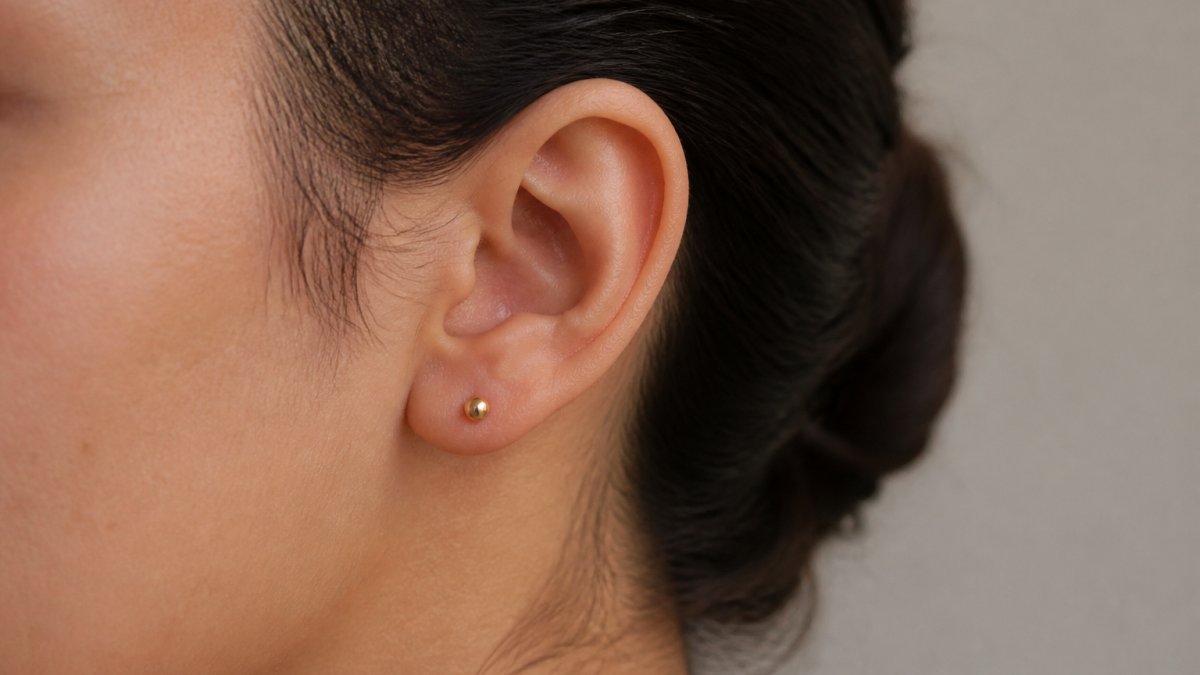
That is why the post and backing matter more than the visible part.
4.10ct Pear Lab Diamond Engagement Ring | 3.05ct Center | D/VS1 IGI Certified →
Our 4 CTTW Oval Diamond Stud Earrings and Heart Cut Lab Diamond Stud Earrings are both set in 14K white gold with stud push backs and IGI-certified lab-grown diamonds.

Match the Closure to the Earring
The closure is the most overlooked variable in sensitive-ear shopping:
- Push back (friction back). A straight post with a butterfly or silicone back. Simple and secure, but the back is a separate metal piece, confirm it matches the post. Best for daily studs.
- Screw back. The back threads onto the post and locks in place. Excellent for people who lose backs or sleep in earrings, and it keeps the post from shifting and creating friction. Slightly slower to put on.
- Lever back. A hinged wire that snaps closed, common on drop and dangle styles. The hinge adds a second metal component, so check what it is made of.
A few practical points for sensitive ears:
- Clean new earrings before the first wear
- Avoid sleeping in heavier styles until the piercing has fully settled
- Dry your ears after showering before putting earrings back in
Studs, Hoops, and Huggies: Which Style Works Best
Studs are the safest choice for sensitive ears: they sit flat against the lobe, move little, and create minimal friction.
Hoops and huggies distribute weight differently. A huggie sits close to the lobe, so it moves less than a large hoop and irritates less.
The backing matters as much as the earring. A nickel-alloy butterfly back can undo the benefit of a solid gold post.
Pro Tip
If you are not sure whether a new pair will bother your ears, wear them for a short window on the first day, a couple of hours, and check the lobe before committing to a full day. Redness that appears within an hour is a signal to stop, not to push through.
How to Care for Gold Jewelry to Extend Its Wear Life
Caring for gold jewelry takes minutes a week and is the difference between a piece that looks new after five years and one that looks tired after one.
A simple routine:
- Remove jewelry before swimming, showering, or applying lotion. Chlorine and skincare products build up on the surface and dull the finish.
- Wipe each piece with a soft cloth after wearing. This removes oils before they set.
- Wash with warm water and a drop of mild dish soap. Use a soft-bristled brush around prongs and settings.
- Dry fully before storing. Moisture left in a closed box encourages dulling.
- Store pieces separately. Gold scratches gold when it rubs together.
- Check prongs twice a year. A loose stone is cheaper to tighten than to replace.
Avoid abrasive polishes, ultrasonic cleaners on certain settings, and chlorine. Harsh cleaners strip plating and dull the alloy surface even when the gold itself is fine.
For a piece like our 1.75cttw Round Lab Diamond Wedding Band, designed for daily wear, that routine is the whole maintenance plan, no special products, no annual service, just a cloth and a few minutes.
Pro Tip
Keep a soft jewelry cloth next to where you take your rings off at night. If the cloth is in reach, you will use it. If it is in a drawer in another room, the ring sits in soap residue overnight.
Conclusion: Choosing Gold Jewelry That Lasts
The confusing part of shopping for sensitive skin is that most listings sound identical: every product is hypoallergenic, every finish is tarnish-free, and none tell you what the alloy actually is.
That is the standard we build to at Native Jewel.
If your skin has reacted to jewelry before, start with a solid gold piece and see the difference. Shop rings at Native Jewel and choose a finish that stays where it belongs.
Frequently Asked Questions
Will gold-plated jewelry always tarnish?
Gold-plated jewelry will eventually tarnish because the base metal underneath the thin gold layer reacts with air, moisture, and skin oils. The plating typically measures just 0.5 to 2.5 microns thick, so it wears through with regular contact. Once the base metal, often brass or copper, is exposed, you see discoloration and green skin. Solid gold and 14K gold pieces do not have this problem because the gold alloy runs through the entire piece rather than sitting on the surface.
Is 14K gold considered hypoallergenic?
14K gold works well for most people with sensitive skin because it contains 58.3% pure gold, and the alloy metals used by quality jewelers are typically copper and silver rather than nickel. Pure 24K gold is technically the most hypoallergenic option, but it is too soft for everyday rings and earrings. If you have a confirmed nickel allergy, ask the jeweler to confirm the alloy composition before buying, since some 14K gold blends do include trace nickel.
Does 14K gold tarnish?
14K gold does not tarnish the way plated or lower-karat pieces do. The gold content resists oxidation, and the copper or silver in the alloy may develop a slight patina over years of wear, but this is easily removed with a soft cloth and mild soap. Chlorine, perfume, and harsh cleaning products can dull the surface faster. Rinsing your jewelry after contact with pool water or lotions keeps the finish bright.
What type of gold earrings are best for sensitive ears?
Solid 14K or 18K gold studs and huggie hoops work best for sensitive ears because the post and backing are the same gold alloy throughout, so no base metal touches your skin. Avoid gold-plated earrings with steel or brass posts, since the plating on the post wears fastest. Prong-set stud earrings in 14K white or yellow gold, like the 4 CTTW Oval Diamond Stud Earrings, keep the metal in contact with your ear entirely hypoallergenic.
Is solid gold better than gold-plated jewelry for sensitive skin?
Solid gold is the better choice for sensitive skin because there is no base metal layer to wear through and expose your skin to irritants. Gold-plated jewelry starts with a brass or copper core, and once that plating thins, nickel or copper can trigger a rash. Solid 14K gold pieces cost more upfront, but they last decades rather than months, which makes the cost per year of wear lower than repeatedly replacing plated pieces.


