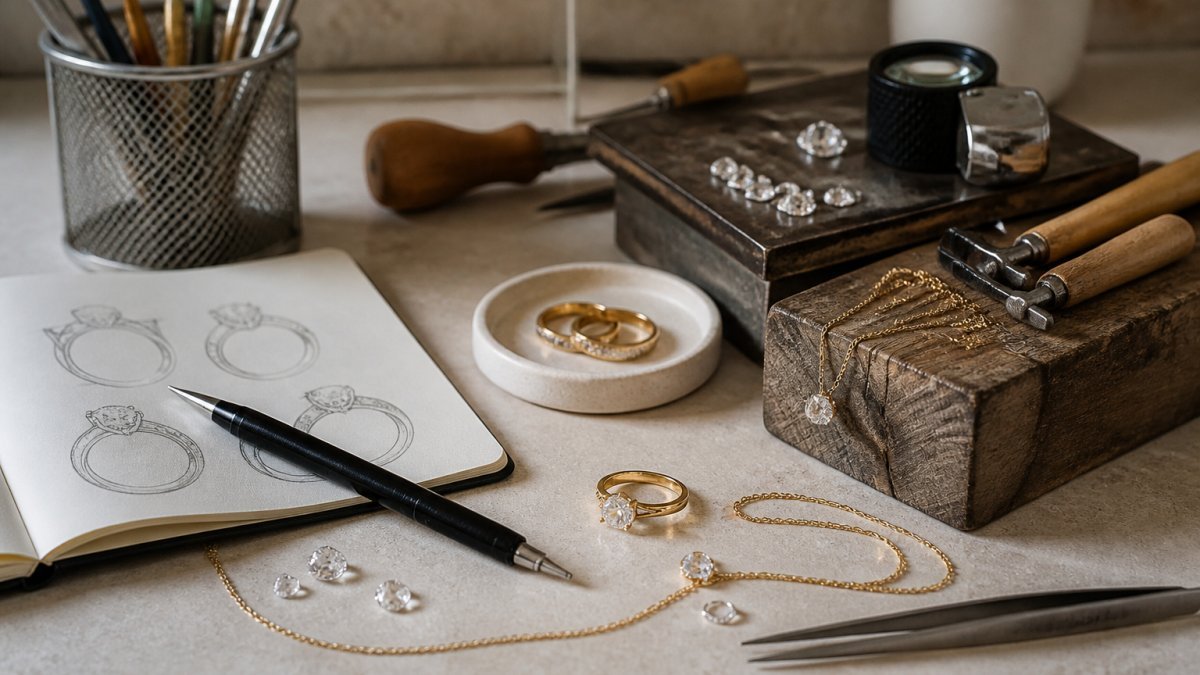
Handcrafted fine jewelry is made by individual artisans who shape, set, and finish each piece by hand rather than on mass-production lines. The difference shows in tighter stone setting, smoother finishing, and a piece built to last decades rather than a season.
Key TakeawayThe clearest test of handcrafted quality is the setting. Look for evenly spaced stones, no visible gaps, and prongs that sit flush against the stone. Machine-set pieces often show uneven spacing under close inspection.
Quick Comparison: Handcrafted Fine Jewelry for Women
The table below summarizes the Native Jewel collection by piece type, price, and best use.
The Benefits of Lab-Grown Diamonds in Handcrafted Jewelry
Lab-grown diamonds are real diamonds created in a controlled environment rather than mined from the earth. They share the same physical, chemical, and optical properties as mined diamonds, which is why independent labs like the International Gemological Institute grade them on the same scale. That last point is the one most buyers skim past, and it is the one that actually protects your money.
5.06ct Oval Lab Diamond Engagement Ring | 4.01ct Center | 14K Yellow Gold Pavé | D/VS1 IGI Certified
What IGI Certification Actually Verifies
IGI certification documents four things you can verify independently:
The 4Cs, measured not claimed. Carat weight to the hundredth, color on the D-to-Z scale, clarity on the FL-to-I3 scale, and cut grade. A seller can claim "D/VS1"; a report is a third party confirming it.
Proportions and finish. Table and depth percentages, crown and pavilion angles, polish, and symmetry, the numbers that determine whether a stone performs as its cut grade suggests.
Whether the stone is lab-grown. The report states the growth method (commonly HPHT or CVD) and confirms origin, separating a legitimate lab-grown stone from an undisclosed simulant.
A unique report number. Laser-inscribed on the stone's girdle and searchable in the lab's database. If a seller cannot give you a report number you can look up, you are not buying a certified stone.
How to Read a Certificate Before You Buy
First-time buyers often compare carat weight and stop there, but carat is the least useful number in isolation, two 3ct stones with different cut grades can look dramatically different in size and sparkle. Here is the order that matters:
Cut first. Cut grade drives light return. A well-cut stone with slightly lower color out-performs a poorly cut stone with better color every time.
Clarity second, at eye level. VS1 and VS2 are typically clean to the naked eye; VVS or FL is where you pay for something only a loupe can see.
Color third, in context. D and E are colorless; F and G are near-colorless and often indistinguishable once set in yellow gold, where the metal's warmth masks a slight tint.
Carat last. Decide your budget, then let the first three grades determine how large a stone that budget buys.
The Practical Benefits for Buyers
Documented quality. Each Native Jewel center stone is IGI certified, so color, clarity, and cut grades are verified by a third party rather than stated by the seller.
More size for the budget. A lab-grown diamond of the same carat weight typically costs less than a mined equivalent, which is why a 4ct center is reachable at these price points. The savings come from a shorter supply chain, not a lower grade.
Traceable sourcing. Lab-grown stones are created, not extracted, so there is no mining supply chain to verify. That is a sourcing fact, not a sustainability certification.
Key TakeawayBefore you buy any certified stone, look up the report number yourself. A certificate you cannot verify in the lab's public database is a piece of paper, not a guarantee.
A common mistake is assuming lower price means lower quality. It usually means a shorter supply chain. The grading is the same, and the certification is what you should actually check.
Engagement Rings and Wedding Sets: Handcrafted 14K Gold Pieces
The best engagement ring is the one whose center shape suits the wearer's taste, set in a metal that flatters the stone. In 14K gold, yellow versus white comes down to warmth versus a cooler, brighter look.
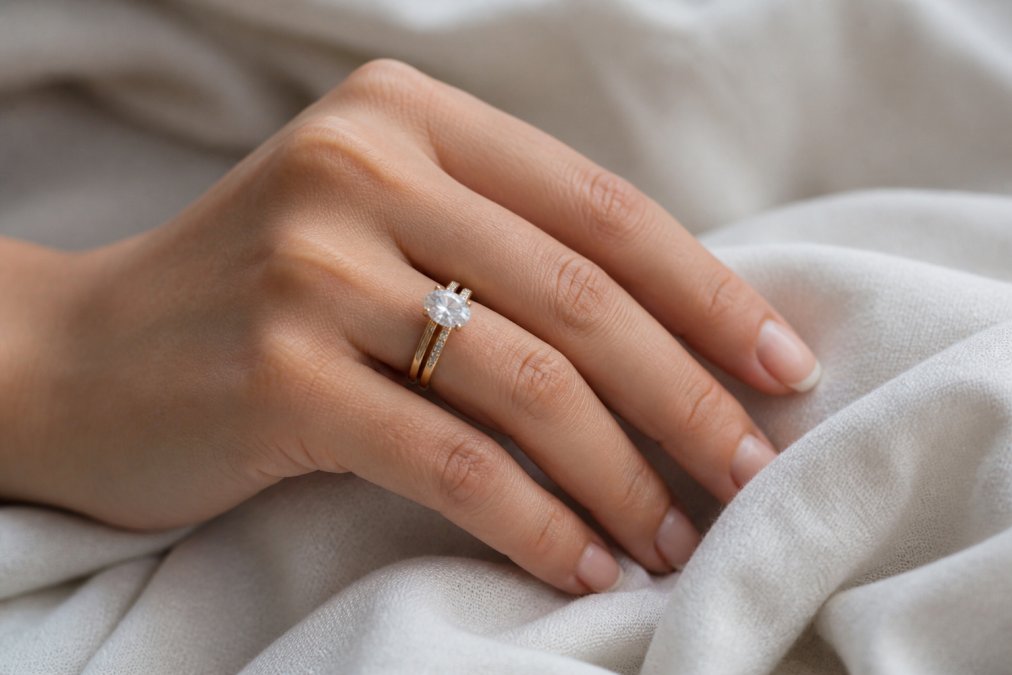
Woman’s hand wearing an oval lab diamond engagement ring in 14K gold resting on neutral fabric
When pairing an engagement ring with a wedding band, match the metal first. A 14K Yellow Gold French Pavé Wedding Band at $1,400 sits flush against a yellow gold engagement ring, but will visually clash against white gold. Order both in the same metal unless you want a deliberate mixed-metal stack.
14K Yellow Gold French Pavé Wedding Band | 1.05ct | 2.5mm
Everyday Wear and Statement Pieces: Earrings, Necklaces, and Bracelets
Everyday pieces should be light enough to forget you're wearing them and durable enough to survive a commute. Statement pieces should command attention on the occasions that call for it. The practical difference is not price, it is how much maintenance the piece demands.
Everyday Pieces: Built for Repetition
The test for an everyday piece is whether you can put it on in the morning and not touch it again until night. That rules out delicate clasps, long drops, or settings that catch on knitwear.
Statement Pieces: Built for Occasions
A statement piece earns its price by doing what an everyday piece cannot: filling open space. The 12.50ct Diamond Tennis Bracelet delivers 4mm diamonds in a continuous line of 14K yellow gold at $8,000. Custom sizing is available on request, which matters because a tennis bracelet should sit just below the wrist bone and stay there when your arm moves.
Everyday pieces fail from accumulation. Soap, lotion, and skin oils build up on pavé and behind stones. The monthly warm-water-and-soft-brush routine below matters most for pieces you wear daily.
Statement pieces fail from impact. A tennis bracelet worn to the gym or while lifting will stretch and bend at the clasp. The fix is taking it off before the activity.
Both benefit from the six-month prong check. Run a fingernail along the setting. A snag means a loose stone, and a loose stone in a daily-wear piece will be lost before you notice it.
Pro TipIf you are building a collection from scratch, buy the everyday pieces first. A stud and a pendant you actually wear will out-value a statement piece that sits in a box, and the everyday pieces establish your metal choice for everything you add later.
How to Style 14K Gold Jewelry for Different Necklines and Outfits
The rule for styling 14K gold is simple: match the jewelry's visual weight to the neckline's openness. An open neckline carries more metal and stone; a high or busy neckline needs restraint.
Here's how to apply it:
V-neck and scoop necks. These frame a pendant naturally. A 16-inch chain like the Heart Cut Pendant lands right in the V, which is why this pairing works so reliably.
Crew and boat necks. Skip the pendant and go for studs or a bracelet. A necklace here competes with the fabric line rather than complementing it.
Strapless and off-shoulder. This is where a statement piece earns its place. A tennis bracelet or a larger pendant fills the open space without looking cluttered.
Buttoned shirts and turtlenecks. Wear gold over the fabric, not under it. A pendant over a fine turtleneck reads intentional; tucked underneath, it disappears.
Stacking too many pieces in the same visual zone is the most common styling mistake. A bold pendant, statement earrings, and a chunky bracelet worn together fight for attention and end up looking accidental rather than styled. Pick one focal point per outfit.
Fine Jewelry Care Guide: Maintaining Handcrafted Pieces for Longevity
Handcrafted fine jewelry lasts generations when cared for properly, and most damage comes from a handful of avoidable habits rather than normal wear. The Gemological Institute of America publishes guidance on gemstone care that applies to diamond pieces as well.
Follow this routine:
Remove rings before showering, swimming, or applying lotion. Soap residue dulls pavé stones faster than anything else.
Store each piece separately in a soft pouch or lined box. Diamonds scratch other jewelry, including other diamonds.
Clean monthly with warm water, mild dish soap, and a soft brush. Pat dry with a lint-free cloth.
Check prongs every six months by running a fingernail along the setting. A snag means a loose stone.
Take bracelets and necklaces off before gym sessions or heavy lifting. Chains stretch and clasps bend under load.
Book a professional inspection once a year, especially for pavé-heavy designs with many small stones.
Conclusion
Choosing handcrafted fine jewelry for women comes down to three decisions: the stone, the metal, and the setting. Getting those right matters far more than brand name or markup. The pieces above cover proposals, weddings, daily wear, and milestone gifting, all with IGI-certified lab-grown diamonds and 14K gold construction.
Frequently Asked Questions
What defines fine jewelry versus fashion jewelry?
Fine jewelry is made from precious metals like 14K gold, sterling silver, or platinum and set with genuine gemstones or diamonds. Fashion jewelry uses base metals and synthetic stones. Handcrafted fine jewelry for women typically includes IGI-certified lab-grown diamonds, which offer the same physical and optical properties as mined diamonds. At Native Jewel, every piece is crafted with 14K gold and certified stones, backed by a lifetime warranty on craftsmanship.
Are lab-grown diamonds considered fine jewelry?
Yes. Lab-grown diamonds have the same chemical composition, hardness, and brilliance as mined diamonds. They are graded by independent labs like IGI on the same color, clarity, and cut scales. When set in 14K gold and handcrafted, they meet the definition of fine jewelry. Native Jewel's collection includes IGI-certified lab-grown diamonds in engagement rings, earrings, and necklaces, all backed by a lifetime warranty.
How can you tell if jewelry is truly handcrafted?
Look for slight variations in the setting, hand-finished details, and documentation from the maker. True handcrafted fine jewelry for women often includes a certificate of authenticity and a warranty that covers craftsmanship. Native Jewel provides IGI certification for every diamond and a lifetime warranty on all diamond jewelry, so you can verify the quality and origin of your piece before and after purchase.
How do I care for handcrafted fine jewelry to ensure longevity?
Clean your handcrafted fine jewelry with warm water, mild soap, and a soft brush, then dry with a lint-free cloth. Store each piece separately in a soft pouch to prevent scratches. For 14K gold and lab-grown diamonds, avoid harsh chemicals and remove jewelry before swimming or exercising. Native Jewel offers complimentary resizing and a lifetime warranty on craftsmanship, so you can maintain your piece with confidence.
What are the benefits of buying 14K gold jewelry?
14K gold balances durability and beauty. It contains 58.3% pure gold mixed with alloys for strength, making it suitable for everyday wear. It resists scratches better than 18K or 24K gold and holds its shape well in detailed settings. Native Jewel's 14K gold pieces, including engagement rings and wedding bands, are handcrafted and backed by a lifetime warranty, ensuring long-term value.