

Cart
0
Table of Contents
- What Recycled Gold Jewelry Actually Means
- Step 1: Read the Recycled Gold Jewelry Hallmark
- Step 2: Match the Mark to Real Recycled Gold Certification
- Step 3: Ask for Documentation, Not Just a Label
- Step 4: Know the Limits of Visual Identification
- Recycled Gold vs Mined Gold: What the Difference Means for Buyers
- Questions to Ask When Buying Recycled Gold Jewelry
- When to Get Independent Testing and Professional Appraisal
- Frequently Asked Questions
Last Updated: October 19, 2026
What Recycled Gold Jewelry Actually Means
Recycled gold jewelry is jewelry made from gold that was previously refined and used, then melted and refined again instead of being pulled fresh from a mine. That old ring in your drawer, the scrap from a jeweler's bench, even gold recovered from electronics, can all become new jewelry.
Here's the part most guides skip: "recycled" describes where the metal came from, not how pure it is. A recycled gold ring and a newly mined gold ring can both be 14K, both test the same, and both wear the same. The difference lives in the paperwork, not the metal.
At Native Jewel, we work with 14K gold and IGI-certified lab-grown diamonds, and we get questions about sourcing constantly. So we built this guide around the checks that actually work.
Below, we'll walk through seven practical checks, from reading a hallmark to knowing when to pay for an independent assay. Here's what most buyers get wrong first: they look for a "recycled" stamp. There isn't one.
Step 1: Read the Recycled Gold Jewelry Hallmark
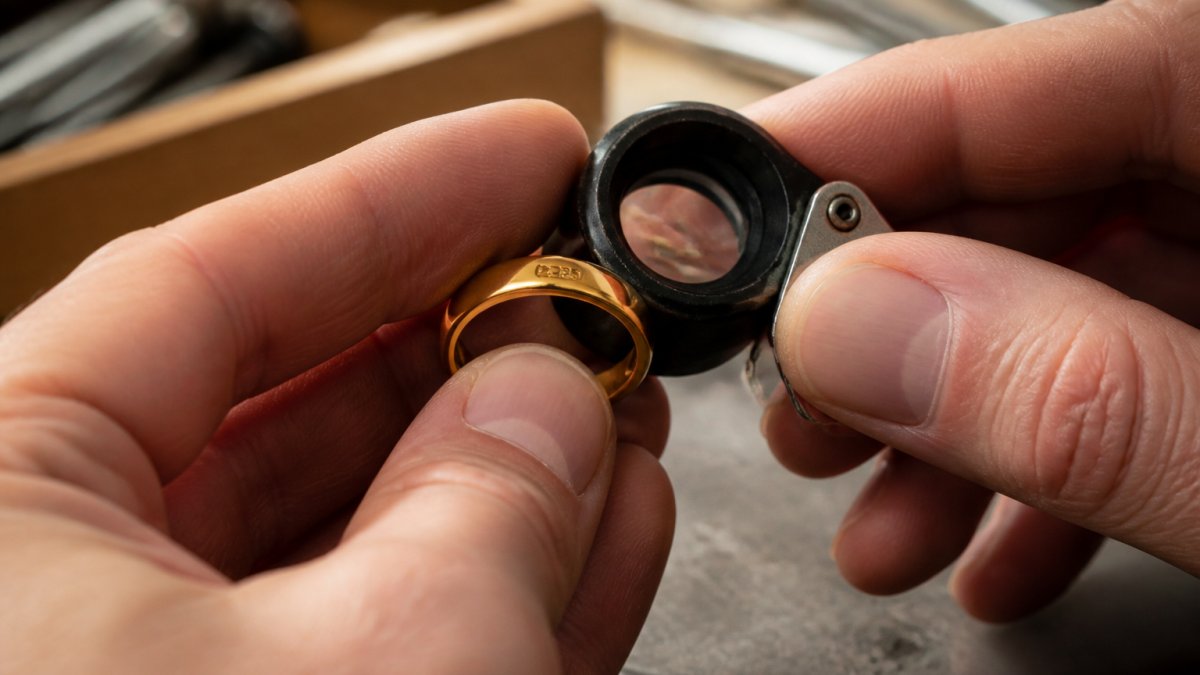
Start with the stamp inside the band. A recycled gold jewelry hallmark tells you the metal's purity, not its origin. In the United States, the FTC Jewelry Guides govern how precious metal claims can be made, and they require accurate quality marks.
Turn the piece over and look for:
- A karat stamp: 14K, 18K, 10K, or 24K
- A manufacturer's mark or trademark
- Sometimes a country of origin
What Karat Stamps Tell You and What They Don't
A karat stamp tells you the gold content in the alloy. 14K means roughly 58% gold mixed with other metals for strength. 18K runs about 75% gold. That's it.
What the stamp does not tell you is where the gold came from. A "14K" mark says nothing about mining, recycling, or sourcing. Anyone who tells you otherwise is guessing.
Why No Hallmark Says 'Recycled'
There is no official recycled gold hallmark in the United States. No stamp, symbol, or code means "recycled." Purity marks are regulated; origin claims are handled through certification and disclosure instead. So if a seller points to a stamp as proof of recycled content, that's a red flag, not a receipt.
Step 2: Match the Mark to Real Recycled Gold Certification
Recycled gold certification comes from third-party standards, not from the jeweler's own label. The most recognized framework is the Responsible Jewellery Council's Chain of Custody standard, which tracks material from source to finished piece.
Ask which certifier backs the claim. Then check:
- Does the certificate name the specific piece or batch?
- Is the certifier independent of the seller?
- Does the certificate have a verification date?
Recycled-Content Claims vs Certified Sourcing
These are two different things, and sellers blur them. A recycled-content claim says "this metal was recycled." Certified sourcing says "an independent body verified the full chain." The second is far stronger. A piece can be genuinely recycled and still have zero certification behind it.
Watch Out
A common mistake is accepting a "100% recycled gold" sticker as proof. Stickers and hangtags are marketing, not certification. Without a named certifier and a traceable certificate number, the claim is unverified.
Step 3: Ask for Documentation, Not Just a Label
Documentation is the only reliable path to verifying recycled content, but not all documents carry the same weight. A supplier declaration, a chain-of-custody certificate, and an invoice each prove something different, and none of them proves everything. Knowing what each document can and cannot establish is what separates a real verification from a folder of PDFs.
Here is what to ask for, and what each item actually tells you:
- Supplier declaration of recycled content. A written statement from the refiner or manufacturer stating the percentage of recycled gold in a batch. It proves the supplier is willing to put a number in writing. It does not prove the number is accurate unless an independent body has audited it.
- Chain-of-custody certificate. Issued by a third-party standard holder, this document tracks material from feedstock through refining to finished goods. It proves an independent auditor reviewed the flow of material. Check the scope: does the certificate cover the specific refiner, the specific product category, or only a corporate-level claim?
- Certificate number and issuing body. A real certificate has a number you can look up with the issuer. If the seller cannot name the issuing body or the number does not resolve, the claim is unverified.
- Batch or piece reference. The certificate should reference a batch, lot, or piece that matches your item. A certificate for a different production run does not transfer to your ring.
- Refiner name and location. This lets you cross-check the refiner against public certification lists. A refiner that does not appear on any standard holder's list is a gap, not necessarily a fraud, but it is a gap.
- Date of certification. Recycled-content certificates have validity periods. An expired certificate is not proof of current sourcing.
- Written statement of recycled-content percentage. Ask for the number in writing, not verbal. "100% recycled" and "made with recycled gold" are different claims, and the percentage should be stated explicitly.
A common pattern is that sellers provide one document, usually a supplier declaration, and present it as full verification. That document is a starting point, not a finish line. The stronger file includes an independent certificate with a resolvable number, a batch reference that matches your piece, and a named refiner.
Watch Out
A certificate that names only the brand, not the refiner or the batch, is a corporate-level claim. It may be true at the company level and still not apply to the specific piece in your hand. Ask for the scope in writing.
If a seller can produce the full set, treat the recycled claim as verified. If they can produce only a sticker or a verbal assurance, treat it as unconfirmed. That does not mean the gold is bad. It means you cannot verify the story attached to it, and the story is the only thing that distinguishes recycled gold from newly mined gold.
Step 4: Know the Limits of Visual Identification
You cannot identify recycled gold jewelry by looking at it. Recycled gold and newly mined gold are chemically identical once refined. No loupe, no color check, no weight test can tell them apart.
What visual inspection can do:
- Confirm the piece is solid gold, not plated
- Reveal wear, repairs, or resizing marks
- Show whether the hallmark looks stamped or laser-etched
What it cannot do is confirm origin. Any jeweler who claims to "see" recycled content is overstating what's possible.
Pro Tip
The real difference between recycled and mined gold shows up in paperwork, not appearance. If you're comparing two identical rings, the certification file is the only thing that separates them.
Recycled Gold vs Mined Gold: What the Difference Means for Buyers
Recycled gold and mined gold perform the same in a finished piece. Same purity, same durability, same look. The choice comes down to sourcing values and documentation, not metal quality. But the phrase "recycled gold" covers a wide range of claims, and the differences between them matter more than the recycled-versus-mined label itself.
Recycled-content percentage. A piece labeled "recycled gold" may contain 100% recycled feedstock, or it may contain a minority share blended with newly mined gold. Ask for the percentage in writing. "Made with recycled gold" is not the same claim as "100% recycled gold," and the two are often used interchangeably in marketing.
Mixed feedstock. Many refiners process recycled and newly mined material in the same facility. When that happens, the refiner may use a mass-balance system: recycled material is accounted for in the books, but the physical gold in any given piece is not segregated. Mass balance is a legitimate accounting method under several standards, but it means the specific atom of gold in your ring may not be traceable to a specific recycled source.
Certified sourcing vs. recycled content. These are separate claims. A piece can be genuinely recycled and still lack any responsible-sourcing certification. A piece can carry a responsible-sourcing certificate and still contain newly mined gold. Ask about both, and read the certificate scope to see which claim it actually covers.
Why buyers care about recycled gold vs mined gold:
- Environmental impact: recycling avoids new extraction, but the benefit depends on the feedstock and the refining energy mix. A high recycled-content claim with a mass-balance accounting method delivers a different environmental story than a segregated, fully traceable supply.
- Supply chain transparency: certified recycled gold is often easier to trace than newly mined gold, but only when the certificate names the refiner and the batch. A corporate-level certificate does not give you piece-level traceability.
- Cost: recycled gold is not automatically cheaper, since refining costs apply either way. A price premium usually reflects certification and documentation, not the metal itself.
One honest limitation: "recycled" is not the same as "responsibly sourced." A piece can be recycled and still lack any responsible-sourcing certification. Ask about both, and ask for the percentage and the accounting method in writing. Those two details tell you more about the strength of the claim than the word "recycled" on its own.
Questions to Ask When Buying Recycled Gold Jewelry
The right questions separate a real claim from a slogan. Here are the ones we'd ask any seller:
- Which third-party body certified the recycled content?
- Can I see the certificate number and date?
- What percentage of the gold in this piece is recycled?
- Who refined the gold, and where?
- Is the sourcing also certified as responsible, or only recycled?
- What documentation ships with the piece?
A seller who answers all six clearly is worth your trust. Vague answers are your signal to slow down.
When to Get Independent Testing and Professional Appraisal
Independent testing confirms what a piece is made of, not where it came from. A professional assay or appraisal verifies karat, metal content, and value. It will not verify recycled origin.
Get an appraisal when:
- You're spending a significant amount on a piece
- You need documentation for insurance
- The hallmark looks worn, altered, or missing
For origin claims, rely on certification and supplier disclosure instead. Testing and traceability answer different questions, and you need both to buy with full confidence.
Buying recycled gold jewelry asks more of you than buying on looks alone. The claims are only as good as the paperwork behind them, and that's exactly where we built our standards. Native Jewel offers handcrafted 14K gold pieces with IGI-certified lab-grown diamonds, ethically sourced materials, and a lifetime warranty on all diamond jewelry, plus a 30-day hassle-free return window. Shop rings at Native Jewel and buy with the documentation to match the claim.
Frequently Asked Questions
Can a jeweler test whether gold is recycled?
A jeweler can confirm purity, not origin. Standard tests like acid testing, electronic gold testers, or X-ray fluorescence measure karat and metal content, and a professional can spot plating or base-metal fakes. None of these methods can tell whether the gold came from a mine or a refinery that re-processed scrap. Recycled status depends on documented chain of custody from the refiner and supplier, so ask for that paperwork alongside any verbal assurance.
Is recycled gold good quality?
Yes. Recycled gold is refined to the same purity standards as newly mined gold, so a 14K recycled gold ring contains the same 58.5% gold alloy as any other 14K piece. Quality differences come from alloy mix, craftsmanship, and setting work, not from whether the metal was previously used. Look at the hallmark, the finish, and the seller's warranty terms rather than treating recycled content as a quality grade.
What does a recycled gold hallmark look like?
There is no official hallmark for recycled gold. Stamps show karat and metal, such as 14K, 585, or 18K, and may include a maker's mark or country mark. Recycling status is not part of the stamp because assay offices verify purity, not provenance. Any seller claiming a special recycled stamp should be able to show third-party certification or refiner documentation instead.
Is recycled gold the same as Fairmined gold?
No. Recycled gold comes from previously refined metal, including old jewelry, coins, and manufacturing scrap. Fairmined gold is newly mined from certified artisanal and small-scale operations that meet environmental and labor standards. Both can support responsible sourcing, but they are different claims with different verification paths. Ask which one a seller means, and request the specific certification that backs it.


