

Cart
1

Table of Contents
- What Makes a Jewelry Brand Sustainable (And How to Verify It)
- How We Evaluated These Ethical Jewelry Brands
- 1. Native Jewel: Lab-Grown Diamond Jewelry With IGI Certification
- 5. Native Jewel Solitaire Ring: Recycled Gold Jewelry and 14K Durability Explained
- 6. Material Trade-Offs: 14K vs 18K Gold, Plated vs Solid, and Lifecycle Impact
- Frequently Asked Questions
Last Updated: October 21, 2026
What Makes a Jewelry Brand Sustainable (And How to Verify It)
Sustainable jewelry is fine jewelry made with materials and methods that limit environmental harm and protect the people who mine, cut, and craft them. At Native Jewel, we treat that definition as a checklist, not a slogan.

That is why verification matters more than vocabulary. A brand that publishes its diamond certifications, names its metal sources, and explains its production process is telling you something. A brand that uses green imagery and says nothing specific is telling you something too.
The Claims That Actually Hold Up
Four claims survive scrutiny, and the rest are usually decoration.
- Third-party diamond certification. A grading report from an independent lab such as the International Gemological Institute documents a stone's carat weight, color, clarity, and origin. Without a report, "lab-grown" is just a word.
- Named metal content. "14K" or "18K" stamped on a piece is a legal standard enforced by the Federal Trade Commission's Jewelry Guides, not a marketing flourish. Solid gold is measurable; "gold tone" is not.
- Traceable stones. Lab-grown diamonds have a documented growth origin, which makes chain of custody simpler than with mined stones.
- Written guarantees. A published lifetime warranty and a stated return window are verifiable commitments. Vague promises of "quality" are not.
Watch Out
The most common mistake is treating "conflict-free" as a complete sustainability claim. It addresses one human-rights concern and says nothing about energy use, water, or metal sourcing. Ask what else the brand can document.
How We Evaluated These Ethical Jewelry Brands
We scored each piece on four things: material traceability, certification, durability for daily wear, and price transparency. Every item below is from a single brand, Native Jewel, because that is the collection we can verify line by line, stone by stone.

Our methodology is deliberately narrow. We did not rank brands by the poetry of their mission statements. We asked whether the claims could be checked. IGI certification can be checked. A 14K stamp can be checked. A stated price can be checked.
Our Scoring Criteria and Why Price Transparency Counts
Price transparency earns a scoring slot because it is a proxy for honesty. A brand that lists exact carat weight, clarity grade, metal karat, and finished ring size is inviting comparison. A brand that hides those details behind "starting at" language is not.
| Criterion | What We Check | Why It Matters |
|---|---|---|
| Certification | IGI report on every diamond | Confirms grade and origin |
| Metal content | Stamped 14K, solid (not plated) | Predicts wear over years |
| Durability | Prong settings, solid backs, karat weight | Survives daily wear |
| Price clarity | Exact price, exact specs listed | Enables fair comparison |
| Aftercare | Lifetime warranty, 30-day returns, resizing | Protects your purchase |
That last row is where most online jewelers get vague. Native Jewel publishes all five, which is why it anchors this list.
1. Native Jewel: Lab-Grown Diamond Jewelry With IGI Certification
Native Jewel is our top pick for sustainable fine jewelry because every diamond ships with an IGI report, every piece is solid 14K gold, and the prices are listed in full.

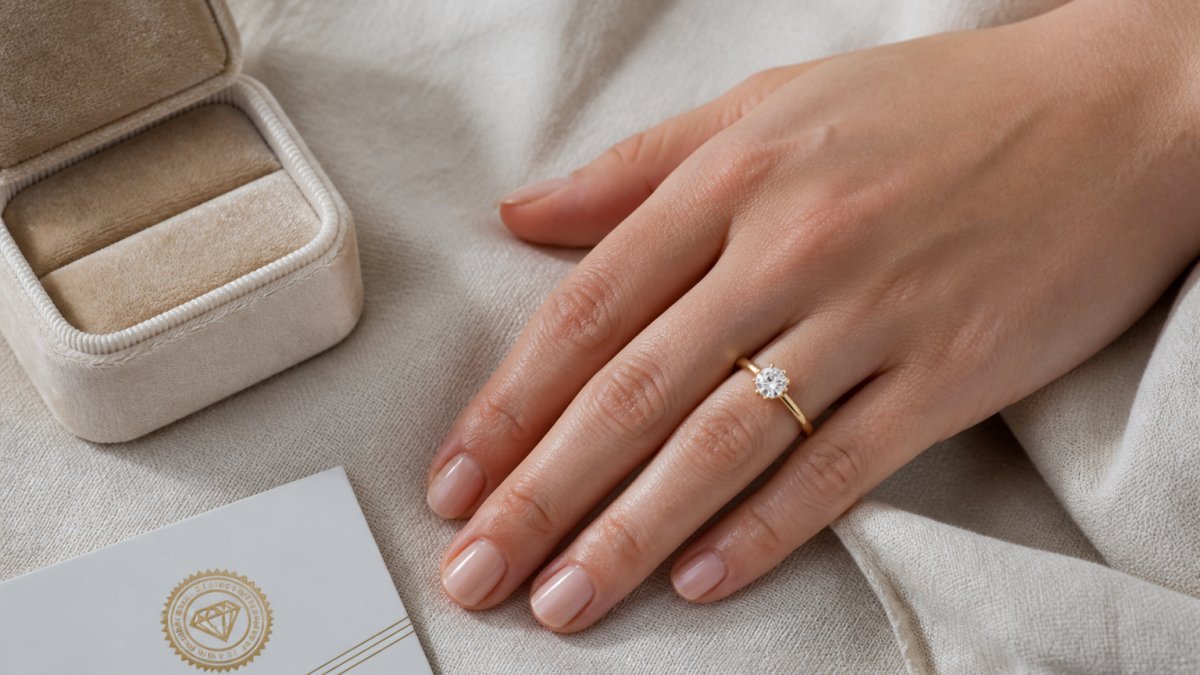
Here is the part that answers the question shoppers actually ask: how do you know the stone is real?
(/products/14k-yellow-gold-3mm-1-75cttw-round-diamond-french-pave-wedding-band) above is the workhorse. A 3mm width sits close to the finger, which matters if you wear gloves, type all day, or stack rings.5. Native Jewel Solitaire Ring: Recycled Gold Jewelry and 14K Durability Explained
Here is the durability question we hear most: will 14K gold wear down faster than 18K? Yes, slightly, and that is the trade-off. Fourteen-karat gold is roughly 58% pure gold alloyed with harder metals, which makes it more scratch-resistant than softer 18K. For a ring worn daily, 14K is the pragmatic choice, not the compromised one.
Everyday-Wear Performance: Tarnish, Water, and Repair
Solid 14K gold does not tarnish the way plated or lower-karat alloys can, and it tolerates normal handwashing and occasional water exposure. That said, no fine jewelry should be worn in chlorinated pools or hot tubs, and repeated exposure to lotions and hair products dulls the surface over time.
Repairability is where solid gold wins. A scratched band can be re-polished, a worn prong can be retipped, and a ring can be resized. Plated pieces cannot be repaired economically because the coating wears through at contact points.
Recycled Gold: A Real Difference, With Limits
On recycled gold: the gold in recycled jewelry is chemically identical to newly mined gold, and refining it avoids new extraction. That is a real environmental difference. The limit is verification. Ask whether the brand names its refiner or publishes a sourcing policy. A claim without documentation is a word, not a fact.
Round Cut Lab Diamond Stud Earrings | 2cttw IGI Certified | 14K Yellow Gold →
What to Check Before You Buy a Daily-Wear Ring
A solitaire worn every day should meet four practical tests. First, the metal should be stamped 14K or 18K solid, not plated. Second, the stone should ship with an independent grading report; an International Gemological Institute report confirms grade and origin. Third, the setting should be a prong style that can be retipped and inspected. Fourth, the brand should publish a lifetime warranty on craftsmanship and a stated return window. Those are verifiable commitments, and they matter more for daily wear than any eco-label.
6. Material Trade-Offs: 14K vs 18K Gold, Plated vs Solid, and Lifecycle Impact
The right material depends on how often you will wear the piece, not on which karat sounds more impressive. Below is how the trade-offs actually break down for everyday wear, with the verification steps that separate a real sustainability claim from a slogan.
| Material | Daily-Wear Durability | Color Depth | Care Needed | Best For |
|---|---|---|---|---|
| 14K solid gold | High, resists scratching | Slightly muted | Occasional polish | Rings, studs, bracelets worn daily |
| 18K solid gold | Moderate, softer alloy | Richer yellow | Gentler handling | Occasional pieces, heirlooms |
| Gold plated | Low, wears at contact points | Consistent until worn | Avoid abrasion | Short-term fashion wear |
| Lab-grown diamond | Very high, same hardness as mined | D to near-colorless | Standard cleaning | All settings, all frequencies |
Recycled vs. Newly Mined Metals: What the Claim Actually Means
Recycled gold is chemically identical to newly mined gold. The environmental difference comes from skipping new extraction and refining, which avoids the land disturbance, water use, and energy associated with mining.
A practical verification step: look for a named refiner or a published sourcing policy. The Federal Trade Commission's Jewelry Guides require marketers to have a reasonable basis for environmental claims, so a brand that cannot explain its recycled content in writing is on shaky ground.
Lab-Grown vs. Mined Stones: Comparable Durability, Different Footprints
Lab-grown diamonds have the same hardness (10 on the Mohs scale) and the same optical properties as mined diamonds, so everyday durability is effectively identical. The difference is origin and footprint: lab-grown stones are produced in controlled facilities, which makes chain of custody simpler to document.
Do not treat all "sustainable" stones as equivalent. Cubic zirconia and moissanite are different materials with different durability and resale profiles. If a listing does not name the stone and the certification, assume the claim is marketing.
Lifecycle Impact: Longevity Is the Most Underrated Metric
A solid 14K piece with a certified lab-grown stone is a decades-long purchase. A plated item replaced every year generates more waste than a single well-made ring worn for twenty. That is the lifecycle math most roundups skip.
End-of-life matters too. Solid gold and certified diamonds can be resized, repaired, and reset; plated fashion jewelry usually cannot. Before you buy, ask three questions: Can the piece be resized? Does the brand offer repairs? Is there a warranty that covers craftsmanship?
Watch Out
Do not store fine jewelry loose in a drawer. Chains tangle, prongs catch, and diamonds scratch softer stones. A lined box with separate compartments prevents the damage that shortens a piece's life.
Frequently Asked Questions
What makes a jewelry brand sustainable?
A sustainable jewelry brand can document where its metals and stones come from, how they were produced, and what happens after purchase. Look for specifics: IGI certification on lab-grown diamonds, stated metal content like 14K solid gold rather than plating, written warranty and return terms, and resizing or repair support. Vague words like 'eco-friendly' without documentation are a warning sign. Native Jewel, for example, lists IGI certification on every diamond piece and backs craftsmanship with a lifetime warranty and 30-day returns.
Are lab-grown diamonds a sustainable choice for everyday wear?
Lab-grown diamonds have the same physical and optical properties as mined diamonds, so they hold up to daily wear the same way. They are graded on the same color, clarity, and cut scales, and IGI certification documents those grades. For buyers comparing sustainability claims, the practical advantage is traceability: a certified lab-grown stone comes with paperwork that identifies it. Native Jewel's lab-grown diamond jewelry, such as the 2cttw round stud earrings at $2,000, ships with IGI certification.
Is recycled gold better for the environment than newly mined gold?
Recycled gold keeps existing metal in circulation instead of requiring new extraction, which avoids the land disturbance and energy use of mining. The catch is verification: ask whether the brand states its recycled content in writing. Solid 14K gold pieces, like Native Jewel's 14K yellow gold settings, can be resized and repaired rather than replaced, which extends the metal's useful life. That repairability matters more for everyday pieces than a one-time sourcing claim.
Can you wear 14K gold jewelry every day without damaging it?
Yes. 14K gold is 58.5% gold alloyed with harder metals, which makes it more scratch-resistant than 18K for rings and bracelets that take daily contact. Remove pieces before swimming, cleaning with abrasives, or lifting weights, and store them separately to prevent scratching. Native Jewel includes complimentary resizing on its rings and a lifetime warranty on craftsmanship, so wear from normal use is covered rather than treated as a dead end.
How can you tell if a jewelry brand sources materials responsibly?
Ask for three things: certification, metal disclosure, and post-purchase terms. Certification should name the grading body, such as IGI for lab-grown diamonds. Metal disclosure should state the karat and whether the piece is solid or plated. Post-purchase terms should cover warranty length, return window, and resizing. A brand that answers all three in writing, as Native Jewel does with IGI certification, 14K gold specs, a lifetime warranty, and 30-day returns, gives you something to hold them to.


