

Cart
0

Last Updated: November 3, 2026
Quick Summary
A lab grown diamond warranty usually covers manufacturing defects in the metal, setting, and workmanship, such as a prong set too loosely at the factory or a weak solder joint. It normally does not cover normal wear, accidental damage, loss, theft, or repairs done by another shop. Native Jewel offers a lifetime warranty on all diamond jewelry.
- Warranties cover manufacturing faults, not everyday accidents like cracks from a fall.
- Coverage usually starts on the purchase date, not the delivery date.
- Warranties are often tied to the original buyer, so check transfer rules before a gift or resale.
- Keep your original receipt, order confirmation, and grading report as proof of purchase.
- Stop wearing the ring after noticing a problem, since continued wear can turn a defect into an exclusion.
Table of Contents
- What a Lab Grown Diamond Warranty Covers
- Lab Grown Diamond Ring Warranty Exclusions
- Lab-Grown Diamond Warranty vs. Insurance: Which Do You Need?
- Lab-Grown Diamond Insurance: When a Policy Makes Sense
- Original Purchaser and Proof-of-Purchase Requirements
- How to File a Jewelry Warranty Claim, Step by Step
- Keeping Your Warranty Valid: Inspections and Next Steps
- Frequently Asked Questions
What a Lab Grown Diamond Warranty Covers
A lab grown diamond warranty is a written promise from the seller that certain problems with your jewelry will be fixed or replaced. Most lab grown diamond warranty terms focus on defects from making the piece, not on everyday accidents.
Native Jewel offers a lifetime warranty on all diamond jewelry. This guide walks through what is covered, what is not, and how to make a claim.
Manufacturing defects in materials and workmanship
The core of most warranties is a manufacturing defect. That means a fault in the metal, the setting, or how the piece was put together. A prong that was set too loosely at the factory is an example.
These defects are the reason a warranty exists. They are problems the maker should have caught before the ring left the workshop.
Warranty duration and when coverage begins
Coverage usually starts on the date of purchase, not the date the ring is delivered. Some warranties last a set number of years. Others last a set number of years, while some, such as Native Jewel's lifetime warranty on diamond jewelry, are described as lifetime coverage.
Check two things:
- When coverage starts
- Whether it applies to the original buyer only
Lab Grown Diamond Ring Warranty Exclusions
Warranties almost never cover everything. Knowing the exclusions early saves you from a denied claim later.
Common exclusions include:
- Normal wear and tear, such as small scratches on the band
- Accidental damage, like a stone cracked after a fall
- Loss or theft, which usually need a separate jewelry insurance policy
A ring that gets a loose prong from hitting a countertop is a gray area. Many warranties cover manufacturing faults but not impact damage, so ask before you file.
Lab-Grown Diamond Warranty vs. Insurance: Which Do You Need?
A warranty and insurance do different jobs. A warranty covers faults in how the piece was made. Insurance covers loss, theft, and accidental damage, usually for a fee.
Many owners of expensive rings choose both. A warranty handles defects. A policy handles the events a warranty leaves out.
Lab-Grown Diamond Insurance: When a Policy Makes Sense
A jewelry insurance policy makes the most sense when the ring is hard to replace or worth a lot of money. It is also useful if you wear the ring every day, since daily wear raises the chance of loss or accidental damage.
Before you buy a policy, check:
- The appraised value of the ring
- Whether the policy covers loss and theft
- The deductible and the premium
Original Purchaser and Proof-of-Purchase Requirements
Most lab grown diamond warranties are written for the original buyer, and the proof-of-purchase rules are where claims quietly fail. Understanding these terms before you buy, and again before you file, is the difference between a covered repair and a denied claim.
What "original purchaser" usually means
The warranty is tied to the person who bought the piece from the seller, not to the piece itself. If you received the ring as a gift, inherited it, or bought it secondhand, the warranty may not transfer. Some sellers allow transfers to a gift recipient and others do not. Ask before the purchase, not after.
What counts as proof of purchase
Acceptable proof varies by seller, but common requirements include:
- The original sales receipt or order confirmation showing the date, item, and price
- The order number or invoice number
- Any grading report or certificate that came with the stone
A credit card statement alone is usually not enough, because it does not identify the item. A screenshot of a confirmation email is often accepted, but a forwarded email from someone else may not be.
How ownership changes affect coverage
- Resizing. A resize done by another jeweler may affect warranty coverage, so check your warranty terms before having work done elsewhere.
- Upgrades. If a seller offers a trade-up program, confirm whether the new piece carries a fresh warranty or continues the original term.
- Resale. Warranties generally do not transfer to a new owner unless the terms say so. A buyer of a used lab grown diamond ring should assume no warranty unless the seller confirms transferability in writing.
The fine-print checklist
When you compare warranties, put these terms side by side:
- Term length. Lifetime versus a set number of years, and whether "lifetime" means the buyer's lifetime or the piece's.
- Transferability. Whether coverage follows the piece or stays with the original buyer.
- Shipping costs. Who pays for inbound and outbound shipping on a claim.
Watch out: some warranties require periodic inspections to keep coverage valid, so check your terms.
Keep digital and paper copies of every document in one place, and note the date you received each one. If you sell or gift the piece, hand over the receipt and certificate along with it, and tell the new owner in writing what the warranty does and does not cover.
How to File a Jewelry Warranty Claim, Step by Step
Most warranty pages tell you what is covered and stop there. If a repair or claim doesn't work out, you can also check the store's return and exchange rules as a fallback. The part buyers actually need is the process: what to document, how to contact the seller, what to ship, and what happens after the package arrives. Here is a practical walkthrough that applies to most lab grown diamond jewelry warranties, with the fine print you should confirm in your own policy.
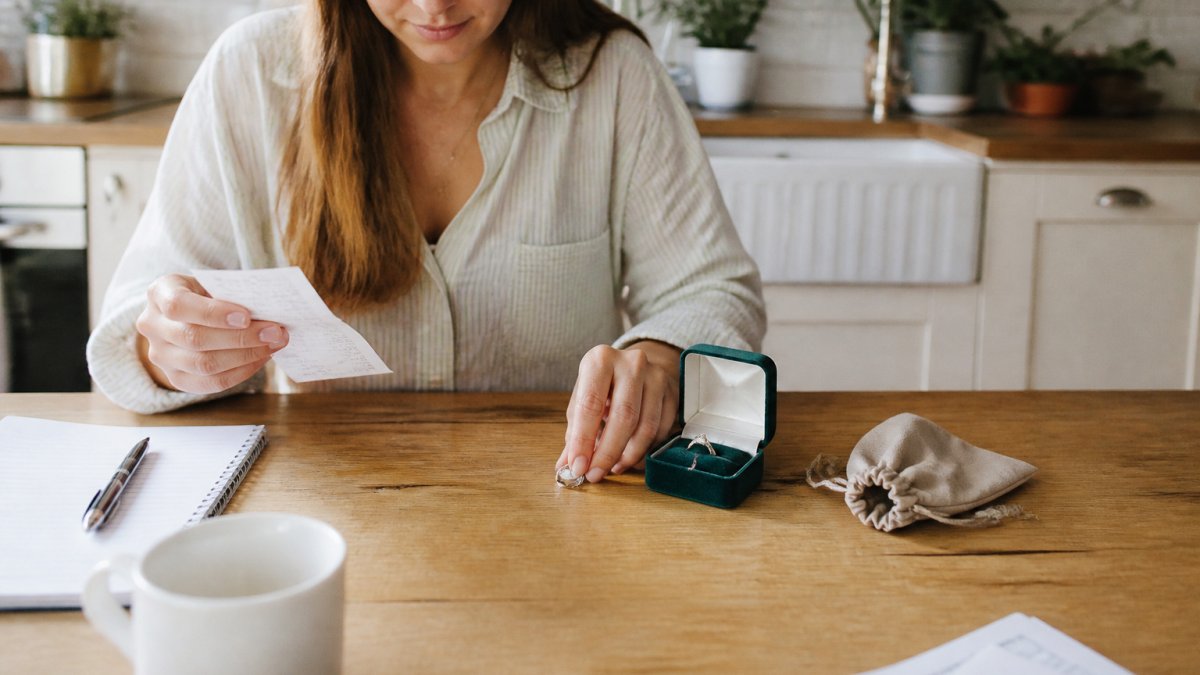
Before you contact anyone
- Locate your proof of purchase. Pull the original receipt, order confirmation email, and any grading report or certificate that came with the stone. Warranties typically require the original purchaser to prove the purchase date and item identity.
- Photograph the problem. Take clear, well-lit photos from several angles, plus a short video if the issue is a loose stone or a rattle. Include a close-up of the defect and a wider shot showing the whole piece. Sellers use these to triage whether the issue looks like a manufacturing defect or impact damage.
- Stop wearing the piece. Continued wear can widen a crack, bend a prong further, or cause a loose stone to fall out, which can turn a covered defect into an exclusion.
- Re-read the exclusions. Confirm the issue is not normal wear, accidental damage, or the result of a repair done elsewhere. If it is a gray area, say so up front rather than letting the seller discover it later.
Contacting the seller
Use the customer support channel named in your warranty terms, not a general sales inbox. Put the request in writing so you have a record. A useful first message includes:
- Your order number and purchase date
- A one-paragraph description of the problem and when you first noticed it
- The photos and video attached
Ask for a claim or ticket number. If the seller offers a phone line, follow up in writing so the conversation is documented.
Shipping the piece
If the seller asks you to send the jewelry in, confirm three things before you box it: who pays for shipping, whether the shipment must be insured, and whether the seller requires a specific carrier or signature service. Many warranties require insured, tracked shipping, so check the shipping requirements in your warranty terms before sending the piece.
Pack the piece in a padded box inside a larger shipping box, and include a copy of the receipt and the claim number. Do not send the original certificate unless the seller asks for it; a copy is usually enough.
Watch out: some warranties require you to use the seller's prepaid label, so confirm the requirement before shipping.
What happens after the seller receives it
The seller inspects the piece and decides whether the issue is a covered defect. Possible outcomes include:
- Approved repair. The seller may fix the setting, replace a component, or re-tip prongs. Ask for the expected turnaround in writing, since timelines vary.
- Approved replacement. If a piece cannot be repaired, a seller may offer a replacement. Confirm whether any replacement carries a new warranty term or continues the original one.
- Denied claim. Ask the seller to explain the reason in writing and cite the specific exclusion. Ask whether a paid repair option exists, and whether you can appeal the decision or request a second inspection.
Ask whether an approved claim results in a repair, a replacement, or another remedy. If it is denied, get the reason in writing so you can decide whether to appeal, pay for the repair, or file an insurance claim if you carry a policy.
Keep a claim file
Save the claim number, all emails, shipping receipts, and photos in one folder. If the dispute escalates, a clean paper trail is the difference between a quick resolution and a stalled claim.
The claim process follows a sequence of steps, and each one has its own timing and requirements.
| Step | What to do | Time or frequency |
|---|---|---|
| Locate proof of purchase | Pull receipt, order email and grading report | Before contacting seller |
| Photograph the problem | Clear photos from several angles plus a short video | Before contacting seller |
| Stop wearing the piece | Avoid further wear that could widen the defect | Immediately |
| Re-read exclusions | Confirm the issue is not normal wear or accidental damage | Before contacting seller |
| Contact seller in writing | Send order number, description, photos and a direct question | Use the support channel in your terms |
| Ship the piece | Confirm shipping cost, insurance and carrier requirements | Before boxing the piece |
| Review outcome | Check whether the claim is approved, replaced or denied | After seller receives the piece |
Keeping Your Warranty Valid: Inspections and Next Steps
Regular care helps protect your warranty. To understand how long these stones hold up and how wear affects them, read about the lifespan of a lab diamond.
Store your ring away from other jewelry to prevent scratches. For more practical tips, see our guide on how to store fine jewelry to prevent scratching. Keep it in a soft pouch or a lined box.
To review your coverage or find the right protection for your ring, shop our full collection of lab-grown diamond rings and fine jewelry, or read our guide to lab-grown diamond warranty and insurance options before you decide.
Frequently Asked Questions
Does a lab-grown diamond warranty cover the center stone?
In most cases, a lab-grown diamond warranty covers the center stone only for manufacturing defects, such as a flaw in the stone's materials or in how the piece was made. It does not cover loss, theft, normal wear, or accidental damage like a chipped stone from a fall. Read the warranty's exclusion list before buying, because coverage for the diamond and coverage for the setting can differ. Native Jewel's lifetime warranty applies to its diamond jewelry; visit the Native Jewel website or contact customer support for the current terms that apply to your piece.
Do lab-grown diamond warranties cover lost or stolen stones?
Typically no. Lost and stolen stones are usually excluded from a standard warranty because a warranty addresses defects, not the loss of property. If you want protection against loss or theft, a jewelry insurance policy is the more appropriate tool. Compare the two before you buy, and keep your receipt and any grading or certification documents, since those are needed for both a warranty claim and an insurance claim.
Can a lab-grown diamond warranty be voided if I miss an inspection?
Some warranties tie coverage to routine care, such as periodic inspections of prongs and settings. Missing one may give the seller grounds to deny a claim, particularly if the problem could have been caught at an inspection. Check the warranty's maintenance requirements and keep records of any inspections you complete. If you are unsure whether a requirement applies to your piece, contact the seller in writing before you need to make a claim.
What is the difference between a jewelry warranty and jewelry insurance?
A warranty is a promise from the seller to repair or replace a piece if it has a manufacturing defect. Insurance is a contract with an insurer that pays out for covered losses, including loss, theft, and accidental damage, usually for a premium. A warranty is generally included with the purchase, while insurance is a separate policy you buy and renew. Many owners of expensive jewelry use both, because each covers risks the other does not.
Frequently Asked Questions
Does a lab grown diamond warranty cover loss or theft? Usually not. Most warranties cover manufacturing defects only. Loss and theft typically require a separate jewelry insurance policy.
Is the warranty transferable to a new owner? Many warranties apply only to the original purchaser. Check the terms before you give or sell the ring.
What proof do I need to file a claim? Keep your receipt or order confirmation. Photos of the damage also help.


