

Cart
1

Last Updated: November 8, 2026
Quick Summary
The best alternatives to traditional diamond rings are lab-grown diamonds, moissanite, and colored gemstones like sapphire and ruby. Lab-grown diamonds match mined stones in hardness and brilliance, while moissanite offers maximum sparkle for less and sapphire or ruby handle daily wear well.
- Lab-grown diamonds share the same chemical, optical, and physical properties as mined stones and test identically on gemological equipment.
- Native Jewel's IGI-certified lab-grown rings in 14K gold include a 1.50ct elongated emerald solitaire at $1,600.
- Moissanite has a higher refractive index than diamond, giving it distinctive fire and rainbow flash at a lower price.
- Sapphire, ruby, spinel, and moissanite offer the best balance of color and durability for active wearers.
- A bezel or low-profile prong setting shields the stone from knocks and keeps costs down without sacrificing longevity.
Ready to choose your ring?IGI-certified lab-grown diamonds in handcrafted 14K gold, with a lifetime warranty.
Shop Lab Diamond Rings
Table of Contents
- Why Couples Are Rethinking the Traditional Diamond Ring
- Lab-Grown Diamond Engagement Rings: The Closest Match to Mined Stones
- Moissanite Engagement Rings: Maximum Sparkle for Less
- Colored Gemstone Engagement Rings: Sapphire, Ruby, Emerald and More
- Cheap Alternatives to Traditional Diamond Rings That Still Last
- Ethical Sourcing and the Real Cost of Ownership
- Matching the Stone to Your Lifestyle and Setting
- Choosing Your Ring at Native Jewel
- Frequently Asked Questions
Why Couples Are Rethinking the Traditional Diamond Ring
The classic diamond solitaire still holds its place, but a growing number of couples are choosing alternatives to traditional diamond rings for reasons that range from budget to ethics to plain personal taste.
The shift isn't about rejecting tradition, it's about matching the ring to the life it will live in. A nurse who wears gloves all day has different needs than a desk worker, and a couple saving for a house may want a bigger stone for less.
Lab-Grown Diamond Engagement Rings: The Closest Match to Mined Stones
Lab-grown diamonds are the closest match to mined stones because they share the same chemical, optical, and physical properties.
For buyers who want diamond look and hardness without the mining footprint, this is the most direct swap.
At Native Jewel, our lab-grown diamond rings are IGI-certified and set in 14K gold. Our 1.50ct elongated emerald solitaire is priced at $1,600, and our 2ct oval solitaire is priced at $2,100.
Best for: buyers who want diamond look and hardness with a documented, traceable origin. Skip if: you specifically want a mined stone for sentimental or resale reasons.
What IGI Certification Actually Tells You
IGI certification means an independent lab has graded the stone's color, clarity, cut, and carat weight and issued a verifiable report. The International Gemological Institute is a grading lab that issues certification reports for lab-grown diamonds.
Ask for the report number and check it against the lab's online verification portal. Certification won't tell you how the stone looks on your hand in daylight, so pair the report with a real photo or video of the finished ring.
Moissanite Engagement Rings: Maximum Sparkle for Less
Moissanite engagement rings can offer strong sparkle at a lower price than many other options.
The trade-off is the look: moissanite sparkles differently from diamond, with more color play and a slightly warmer tone in some lighting.
Best for: buyers who want maximum sparkle on a smaller budget. Skip if: you want a stone that reads as a diamond to a trained eye.
Colored Gemstone Engagement Rings: Sapphire, Ruby, Emerald and More
Colored gemstone engagement rings offer the widest range of personality, from deep blue sapphire to red ruby, green emerald, pale aquamarine, blush morganite, and iridescent moonstone.
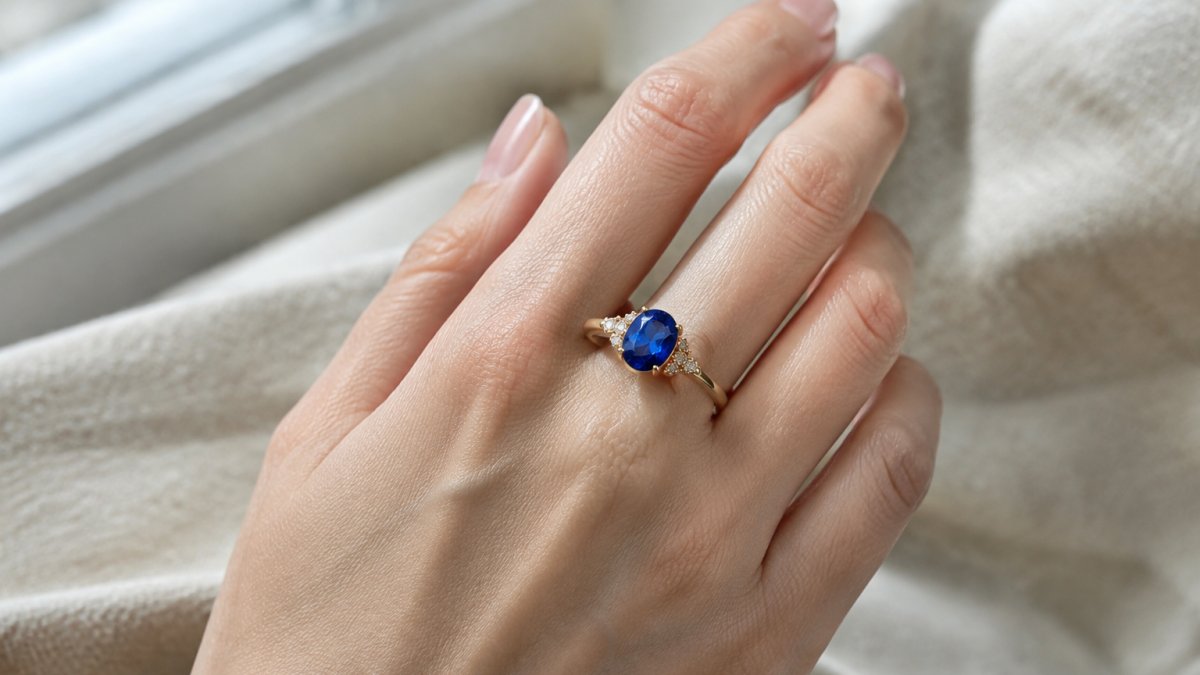
Sapphire is a widely known colored gemstone available in blue, pink, yellow, and green. Ruby brings warmth and rarity.
Best for: buyers who want color, character, and a ring that does not look like everyone else's. Skip if: you need maximum scratch resistance and want zero special care.
Hardness and Everyday Wear by Stone
Hardness and everyday wear go hand in hand: the harder the stone, the better it resists scratches over decades. The Mohs scale is the most useful number for daily-wear rings, but toughness (resistance to chipping) and cleavage matter just as much.
| Stone | Mohs Hardness | Toughness | Everyday Wear Fit | Care Note |
|---|---|---|---|---|
| Diamond (mined or lab) | 10 | Excellent | Excellent | Routine cleaning, annual prong check |
| Moissanite | 9.25 | Excellent | Excellent | Avoid harsh chemicals; clean with mild soap |
| Ruby / Sapphire | 9 | Very good | Excellent | Warm soapy water; avoid steam if fracture-filled |
| Spinel | 8 | Very good | Very good | Gentle cleaning; avoid ultrasonic if included |
| Emerald | 7.5-8 | Fair (brittle) | Good with care | Avoid steam and ultrasonic; no harsh chemicals |
| Tourmaline | 7-7.5 | Good | Moderate | Protect from knocks; store separately |
| Garnet | 6.5-7.5 | Good | Moderate | Store separately to avoid scratches |
| Opal | 5.5-6.5 | Fair (delicate) | Delicate | Avoid water, heat, and chemicals |
| Moonstone | 6-6.5 | Fair | Delicate | Avoid ultrasonic; clean with damp cloth |
Mohs Hardness
Diamond (mined or lab) 10
Moissanite 9.25
Ruby / Sapphire 9
Spinel 8
Emerald 7.5-8
Tourmaline 7-7.5
Garnet 6.5-7.5
Opal 5.5-6.5
Moonstone 6-6.5
Emerald, opal, and moonstone are beautiful but need more mindful wear. If you work with your hands, a bezel setting or a harder stone is the safer route, buyers who choose emerald or opal for daily wear often end up resetting into a bezel within a few years, so plan for that up front.
Treatments, Certification, and What to Ask
Many colored gemstones are routinely treated to improve color or clarity, affecting durability and value. Heat treatment is standard and stable for sapphire and ruby; fracture filling in emerald improves clarity but makes the stone more sensitive to heat and chemicals. Always ask whether a stone is treated and whether the treatment is stable.
Certification for colored stones is less standardized than for diamonds. Reputable labs issue reports for higher-value sapphire, ruby, and emerald, but many affordable stones come with only a seller's description. Ask these questions first:
- Is the stone natural or lab-created?
- Has it been treated, and is the treatment stable?
- What is the stated origin, and is it documented?
Matching the Stone to Your Life
A stone that suits a desk job may not survive a workshop. For active wearers, sapphire, ruby, spinel, and moissanite offer the best balance of color and durability. Avoid opal, moonstone, and emerald for daily wear unless you choose a protective bezel and accept gentler care; sapphire and spinel are the most forgiving if you want color without fragility.
Cheap Alternatives to Traditional Diamond Rings That Still Last
Alternatives to traditional diamond rings can be durable when you prioritize hardness, a protective setting, and a metal that holds its shape.
Three moves keep costs down without sacrificing longevity:
- Choose a harder stone. Moissanite, sapphire, and lab-grown diamond all handle daily wear well.
- Pick a protective setting. A bezel or low-profile prong setting shields the stone from knocks.
- Stick with solid gold. A 14K band resists bending better than a thin, hollow setting.
For a deeper look at budget-friendly options, see our guide to affordable alternatives to diamond solitaire rings.
Skip if: you are set on a soft stone like opal for daily wear.
Ethical Sourcing and the Real Cost of Ownership
Ethical sourcing and the real cost of ownership matter more than the sticker price. A ring's true cost includes the stone, metal, resizing, insurance, and long-term care, numbers that add up over a decade. This section gives you a transparent framework for comparing alternatives on both ethics and total cost.
Ethical and Environmental Trade-Offs by Stone
No stone is impact-free. Mined diamonds and colored gemstones carry land disturbance, water use, and labor concerns; lab-grown diamonds and moissanite carry energy-intensive manufacturing.
- Mined diamonds: documented origin and Kimberley Process certification help, but traceability is imperfect. Ask for a provenance statement and a grading report.
- Lab-grown diamonds: avoid mining disturbance but require significant electricity; ask whether the grower uses renewable energy or offsets. Certification from a grading lab confirms the stone is lab-grown.
- Moissanite: lab-created, so no mining; manufacturing energy is the main impact. Less documented than diamond supply chains.
If sourcing is your priority, ask for certification and a documented origin. For a focused explanation, read are lab grown diamonds ethically sourced. Metal choice matters too: recycled gold vs mined gold changes both the environmental story and the price.
Total Cost of Ownership: A Realistic Budget
Sticker price is only the first line item. Use this framework to estimate the decade-one cost of a ring.
| Cost Category | Typical Range (USD) | Notes |
|---|---|---|
| Center stone + setting | $800-$5,000+ | Lab-grown and moissanite sit at the lower end; mined diamond and fine sapphire at the higher end |
| Resizing | $0-$150 | Often included at purchase; confirm before you buy |
| Insurance rider | 1%-2% of value per year | Homeowner's or renter's policy rider; higher for high-value rings |
| Annual inspection and prong tightening | $0-$75 per visit | Many jewelers include this free for life |
| Repair (loose stone, re-tipping) | $50-$300 per incident | More frequent with soft stones and thin prongs |
| Replacement of small pavé stones | $25-$100 per stone | Relevant for pavé and halo settings |
- Resizing: confirm whether it is included before you buy.
- Insurance: check with your homeowner's or renter's policy provider about coverage for a ring.
- Repairs and prong tightening: an annual check can catch loose stones early.
Read the warranty terms carefully before you assume what it covers.
Questions to Ask Before You Buy
- What is the stone's origin, and is it documented?
- Is the metal recycled, and can the seller confirm it?
- What does the warranty cover, and what voids it?
Matching the Stone to Your Lifestyle and Setting
Matching the stone to your lifestyle is the step most buyers skip, and it determines whether you love the ring in five years. A stone that suits a desk job may not survive a workshop, and a dramatic setting may catch on clothing every day.
Start with how you use your hands. Active jobs favor bezel settings and harder stones.
For setting comparisons, our breakdown of modern pavé vs solitaire pros and cons walks through the trade-offs.
Best for: buyers who want a ring that fits their daily routine, not just their wedding photos. Skip if: you are choosing purely on trend without considering wear.
Choosing Your Ring at Native Jewel
Choosing your ring at Native Jewel means picking a certified stone, setting, and metal that fit your budget and life.
A few of our favorites:
- 3ct radiant-cut solitaire, $3,200: maximum fire with trimmed corners for durability.
- 2.25ct emerald-cut pavé, $2,200: clean step-cut lines with a fine trail of pavé brilliance.
- 4.05ct Toi et Moi emerald and pear, $3,500: two matched D-color stones for a truly personal design.
Select rings include complimentary resizing, and free shipping applies on qualifying orders. Browse the full ring collection to see the shapes and settings side by side.
The hardest part is not finding an alternative to a traditional diamond ring. It is choosing one you will still love in twenty years.
Frequently Asked Questions
What are the main alternatives to a traditional diamond ring?
The four practical routes are lab-grown diamonds, moissanite, colored gemstones such as sapphire, ruby, emerald and aquamarine, and vintage or repurposed rings. Lab-grown diamonds match mined stones chemically and optically and come with grading reports, which makes them the closest swap. Moissanite costs less and throws more rainbow fire. Colored stones trade brilliance for personality. Each option changes the price, the care routine and the long-term service picture, so decide which of those three matters most before you shop.
Are moissanite engagement rings a good alternative to diamond rings?
Moissanite engagement rings suit buyers who want visible sparkle on a smaller budget. Moissanite measures around 9.25 on the Mohs hardness scale, so it handles daily wear well, though it can chip at a sharp point. It shows more colored fire than a diamond and reads slightly warmer in some lights. The trade-off is resale: moissanite holds little resale value, so treat it as a ring you keep rather than an asset. Ask about the warranty and repair terms before ordering.
Which gemstones are durable enough for an engagement ring?
Sapphire and ruby, both corundum at Mohs 9, are the safest colored choices for everyday wear. Diamond and moissanite sit at the top of the scale. Emerald, aquamarine, morganite, opal and moonstone are softer or more brittle and need protective bezel settings and careful wear. Spinel and tourmaline land in the middle. If you work with your hands, choose a harder stone or set a softer one in a bezel so the edges are shielded from knocks.
What is a poor man's diamond called?
The phrase usually refers to moissanite or cubic zirconia, though the two are not equal. Cubic zirconia is cheap and scratches easily, so it dulls within a year or two of daily wear. Moissanite is harder, holds polish far longer and is the better budget stand-in. Lab-grown diamonds are a different category entirely: they are real diamonds with the same hardness and a grading report, just grown in a lab instead of mined.
Can a lab-grown diamond replace a traditional diamond ring?
Yes. A lab-grown diamond has the same chemical, optical and physical properties as a mined one, so it wears, cleans and resizes identically. At Native Jewel, our lab diamond rings are IGI-certified, and you can verify the grading report through the IGI online portal using the registry number. Prices run from $1,600 for a 1.50ct elongated emerald solitaire to $3,500 for a 4.05ct Toi et Moi, with a lifetime warranty on craftsmanship and complimentary resizing on listed rings.


