

Cart
1
Last Updated: November 7, 2026
Quick Summary
Fairmined gold certification is a third-party standard that verifies gold came from artisanal and small-scale mining operations meeting defined social and environmental requirements. Certified gold is tracked through a documented chain of custody back to the mining organization that produced it.
- The Fairmined Standard is owned and maintained by the Alliance for Responsible Mining, a nonprofit.
- Certification is granted to organized artisanal and small-scale mining groups, not to individual miners working alone.
- Independent auditors visit the operation, and certification is time-limited and requires surveillance audits and renewal.
- Fairmined and Fairtrade gold are run by different organizations and are not interchangeable labels.
- Ask a jeweler for the certified mining organization's name or a chain-of-custody document, not just the word "ethical.
Table of Contents
- What Fairmined Gold Certification Means
- Who Can Receive Fairmined Certification
- The Fairmined Standard and Its Requirements
- How Chain of Custody and Traceability Work
- Fairmined vs. Fairtrade Gold: A Side-by-Side Comparison
- Fairmined vs. Recycled Gold: Which Is More Responsible
- Shopping for Fairmined Gold Jewelry and Verifying the Claim
- Frequently Asked Questions
What Fairmined Gold Certification Means
Fairmined gold certification is a third-party standard that verifies gold came from artisanal and small-scale mining operations meeting defined social and environmental requirements. At Native Jewel, we use this kind of sourcing context to explain what a responsible gold claim actually promises, and where it stops.
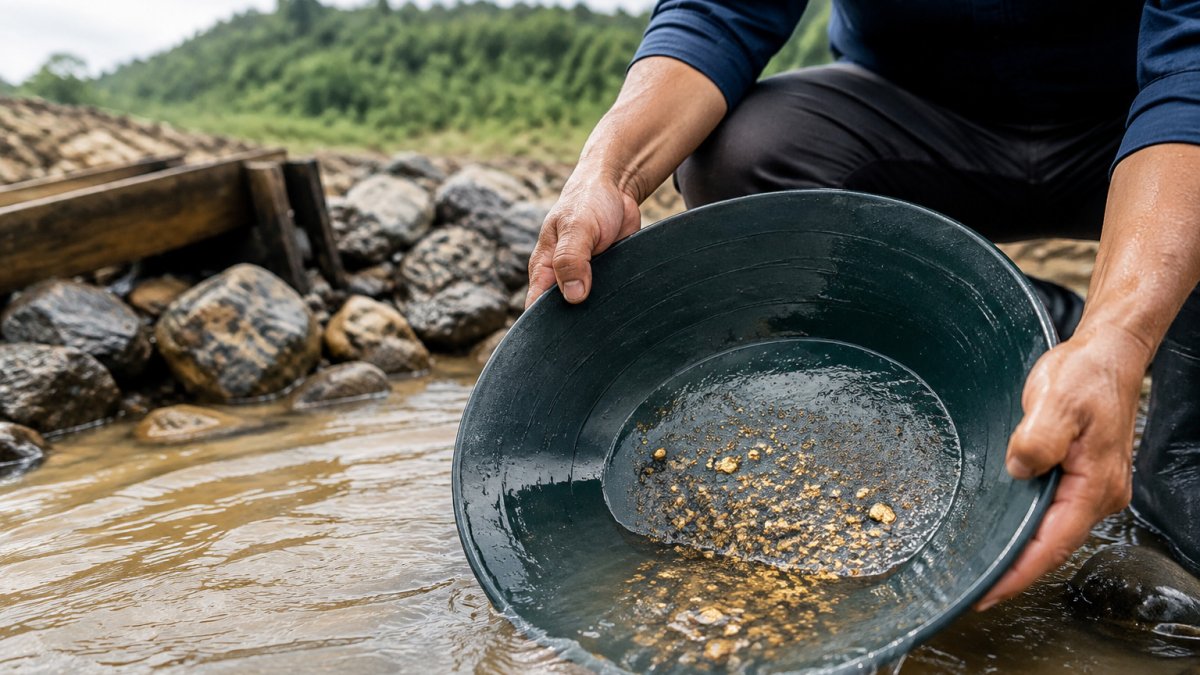
Fairmined gold certification is a responsible-gold scheme for artisanal and small-scale mining (ASM). It is designed to give small miners access to premium markets in exchange for meeting traceability, environmental and labor standards. Gold carrying the Fairmined label has been traced through a documented chain of custody back to certified mining operations.
The underlying idea is simple. Artisanal and small-scale miners often sell gold at the lowest price, with little visibility into where it ends up. Certification creates a verified path from the mine to the jeweler, so the premium a buyer pays can reach the people who produced the gold.
Who Can Receive Fairmined Certification
Certification is available to artisanal and small-scale mining organizations rather than to individual miners working alone. A certified organization must show that it operates legally, is organized as a group, and can document its production and sales.
Eligibility depends on the scale and structure of the operation. Organizations must demonstrate that they are formally constituted, that their members share in the benefits, and that they can keep records of every batch of gold they sell.
Because the scheme focuses on organizations, buyers should understand that a Fairmined label describes a supply chain built around those groups, not a single mine or a single miner.
The Fairmined Standard and Its Requirements
The Fairmined Standard is the rulebook behind the label. It is published and maintained by the Alliance for Responsible Mining (ARM), a nonprofit that owns and revises the standard.
The standard is revised on a multi-year cycle, and each version is dated and published. Buyers and jewelers who want to rely on a specific claim should confirm which version of the standard was in force when the gold was certified, because requirements tighten over time. ARM publishes the current standard, its revision history, and guidance documents on its website, and those documents, not third-party summaries, are the authoritative reference.
What the standard actually requires
The requirements cluster into four areas that auditors test directly:
How the audit process works
- Application and self-assessment. The mining organization applies to ARM and completes a self-assessment against the standard.
- Initial audit. An independent auditor, ARM works with qualified third-party auditors, reviews documentation, visits the operation, inspects workings and processing sites, and interviews workers and community members.
- Corrective action. Where the organization falls short, the auditor issues findings and the organization must close them before certification is granted. This gap-closing period is often the longest part of the process for first-time applicants.
- Certification decision. A certification decision is issued for a defined period, and the organization is entered into the Fairmined system with a unique identifier used on chain-of-custody documents.
- Surveillance and renewal. Certification is time-limited and requires surveillance audits and periodic renewal. Continued certification depends on sustained compliance, not a one-time pass.
What happens when an organization falls short
Watch out: a jeweler citing "Fairmined" without being able to name the certified mining organization or produce a chain-of-custody document is offering a marketing phrase, not a verifiable certification claim.
How Chain of Custody and Traceability Work
Chain of custody is the documented trail that follows gold from the certified mine through refining and into finished jewelry. Each handoff must be recorded so that a claim on a finished piece can be verified against the original source.
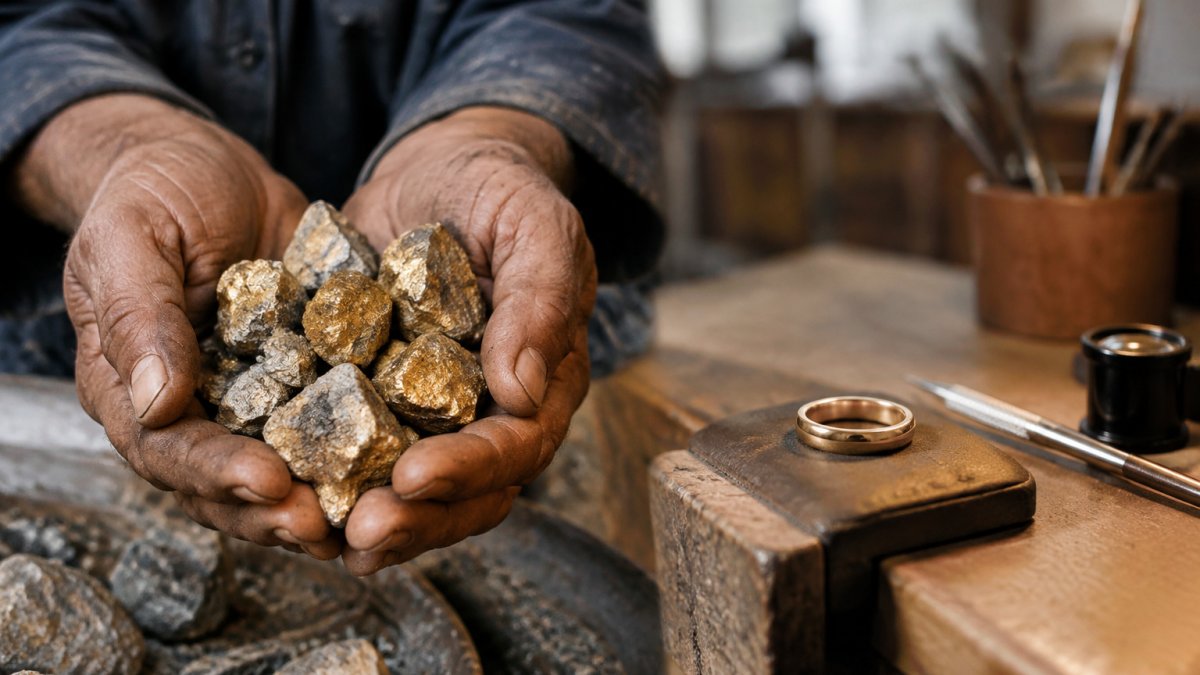
Traceability matters because a label is only as credible as the records behind it. Certified gold is kept separate from uncertified material at each stage, and every transfer generates documentation that can be audited.
For a buyer, the practical question is whether the jeweler can show that documentation. A reputable supplier should be able to explain how the gold in a piece was tracked and which certified source it came from.
Fairmined vs. Fairtrade Gold: A Side-by-Side Comparison
Most articles mention these two labels in the same breath and stop at "they're different." The differences are concrete, and they change what a buyer is actually supporting. Our price breakdown of ethical gold jewelry shows what a responsibly sourced piece costs compared with conventional gold. Here is the comparison the summaries skip.
Who owns and runs each scheme
Fairmined is owned and managed by the Alliance for Responsible Mining (ARM), a nonprofit focused on artisanal and small-scale mining. Fairtrade gold is part of the Fairtrade system. The two are separate organizations with separate standards and labels.
Who can be certified
Both schemes are built for ASM, but their eligibility rules differ. Fairmined certifies organized ASM operations, cooperatives, associations, and small mining companies, that meet the Fairmined Standard. Fairtrade gold certification is likewise aimed at small-scale miners organized into cooperatives or associations, and it is tied to the Fairtrade Standards for gold, which include requirements on democratic organization and on the use of the Fairtrade Premium. The practical overlap is large, but the standards are not interchangeable, and an operation certified under one is not automatically recognized under the other.
How the premium works
Both schemes pay a premium above the market price of gold, but the mechanics differ. Under Fairmined, the certified organization receives a Fairmined Premium on top of the gold price, and the standard requires that premium to be invested in the organization and its community through a documented, democratic process. Fairtrade gold carries a Fairtrade Minimum Price and a Fairtrade Premium, with the premium governed by Fairtrade's rules for collective decision-making and reporting. In both cases the premium is a separate line item from the metal price, which is why buyers should ask how the premium was calculated and where it went, not just whether one was paid.
Traceability and labeling
Fairmined uses a chain-of-custody model in which certified gold is segregated and documented from the mining organization through refining and into the finished product, with the label tied to a specific certified source. Fairtrade gold uses its own chain-of-custody and licensing model, under which products carrying the FAIRTRADE Mark must meet the applicable Fairtrade standards and be licensed through the Fairtrade system. The labels look different and are administered by different bodies, so a piece carrying one is not evidence of the other.
What this means for a buyer
Both schemes are run by different organizations with different standards and labels. The right question is which scheme a given piece is actually certified under, and whether the jeweler can document that specific claim. A side-by-side comparison is useful for understanding the landscape, but it is not a substitute for checking the label on the piece in front of you.
Watch out: treating "Fairmined" and "Fairtrade" as synonyms, or assuming a piece certified under one scheme satisfies the other, is a common sourcing error.
The two labels are run by different organizations and differ in how they work, as summarized below.
| Aspect | Fairmined | Fairtrade Gold |
|---|---|---|
| Owner or manager | Alliance for Responsible Mining (ARM) | Fairtrade system |
| Who can be certified | Organized ASM operations meeting the Fairmined Standard | Small-scale miners organized into cooperatives or associations |
| Premium | Fairmined Premium invested via a documented, democratic process | Fairtrade Minimum Price and Fairtrade Premium |
| Traceability model | Chain of custody tied to a specific certified source | Chain of custody and licensing under the FAIRTRADE Mark |
| Label status | Not interchangeable with the other scheme | Not interchangeable with the other scheme |
Fairmined vs. Recycled Gold: Which Is More Responsible
Recycled gold and Fairmined gold answer different questions. Recycled gold is precious metal that has already been mined and then reclaimed from jewelry, electronics or other scrap. Fairmined gold is newly mined gold from certified artisanal operations.
Recycled gold avoids new extraction. Fairmined gold supports the conditions under which artisanal gold is produced. Neither option is automatically better; the right choice depends on whether a buyer prioritizes avoiding new mining or supporting certified mining communities.
Shopping for Fairmined Gold Jewelry and Verifying the Claim
When shopping for Fairmined gold jewelry, start by asking the jeweler what documentation supports the claim. A credible answer names the certification, explains how the gold was traced, and provides records you can review.
Watch out: a "responsibly sourced" or "ethical" phrase on its own is not a certification. Look for a named scheme and ask for the certificate or traceability record behind it.
At Native Jewel, we offer handcrafted 14K gold and IGI-certified lab-grown diamond pieces, and we are transparent about how each piece is sourced. You can explore our fine jewelry collection for the designs we carry, or compare recycled and mined options before you decide.
Verifying a claim is a skill that improves with practice. Ask direct questions, request documentation, and be wary of vague assurances that cannot be checked.
Choosing responsibly sourced gold is ultimately a question of trust backed by evidence. If you want a clear next step, read our guide on buying recycled gold jewelry with confidence before you commit to a purchase.
Frequently Asked Questions
What does Fairmined gold mean?
Fairmined is a certification for gold mined by artisanal and small-scale mining organizations that meet the Fairmined Standard. The label indicates that the gold was produced under requirements covering environmental protection, safe working conditions, respect for workers' rights, and community development. It also means the gold can be traced back through a documented chain of custody to the mining organization that produced it. The label applies to the gold itself, so buyers should look for it on the product or in the supplier's documentation.
Is Fairmined gold real gold?
Yes. Fairmined gold is conventional gold with the same chemical composition and physical properties as any other gold. The certification concerns how the gold was mined and how it moves through the supply chain, not its purity or identity. Fairmined gold jewelry is sold in standard karat weights, such as 14K, and should be marked accordingly. The certification adds traceability and social and environmental standards on top of the metal's usual characteristics.
How can I tell if gold jewelry is Fairmined certified?
Ask the seller for the certification documentation and check whether the Fairmined claim is backed by a chain-of-custody record that traces the gold to certified mining organizations. Certified brands can usually name the mining organization or supply channel behind their gold. Be cautious of vague wording such as 'responsibly sourced' with no supporting paperwork, since that is not the same as Fairmined certification. Verification is strongest when the seller provides documents you can review rather than relying on marketing language alone.
What is the difference between Fairmined and Fairtrade gold?
Both programs aim to improve conditions for small-scale miners, but they are separate schemes with their own standards and labels.


